


When I finally booked a ticket to the Azores, I made the same mistake almost everyone makes: I tried to “sample” as many islands as possible in a short trip. On a map the archipelago looks compact. In reality, choosing where to spend your days matters far more than simply adding island names to your itinerary. After several trips that now total just over four weeks across the Azores’ nine volcanic islands, I have a clearer sense of which ones I would prioritize again, and why.
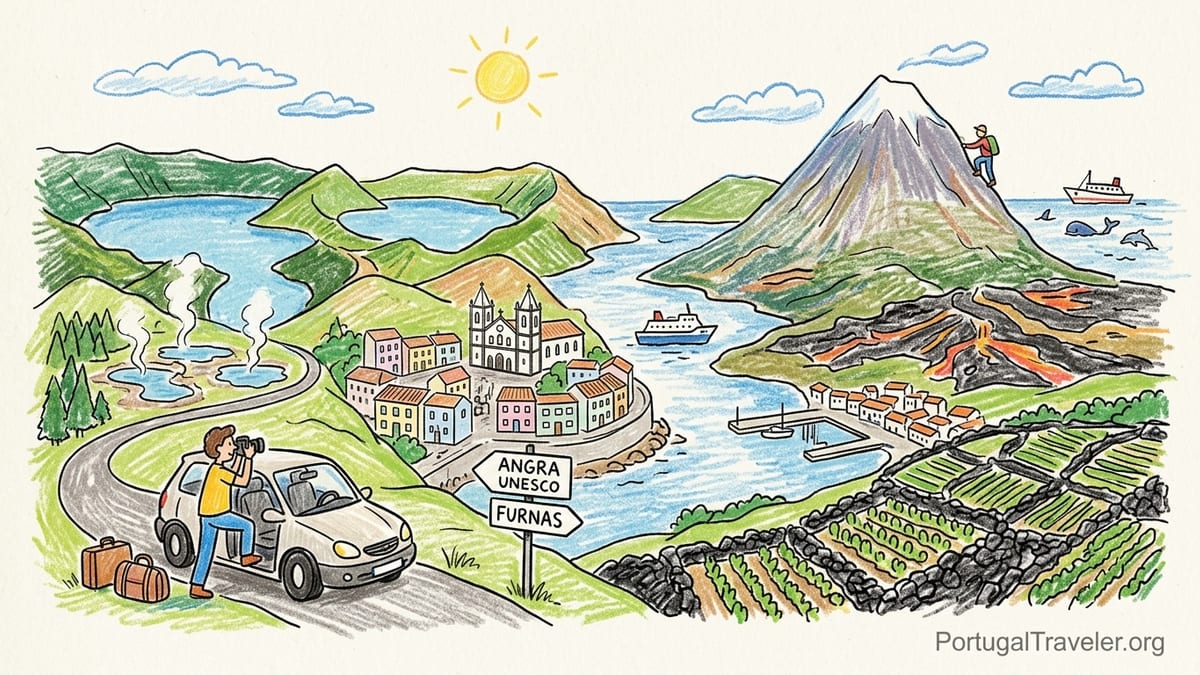
How I Traveled the Azores and What I Prioritized
Across multiple trips between 2019 and 2025, I have spent about fifteen nights on São Miguel, six on Pico, four on Terceira, three on Faial and two on São Jorge. I have only made brief day stops on Santa Maria, Flores, Graciosa and Corvo, usually tied to flight connections or ferry schedules. That means I will not pretend to be an expert on those four. Official tourism information is very clear that the Azores consist of nine inhabited islands, each with its own trails, experiences and accommodation options, but my strong personal recommendations focus on the five I genuinely explored in depth.
My priorities were varied. I wanted volcanic lakes and geothermal pools, but also serious hiking, whale watching and time in wine landscapes. I cared about whether I needed a rental car every day, how big the airport was, how often I could realistically move between islands, and what evenings felt like once the hikes were done. I paid attention to how easy it was to fill several days without repeating myself, and which islands felt better for first-time visitors versus a second or third Azores trip.
The result is not a universal ranking. Different islands shine for different reasons, and the “best” one depends on whether you dream of climbing Portugal’s highest peak, soaking in hot springs every night, or sitting outside a harbor bar watching inter-island ferries glide in at sunset. What follows is how I would choose, based on the specific trips each island gave me.
São Miguel: The Easy First Love of the Azores
In total I have spent around fifteen nights on São Miguel, spread across three trips. My shortest stay was three nights, which felt rushed. My longest stretch was eight nights, which finally felt comfortable. If you only pick one island for a first Azores trip, São Miguel is the one I would recommend, not because it is objectively “best,” but because it combines classic volcanic scenery with relatively big-city logistics in Ponta Delgada.
The island delivered volcanic lakes, geothermal travel and easy day-trip logistics in a way the others could not. I spent full days around Sete Cidades and Lagoa do Fogo, both accessible by paved roads and well-marked viewpoints, and then soaked in hot springs in Furnas in the evening. Furnas is one of the most developed geothermal areas in the archipelago, with Terra Nostra Garden’s large thermal pool and several smaller spas in town. On my longest stay, I split my nights between Ponta Delgada and Furnas so I could walk to dinner after evening soaks instead of driving back in the dark on mountain roads.
Practically, São Miguel is where the Azores eased me in. Ponta Delgada’s airport is the largest in the region and serves as the main international gateway, with year-round flights from Lisbon and other European cities. The arrivals hall hosts desks from several familiar rental companies, and it is a five to ten minute drive into the city, so I could land, pick up a car and be checking into a hotel in less than an hour. In Ponta Delgada itself I did not truly need a car to find restaurants, cafes or bars in the evening. The compact center meant I could return the car on the last day and still enjoy one or two car-free nights before flying out.
Where I underestimated São Miguel was in how much there is to do once the obvious viewpoints are ticked off. I assumed five days would be more than enough. In practice, between side hikes around Salto do Cabrito and Salto do Prego waterfalls, a day exploring the north shore surf town of Ribeira Grande and its black sand beaches, another wandering tea plantations at Gorreana, and weather-dependent returns to viewpoints when clouds lifted, I never ran out of ways to fill a day. For hiking, driving flexibility mattered. Public buses exist but are sparse and slow for reaching trailheads or hot springs at specific times, so I found a rental car functionally essential except for days devoted only to the city.
Would I return to São Miguel? Yes, and I already have. It is the one island I feel comfortable recommending to almost any traveler type, especially if you want variety without worrying about whether a small grocery will be closed or if there is only one restaurant in town. It is also the island I think most easily supports a full week without feeling repetitive. On a very short overall Azores trip of seven or eight days, this is the place I would anchor the bulk of my time and, if necessary, skip more remote islands to avoid spending half my holiday on planes and ferries.
Pico: Wine Landscapes, Whales and a Mountain That Dominates Everything
I have stayed six nights on Pico, across two trips of three nights each. Both times I left wishing I had one more night, and both times Pico surprised me more than any other island. Before visiting, I thought of it primarily as the place with the big mountain. On the ground it offered one of the most distinctive combinations of wine landscapes, whale watching and quietly dramatic scenery I have experienced anywhere.
The wine country around Madalena is not a rolling-vineyard landscape in the classic sense. Instead, small vines grow in black lava rock corrals, protected from the wind, right down to the sea. Walking the coastal trails through this UNESCO-listed vineyard landscape, with Mount Pico rising above and the outlines of Faial visible across the channel, felt like one long open-air museum of how people adapted to a volcanic environment. I had originally scheduled only one day for this area. In reality I spent two, between slow walks, tastings at small producers and simply sitting near the harbor watching ferries arrive from Horta while the Madalena Islets stood just off shore.
The other anchor experiences on Pico were serious hiking and marine life. Climbing Mount Pico is a demanding full-day effort that needs clear weather and proper gear, so I built a flexible three-night window around it. Even without summiting, lower elevation hikes across lava fields and around coastal fajãs delivered that stripped-back, geological feel that makes the central group of islands different from lush São Miguel. For whale watching, Pico and neighboring Faial are among the main departure points in the Azores, with several licensed operators running half-day trips during the main season. I joined a morning excursion from Lajes do Pico and saw several species of dolphins and distant blows from larger whales. The experience felt more focused and less crowded than similar outings I have done in other Atlantic destinations.
On the practical side, Pico feels rural and car-dependent once you step away from Madalena. The island has its own airport at Pico Airport on the north coast, with flights connecting through São Miguel and Terceira, and there are frequent ferry connections from Horta on Faial, often several times a day in summer. That makes it relatively easy to include Pico in a central island loop. However, outside the harbor towns I found restaurant choice limited in the evenings, and distances between villages significant enough that driving after dark along narrow, occasionally foggy roads was something I tried to minimize. Accommodation ranged from simple guesthouses to stylish small hotels and vineyard houses, but availability tightened quickly in high season.
What I underestimated was how long everyday logistics would take. On a map it looks like you can drive anywhere on Pico in under an hour. That is technically true, but if you plan a morning whale trip in the south, an afternoon hike in the high interior and sunset wine tasting near Madalena, the cumulative driving is tiring. My three-night stays felt a touch rushed given how weather-sensitive both the mountain and marine activities are. If climbing Pico is a must for you, I would strongly consider four nights. Would I return? Absolutely, especially to spend slower days in the vineyard landscapes without the mental clock of a planned summit attempt.
Terceira: Culture, Evenings and an Unexpected Favorite
Terceira was the island that surprised me most. I visited for four nights, expecting it to function mainly as a convenient air hub in the central group. Instead it delivered my favorite blend of local culture, easy evenings and accessible day hikes. If São Miguel felt like the archipelago’s big island and Pico like its volcanic heart, Terceira felt like the sociable cousin that quietly gets on with life while visitors obsess over more famous viewpoints elsewhere.
The highlight here was Angra do Heroísmo, the island’s main town and a UNESCO World Heritage site. I stayed in a small hotel within walking distance of the harbor and spent my first afternoon simply wandering its streets, marked by historic churches, pastel-fronted houses and a hilltop fort. Unlike in more resort-oriented coastal towns, evenings in Angra felt genuinely local. Families strolled the waterfront, cafes stayed open late enough for another espresso or glass of wine, and there was a healthy mix of neighborhood-level places and a few more contemporary restaurants. After more isolated nights on Pico, it was a relief to park the car and not touch it after sunset.
Day trips from Angra offered a mix of moderate hiking and geothermal curiosity without the crowds I had seen on São Miguel. I spent a day driving the interior road network, stopping at viewpoints over green cratered landscapes and visiting Algar do Carvão, a volcanic vent visitors can enter with organized access. The experience of standing inside the cooled magma chamber, looking up at a shaft of light from the surface, gave me a very different perspective on the geology that shapes the entire archipelago. Trails near the coast delivered gentler walks that still filled most of a day once drives and lazy lunches were factored in.
From a practical standpoint, Terceira Airport near Praia da Vitória is one of the main entry points for inter-island and some direct flights from mainland Portugal. That translates into relatively frequent connections to other islands compared with smaller airfields. I still found a rental car essential for exploring beyond Angra and Praia da Vitória, but the driving felt less intense than on São Miguel’s mountain roads. Restaurants and accommodation options covered a comfortable middle ground: more than on Pico, fewer than in Ponta Delgada, but enough variety to keep four nights interesting. It was also one of the easiest islands on which to fill several days without obsessing over weather forecasts.
If you are short on time, Terceira is the island that might get cut first when travelers compare photos. That would be a pity. For me it offered the best mix of culture, history and relaxed evenings, and I left with the sense that I had only scratched the surface. Four nights felt about right, but I would happily return for a similar stay, especially in shoulder season when walking Angra’s streets in soft evening light was a pleasure in itself.
Faial: Gateway Island That Felt A Little Rushed
I spent three nights on Faial, using it partly as a base to move between Pico and São Jorge. If Pico is about the mountain and vineyards, Faial is about the harbor and the caldera. Horta, the main town, has long been a stop for transatlantic sailors, and you feel that maritime culture immediately. The marina is full of ocean-going yachts, many with hulls painted by crews marking successful crossings, and cafes spill out onto pavements facing the harbor. It is one of the liveliest evening scenes anywhere in the Azores, especially around the waterfront bars.
In daytime, the island’s star attraction is the great volcanic crater, or Caldeira, and the lunar landscape of Capelinhos, where a mid-twentieth-century eruption added land to the western edge of the island. I devoted one full day to driving up to the crater rim, walking part of its circumference in clear weather and then continuing to Capelinhos to visit the interpretation center and wander the ash-covered slopes. Another day disappeared into boat trips across to Pico, both to explore and simply to enjoy the open water views of Mount Pico dominating the horizon. By the time I factored in a slow half-day just enjoying Horta’s harborfront, my three nights were over.
Faial’s practical role in the central group is important. Its airport handles regular inter-island flights, and the ferry link between Horta and Madalena on Pico runs several times a day in summer, with crossings around thirty minutes. That means Faial can work well as a logistics hub if you are combining islands without wanting to connect through São Miguel every time. In Horta itself I rarely needed a car. The town is walkable, with enough restaurants and bars that I could choose between traditional Azorean dishes, simple seafood and more contemporary menus. Once I left town, however, exploring the caldera and Capelinhos absolutely required a rental car or private tour.
In hindsight, Faial is the island that felt most rushed for me. Three nights gave me a satisfying taste but did not allow for weather backups. Cloud can roll over the caldera very quickly, and I nearly missed the views from the rim entirely on my first attempt. If your schedule is tight and you are already planning significant time on Pico, Faial is the island I would consider skipping on a very short trip of a week or less. On a longer central group itinerary of ten days or more, though, I would happily return for another two or three nights, mainly to repeat the caldera walk and spend slower evenings harbor-watching in Horta.
São Jorge: For Hikers Who Do Not Mind Effort
My two nights on São Jorge were both memorable and slightly frustrating. This is the island I most wish I had given more time to, and it is also the one I am most cautious about recommending to first-time visitors with very limited days. São Jorge is essentially a long, narrow ridge, known for its dramatic cliffs and fjord-like fajãs at sea level. It is a serious hiking island, less about quick viewpoints and more about committing to half- or full-day descents and climbs.
I based myself near Velas, the main town, which has a small harbor and a compact cluster of restaurants and guesthouses. Evenings were quiet but pleasant, with just enough choice for two dinners, though clearly far fewer options than in Angra or Ponta Delgada. During the day, I hiked down to one of the signature fajãs on a trail that wound from misty high pastures through forest to a pocket of houses, fields and ocean-level lava platforms. The sense of isolation was extraordinary, but the price was a tough climb back up. This is not an island of short, casual loops. Distances look modest on the map, yet the vertical meters and narrow roads between trailheads mean each hike becomes a full commitment.
On the logistics front, São Jorge is linked to its neighbors by both small airport flights and ferries, typically connecting from Pico and Faial. Flights can be weather-dependent, and ferry schedules reduce outside the summer months, so I built my visit into a central group loop rather than trying to treat São Jorge as a quick side-trip. A rental car felt essential, because public transport options between Velas, scattered villages and trailheads were limited, and I did not want to be watching a bus timetable while halfway up a cliff path.
Two nights were not enough. I arrived on an afternoon ferry, lost part of the next morning to low cloud that made my planned hike unsafe, and then had to compress my ambitions into one, slightly rushed day on the trail before leaving again the following morning. São Jorge deserves at least three nights, especially if hiking is the main reason you are there. I underestimated both the physical effort and the way weather can erase an entire day’s plans on a ridge island. Would I return? Yes, with trekking as the main focus and with a better fitness base than I had on that first visit. On a short, first-time Azores itinerary oriented around easy logistics and variety, though, this is the island I would save for a future, more hiking-focused trip.
Putting It Together: How I Would Choose 2, 3 or 4 Islands
After moving through these islands and watching how much time transport quietly eats, my main conclusion is that less is more. Inter-island flights and ferries are reliable but operate on specific schedules, and weather can delay or cancel services. For summer 2026, the regional airline plans to keep inter-island capacity broadly in line with the previous year, with some reinforcement on busy routes, which is good news for connectivity but does not change the fact that every transfer costs you at least half a day of usable time. The official tourism board highlights that each of the nine islands has its own set of experiences and infrastructure, but trying to combine too many on a short trip turns them into a blur of airports and harbors rather than real places.
If I had seven or eight days in total and it were my first time in the Azores, I would choose São Miguel and either Terceira or Pico. São Miguel would get at least four or five nights for volcanic lakes, geothermal pools and easy first-time logistics, with Ponta Delgada providing a comfortable restaurant and accommodation base. If culture and gentle walking appealed more than big ascents, I would add Terceira for three nights in or near Angra do Heroísmo, splitting my time between the historic town and interior viewpoints. That combination balances nature, history and evenings that feel alive without putting too much pressure on transport.
For travelers more excited by hiking and wine landscapes, my top three-island combination would be São Miguel, Pico and Faial over about eleven or twelve days. São Miguel would again serve as the entry point and main base. Pico would get at least three or four nights, especially if climbing Mount Pico is a priority or if you want two separate chances for whale watching in case of rough seas. Faial would then earn two or three nights focused on the caldera, Capelinhos and harbor life in Horta. This loop makes practical sense because ferries connect Pico and Faial frequently in season, so you are not flying for every move.
If you have the luxury of fourteen or more days and a strong interest in hiking, adding São Jorge to that central group circuit is worthwhile. In that case I would break the trip into four islands: São Miguel, Terceira, Pico and São Jorge or Faial and São Jorge. São Jorge would need at least three nights, ideally four, to allow for weather flexibility and recovery between demanding trails. What I would not do again is try to touch five or six islands in ten days. On paper that looks like an efficient sampler. In reality you spend too many evenings packing, too many mornings at small airports or ferry terminals, and not enough slow time absorbing how different each island feels.
The central thread through all of my Azores trips is that there is no single “best” island. There are, however, islands that are best for your current travel style and timeframe. São Miguel is the easy first love, Pico the moody heart for wine and whales, Terceira the cultural surprise, Faial the compact gateway with a big crater and harbor life, and São Jorge the hikers’ prize that deserves respect. Choosing fewer islands and giving each one the nights it needs will leave you far more likely to plan a return, rather than to chalk the Azores up as “done.”
FAQ
Q1. Is São Miguel enough for a first trip to the Azores?
For many travelers, yes. With four to seven nights on São Miguel you can experience volcanic lakes, geothermal pools, coastal drives and a lively restaurant scene without changing islands.
Q2. Do I really need a rental car on the Azores islands?
Outside the main towns a rental car is extremely useful, especially on São Miguel, Pico, Faial and São Jorge. In city centers like Ponta Delgada or Angra do Heroísmo you can walk, but reaching trailheads, viewpoints and hot springs without a car quickly becomes restrictive.
Q3. Which island is best for whale watching?
Pico and Faial are among the strongest bases for whale and dolphin watching, with several licensed operators running regular trips in season. São Miguel also has good tours, but the combination of marine excursions and dramatic coastal scenery made the central islands stand out for me.
Q4. I am not a strong hiker. Which islands suit me best?
São Miguel and Terceira work well if you prefer shorter walks and viewpoint-based sightseeing. Both offer paved access to many highlights and a wide range of easier coastal or lakeside strolls, with plenty to do even if you skip strenuous trails.
Q5. How many islands should I include in a one-week trip?
In a week I would limit myself to one or two islands. A common pattern is five nights on São Miguel and two on either Terceira or Pico. Adding more islands tends to turn travel days into a significant share of your holiday.
Q6. Which island felt the most car-free in the evenings?
Within towns, Ponta Delgada on São Miguel, Angra do Heroísmo on Terceira and Horta on Faial all felt comfortable without a car at night, with enough restaurants, cafes and bars within walking distance of central accommodation.
Q7. Is it easy to hop between Pico and Faial?
Yes, in season ferries usually run several times a day between Horta on Faial and Madalena on Pico, with crossings of roughly half an hour. That makes it practical to combine the two islands in one central group itinerary.
Q8. Which island would you skip on a very short first trip?
If I had only seven or eight days total, I would be most likely to skip Faial and São Jorge, focusing instead on São Miguel and either Terceira or Pico to reduce time lost to extra flights and ferries.
Q9. Which island deserves more time than most people allow?
Sao Jorge, if you are a hiker. Its long ridge shape and deep fajãs mean that most worthwhile routes are full-day efforts, and weather can easily cost you one or two days of usable trail time.
Q10. When would you return to the Azores and which island first?
If I were planning another trip now, I would return in late spring or early autumn and split my time between Pico for slower days among the vineyards and São Jorge for dedicated hiking, using São Miguel or Terceira purely as convenient flight gateways.