


Alentejo has a reputation as the “affordable” side of Portugal, but that does not help much when you are staring at rental car quotes, wine tasting menus and rural hotel prices. To write this, I went back through my booking confirmations, card statements and notes from a seven night trip I took across the region in late May 2024, then checked current prices again in October 2026 for rental cars, fuel, accommodation and typical activities. What follows is not a generic claim that “Portugal is cheap,” but a line by line look at what an Alentejo itinerary actually cost me, where I overspent, and where the money genuinely improved the trip.
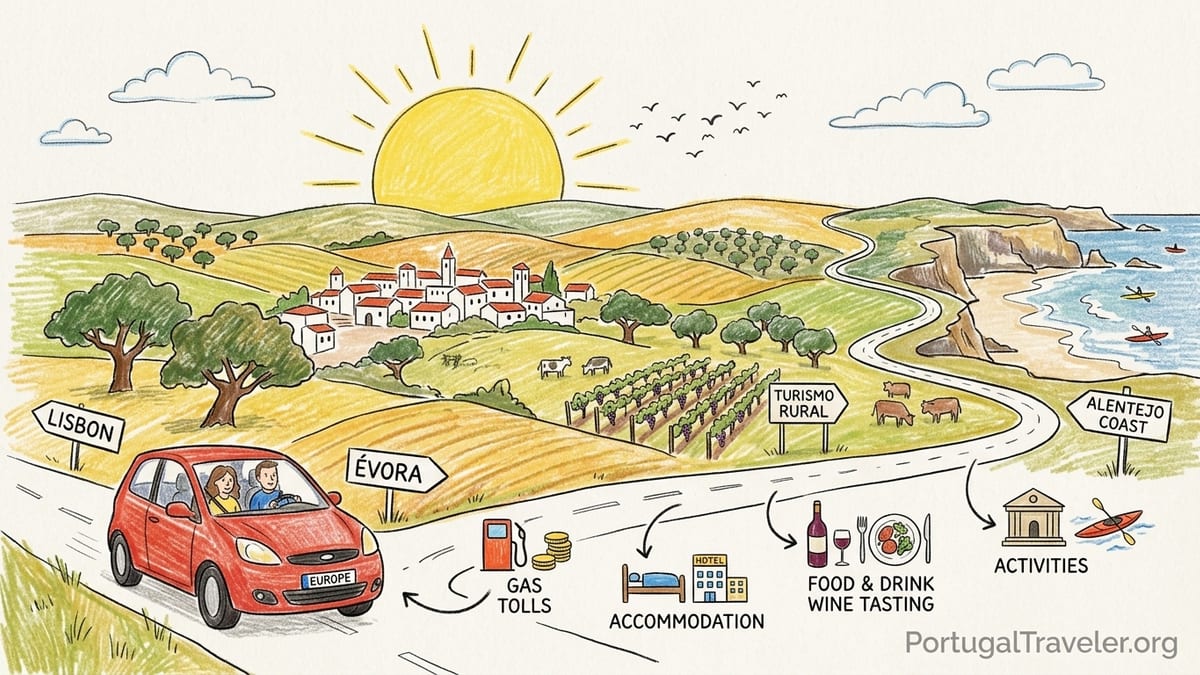
Trip Context and How I Tracked the Costs
I traveled in Alentejo from 24 May to 31 May 2024, late spring shoulder season, when days were warm and dry but before the peak August holiday rush. I started and ended in Lisbon, rented a car for the full week and followed a loop through Évora, the wine country around Reguengos de Monsaraz, the rural interior near Mértola, and the southwest Alentejo coast near Vila Nova de Milfontes. I was traveling as a couple, so almost all costs were for two people sharing one room and one car.
To keep this article grounded in real numbers, I pulled exact figures from my original bookings in euros, then checked equivalent or similar options in October 2026 for the same timing next year, also in late May. Where prices have shifted, I quote the approximate current range. All prices in the narrative sections are from my real 2024 trip unless I clearly state that they are updated examples researched for 2026.
Our travel style for this trip was mid range: private double rooms with bathrooms, a mix of simple guesthouses and a couple of “treat” rural hotels, restaurant dinners about half the time, and no ultra luxury splurges like Michelin starred tasting menus or helicopter flights. If you are a budget backpacker or a luxury resort traveler, I include realistic ranges for you later, but the spine of this article is what two people with a moderate budget actually spent on one week.
I categorize spending into transport, accommodation, food and drink, activities and tastings, and small incidentals that are easy to forget during planning. At the end I give a realistic daily cost range based on this trip, and then separate researched examples for leaner and more upscale budgets so you can see how specific choices will push your own total up or down.
Transport: Car Rental, Fuel, Tolls and Parking
For this itinerary, a car was essential. We picked up a compact manual car at Lisbon Airport and returned it there seven days later. For late May 2024, booking about two months in advance with a well known international broker, the base rental was 196 euros for seven days, including basic third party insurance but not the extra collision damage waiver. The rental company placed a 1,200 euro excess on my card. I handled that risk with a separate annual excess insurance policy I already held, which cost 49 euros per year, but for this article I am not counting that full annual cost into the trip total.
To check how that compares now, I priced a similar compact manual rental for late May 2027, again picked up at Lisbon Airport for seven days, with a few large European brokers and direct with two Portugal based firms. The cheapest reputable options in October 2026 were around 210 to 260 euros for the week for a compact manual with basic coverage, while automatic transmission pushed that closer to 280 to 330 euros. Full coverage with a low or zero excess typically added about 12 to 18 euros per day on top. In practice, that means a realistic current figure for a one week compact rental with full coverage is around 300 to 430 euros.
Fuel was a noticeable but not ruinous cost. Over seven days, with several long rural drives and daily local exploring, we covered just under 900 kilometers. In May 2024 we paid between 1.75 and 1.85 euros per liter for diesel at highway and town stations and spent 104 euros in total on fuel. Checking typical fuel prices in Portugal in early October 2026, standard diesel has been fluctuating roughly between 1.65 and 1.90 euros per liter, with unleaded petrol often a few cents higher. On a similar route today, I would expect to spend about 95 to 120 euros on fuel for the week.
Tolls and parking added less than I expected but still mattered. We used the main A2 and A6 toll highways between Lisbon, Évora and the coastal area, but not every day. Over the week, our electronic toll charges added up to 32 euros, billed to the rental company and passed to my card. In 2026, toll rates on these routes remain broadly similar, so I would still budget around 30 to 40 euros for a similar routing. Parking was free at all rural and coastal accommodations because they had on site lots or gravel areas, and free in smaller inland towns. In Évora, we paid 4 euros to park in a central paid lot for one afternoon. Overall, transport for our week for two people, including car, fuel, tolls and parking, came to around 332 euros based on actual 2024 spending.
Accommodation: Inland Towns vs Rural Estates vs Coast
Accommodation was our single biggest category. We spent seven nights in Alentejo in 2024 and deliberately mixed styles: two nights in the historic town of Évora, two nights at a rural wine country stay near Reguengos de Monsaraz, one night at a simple village guesthouse near Mértola and two nights on the southwest coast near Vila Nova de Milfontes. All prices below are for a double room for two, including taxes and breakfast where stated.
In Évora, we chose a small family run guesthouse inside the historic walls, a short walk from the Roman Temple. The room was simple but comfortable, with air conditioning and a private bathroom. Breakfast was a basic but pleasant buffet of bread, cheese, ham, fruit and coffee. For two nights, we paid 156 euros in total, so 78 euros per night. When I check availability in October 2026 for late May next year, similar town center guesthouses in Évora run about 85 to 120 euros per night for a standard double with breakfast, with slightly lower prices just outside the walls.
Next we upgraded to a rural wine estate near Reguengos de Monsaraz. This was a clear step up in both price and experience. The property had a small outdoor pool, vineyard views, and an on site restaurant that served a short menu of Alentejano dishes and estate wines. Our large double room with terrace and breakfast cost 134 euros per night, and we stayed two nights for a total of 268 euros. Looking at comparable rural “turismo rural” and “herdade” properties in the area for late May 2027, most now show rates around 140 to 190 euros per night for doubles, with suites and pool view rooms higher.
For the inland village stop near Mértola, we deliberately chose a budget friendly local guesthouse. It was in a quiet residential street with free street parking, offered a small private room with a simple bathroom and no breakfast. For that one night we paid 52 euros. As of October 2026, similar rooms in inland Alentejo villages still commonly price between 45 and 70 euros per night, especially outside August, and they remain one of the most economical ways to break up long drives without sacrificing privacy.
On the southwest coast near Vila Nova de Milfontes, prices climbed. We booked a small coastal hotel within walking distance of the riverfront and beaches, with a partial sea view from the shared terrace. Our standard double with breakfast was 112 euros per night, and we stayed two nights, spending 224 euros there. Current searches for similar late May coastal stays in this stretch of Alentejo show standard doubles typically between 120 and 180 euros a night, rising in July and August. Over the entire week, our real accommodation total was 700 euros for two people, around 100 euros per night on average.
Food and Drink: Restaurants, Groceries and Wine
We approached food with a balance of restaurant meals and simple self catering. In towns and on the coast we ate lunch or dinner in restaurants most days. In the rural estates we combined one restaurant dinner with one evening of picnic style food from a supermarket. For breakfast, it was usually whatever the guesthouse or hotel provided, topped up with fresh fruit and yogurt from a grocery store.
Over seven days we ate twelve restaurant or café meals for two, roughly one main restaurant dinner per day and several café or snack style lunches. A typical mid range dinner for two in Évora or Reguengos, with a shared starter, two main dishes, a shared dessert and a bottle of regional house wine, cost us between 38 and 55 euros including service. Simple lunches of soup, a main and a soft drink or glass of wine were usually 22 to 30 euros for two. On the coast, prices edged up by a few euros for fresh fish, but it was still possible to have a grilled fish main for about 15 to 18 euros per person in 2024.
In total, based on notes and receipts, our restaurant and café spending for the week came to approximately 380 euros for two. This included three more indulgent dinners with bottles of wine and desserts, several simple “prato do dia” lunches, and regular coffee stops. When I checked current menus online in October 2026 for comparable mid range restaurants in Évora and coastal Alentejo, prices for mains have increased slightly, and a realistic current figure would be around 20 to 26 euros per person for a main course, and perhaps 8 to 12 euros for a glass of local wine in a sit down restaurant. That might push a similar week of restaurant dining closer to 420 to 460 euros for two.
We kept other food costs down with grocery runs. In Évora and Reguengos we visited large supermarkets, picking up fruit, yogurt, bread, cured meats, cheese, olives and snacks, along with a few bottles of Alentejo wine to enjoy on terraces instead of in restaurants. Over the week we spent 86 euros in supermarkets and small village shops. As of 2026, basic supermarket prices in Portugal remain relatively affordable by Western European standards. A decent bottle of regional red wine can still be found around 4 to 7 euros, a large loaf of bread for about 1.50 euros, and sliced local cheese for a few euros. This meant that two or three “picnic” dinners and most lunches could be handled cheaply when we wanted to rebalance the budget.
We did not go out to bars or clubs on this trip, and almost all our paid drinks were with meals. If you enjoy nightlife, expect to add several euros per drink. Throughout the week we also drank the tap water, refilling bottles in our rooms, which kept soft drink costs low. All in, our actual spend on food, drink and groceries for two people was about 466 euros, which felt like a comfortable midpoint between frugal and indulgent.
Activities, Wine Tastings and Entrance Fees
One of the reasons Alentejo remains good value is that many of its iconic experiences are free or inexpensive. Wandering the whitewashed alleys of Monsaraz, watching sunset over the Alqueva reservoir, or hiking clifftop paths on the Vicentine Coast did not cost anything except fuel to reach them. That said, we did pay for a few visits, tastings and tours that are worth breaking out because they illustrate where money can add value.
In Évora, we paid to visit the Roman Temple area, the cathedral roof and the Chapel of Bones. Combined, those entrance fees came to about 16 euros for two people in May 2024. Checking current 2026 prices, the cathedral rooftop and chapel are still priced in the same rough range per adult ticket, so I would budget 10 to 15 euros per person for a day of central Évora sights. Elsewhere in inland Alentejo most churches and hilltop castles we explored, such as in Monsaraz and Mértola, were free to enter or asked for a small voluntary contribution.
We built one structured wine experience into the trip in the Reguengos de Monsaraz area. We booked a late afternoon guided tour of a mid sized estate followed by a seated tasting of four wines, accompanied by bread, olive oil and small local snacks. In May 2024 this cost 25 euros per person, so 50 euros for the two of us. When I checked current tasting prices at similar estates in 2026, simple tastings of three to five wines often started around 18 to 25 euros per person, with more elaborate paired tastings or vineyard tours rising to 35 to 50 euros per person. Our choice sat in the lower to middle end of that range.
We debated booking a private wine tasting with a winemaker or a bespoke full day driver tour, which would have cost easily 250 to 300 euros for two, but decided against it. Looking back, that restraint made sense for our budget level. We felt our one structured tasting, combined with drinking estate wines by the glass with dinners, gave us a good feel for local production without consuming a large slice of the trip fund.
On the coast, our only paid activity was renting two kayaks for a half day on the Mira River near Vila Nova de Milfontes. This cost 40 euros total for both kayaks and basic life vests. In 2026, similar half day kayak rentals in the area are usually advertised around 25 to 30 euros per person, depending on equipment and duration. Apart from that, most coastal enjoyment came from hikes, swims and exploring beaches, which were all free. In total we spent roughly 120 euros on activities and entrance fees for the entire week.
Incidental Costs and Easy to Miss Line Items
Every trip has small costs that rarely show up in glossy itineraries but still leave your bank account. Over a week in Alentejo these included a local SIM card, laundry, toilet fees on the highway, and a few small purchases like olive oil to bring home. I kept notes where possible to avoid undercounting.
On arrival in Lisbon Airport, we bought a Portuguese prepaid SIM with 15 gigabytes of data that covered the week and beyond. In May 2024 this cost 20 euros. In October 2026, local SIM options remain in a similar band, though many travelers will now rely on roaming plans instead. Roadside and town public toilets sometimes had a small charge of 0.50 euros per use. Across the week we probably spent no more than 4 euros on toilet fees, but it is the kind of cash only cost that can surprise people.
We did one load of laundry at a self service laundromat in Évora, including washing and drying. That cost 11 euros in total for detergent, washer and tumble dryer. Prices checked in 2026 for similar laundromats in Portuguese regional towns show single loads usually in the 8 to 12 euro range for wash and dry. For souvenirs we bought two bottles of olive oil and a small selection of local preserves and ceramics in Monsaraz and on the coast. Those came to about 46 euros all in. Tipping was modest and informal: we rounded up restaurant bills or left a couple of euros in cash when service was particularly warm, perhaps 20 euros across the week.
Putting these smaller items together, our incidental and shopping costs were in the region of 100 euros. This is where personal habits matter most. It is possible to spend almost nothing on souvenirs and extras, or to double that figure if you enjoy shopping in village ateliers and gourmet stores. In financial planning terms, this category will rarely dominate, but it can be the difference between staying inside or overshooting your intended budget.
What Was Worth the Money and What I Would Change
Looking back with all receipts in front of me, a few choices clearly improved the trip and justified the extra spend. Upgrading from a central Évora guesthouse to the rural wine estate near Reguengos was one of them. The estate stay cost about 56 euros more per night than our Évora room, but delivered long views across vines, a quiet pool, unhurried breakfasts and nights under dark skies. The setting changed how those days felt, and that made the extra 112 euros for two nights feel well spent.
Another good decision was using supermarkets for several lunches and one or two dinners. Those 86 euros in groceries probably replaced what would have been at least 150 to 200 euros in additional restaurant spending. Because Alentejo supermarket produce, cheese, cured meats and wine are genuinely good, we never felt we were suffering in the name of savings. The trick was to use picnics for nights when we were tired from driving or hiking rather than skipping restaurants in towns we wanted to explore after dark.
Renting the car for the full seven days was the one area I might adjust. We did not need the car in Lisbon at the start and end of the trip, but we were careful to schedule pick up and drop off for the same day we left and reentered the capital. Within Alentejo itself, we used the car almost every day. However, with hindsight we might have stayed three nights in the Reguengos or Monsaraz area instead of two, and one fewer night elsewhere, reducing driving time. That would not have saved rental days, but it would have reduced fuel and tolls slightly and given us more slow time in one place.
The wine tasting choice also exposed a classic budget decision. We skipped a more expensive private tasting that might have taught us more about specific vintages, but the 25 euro per person estate tour we took still offered generous pours and an engaging overview of local styles. For our interest level, doubling or tripling that cost would not have added enough extra value to feel worthwhile. Similarly, staying in a coastal hotel within easy walking distance of restaurants, rather than driving from a cheaper inland base to the sea each day, genuinely improved our experience. The slight accommodation premium was offset by not needing to worry about parking in busy beach villages or driving back on dark rural roads after dinner.
Realistic Daily Costs for Different Travel Styles
Based on my 2024 trip and current 2026 price checks, the actual daily cost for two people on our mid range itinerary, excluding flights to Portugal, was about 245 euros per day. That figure came from a total spend in Alentejo of approximately 1,715 euros divided by seven days, covering accommodation, car, fuel, tolls, food, activities and incidentals. This included one rural estate upgrade, several restaurant dinners with wine and all the small costs described above.
If you travel on a tighter budget, using my trip as a template but substituting cheaper options, a realistic current daily range for two in Alentejo might be around 140 to 190 euros. That assumes staying in simple guesthouses or budget hotels at 60 to 80 euros per night, sharing a compact rental car without full premium insurance, eating some restaurant meals but leaning more heavily on supermarket food, limiting paid activities to essential entrance fees, and keeping shopping minimal. It also assumes shoulder season dates like late May or September, not peak August.
For a more comfortable mid range that is slightly above how we traveled, expect around 220 to 280 euros per day for two. That would support a mix of town center boutique hotels and rural estates at 110 to 170 euros per night, more frequent restaurant dinners with wine, perhaps an extra paid tour or guided wine tasting and fuller coverage car insurance for peace of mind. This is the bracket that most couples who want comfort but not luxury will fall into today.
If you prefer luxury, with design hotels or full service country estates, more extensive tastings, private tours and mostly restaurant dining, a realistic daily range for two people in current conditions is closer to 350 to 500 euros in Alentejo, especially on the coast or in well known wine appellations. That typically means 230 to 350 euros per night for accommodation, well reviewed restaurants for most meals, premium tastings or private guides and possibly a larger automatic rental car. These figures are based on research for October 2026 and represent examples for planning, not my own spending.
The Takeaway
The value of tracking a trip like this is not the exact euro total, which will always shift with exchange rates and personal choices. It is understanding where an Alentejo itinerary actually consumes money and where it does not. In our case, accommodation and car rental were the major anchors, followed by restaurant dining. Fuel, tolls, tastings, entrance fees and incidentals were real but secondary.
Paying more for a rural estate stay and a central coastal hotel noticeably improved how the trip felt, and those upgrades justified their cost. Spending on one well chosen wine tasting and a few good dinners did the same. In contrast, we saved money almost painlessly by using supermarkets, not overloading the week with paid tours and skipping high end private tastings that did not match our curiosity level.
If you are planning your own Alentejo journey, start by deciding where you want comfort or atmosphere most: in the bed you sleep in, the meals you eat, or the activities you book. Then let that preference guide which line items you inflate and which you gently deflate. With current prices checked as of October 2026, a thoughtful mid range trip for two in Alentejo still compares favorably to many parts of Western Europe, especially if you are willing to mix town guesthouses, rural stays and the occasional picnic under the cork oaks.
FAQ
Q1. How much did your one week Alentejo trip actually cost for two people?
Our real spend for seven days in Alentejo in late May 2024, excluding flights to Portugal, was about 1,715 euros for two. That covered accommodation, car rental, fuel, tolls, restaurant meals, groceries, activities and incidentals.
Q2. What is a realistic daily budget for two mid range travelers in Alentejo now?
Based on my trip and October 2026 price checks, a realistic current mid range budget is roughly 220 to 280 euros per day for two, excluding international flights, if you mix guesthouses and rural stays and eat in restaurants regularly.
Q3. Is it possible to explore Alentejo without renting a car?
It is technically possible using regional buses and occasional trains between larger towns like Évora and Beja, but many villages, rural estates and coastal spots are hard to reach by public transport. For the kind of loop I did, a rental car made a big difference in flexibility.
Q4. How much should I budget for a rental car in Alentejo for a week?
Current checks for late May show a compact manual car with basic insurance typically around 210 to 260 euros per week, with automatic cars and full coverage bringing the total closer to 300 to 430 euros for seven days, not counting fuel and tolls.
Q5. Are rural wine estates in Alentejo worth the higher accommodation cost?
In my experience, yes. Our rural estate near Reguengos cost about 56 euros more per night than a town guesthouse, but the vineyard views, quiet pool and on site restaurant changed the feel of those days enough that the splurge felt justified.
Q6. How expensive are wine tastings in Alentejo now?
Standard tastings of three to five wines at estates around Évora and Reguengos often start around 18 to 25 euros per person. More elaborate vineyard tours or paired tastings can reach 35 to 50 euros per person, while private tastings with a winemaker cost more.
Q7. What are typical restaurant prices in Alentejo for a couple?
For a mid range dinner in towns or on the coast, expect to pay around 45 to 65 euros for two, including a shared starter, two mains and a bottle of regional wine. Simple lunches of the daily special in cafés often fall between 22 and 35 euros for two.
Q8. How much can I save by using supermarkets instead of always eating out?
On my trip, we spent 86 euros on groceries that likely replaced 150 to 200 euros of extra restaurant meals. Using supermarkets for some lunches and a few dinners saved money without feeling like a downgrade, because local bread, cheese, cured meats and wine are good quality.
Q9. Does staying right on the Alentejo coast cost significantly more?
Coastal hotels near Vila Nova de Milfontes and similar towns usually cost more than inland guesthouses. In my case, our coastal hotel was around 112 euros per night in 2024, and similar places now often run 120 to 180 euros per night in late May. The premium bought beach access and the convenience of walking to dinner.
Q10. When is the best season for good value in Alentejo?
Late spring, from May into early June, and September into early October usually offer a good balance of warm weather and moderate prices. Peak August holiday weeks often bring higher accommodation rates and busier beaches, while winter can be cheaper but cooler and quieter.