


Alentejo rewards you most when you match your plans to its seasons. After several trips across its whitewashed hill towns, baked golden plains and windy Atlantic coves, I have learned that the “best” time to visit depends very strongly on what you want to do, and exactly where in Alentejo you are going. The interior around Évora or Beja can feel like a low, glowing oven in high summer, while the coast between Sines and Vila Nova de Milfontes can be twenty degrees cooler, lashed by wind and mist. Harvest in the vineyards rolls through late summer and early autumn, spring covers the campo in flowers, and winter brings life-giving rain. This guide pairs those on-the-ground impressions with the hard realities of temperatures, harvest timing and trail conditions so you can choose the moment that fits your own version of Alentejo.
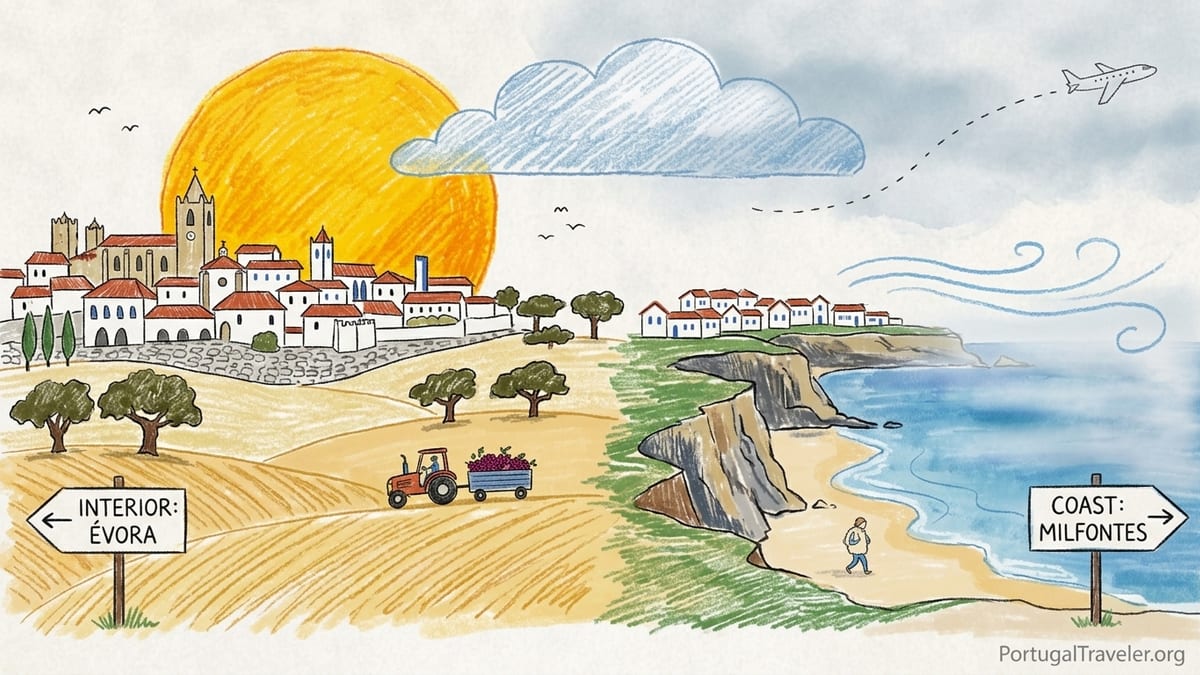
Understanding Alentejo’s Split Personality: Interior vs Coast
Alentejo is not a single climate. Inland hubs like Évora, Beja and Reguengos de Monsaraz sit on open plains where summer afternoons can climb into the mid to high 30s Celsius, and on some days still spike above 40. By contrast, coastal towns such as Vila Nova de Milfontes and Zambujeira do Mar sit on the Atlantic, where maximum summer temperatures are often closer to the mid 20s and tempered by consistent wind and sea fog. That contrast shapes almost every travel decision, from when to book a wine harvest visit to whether you can comfortably walk a cobbled town at midday.
In practice this means one month can feel like two different seasons in the same region. A July afternoon in the alleys of Évora’s historic center can feel punishing if you step out of the shade, while the same July afternoon on Almograve beach, a short drive away on the coast, might require a light jacket once the wind picks up. Any plan that treats “Alentejo weather” as a single line in a guidebook is likely to disappoint you on the ground. The more you separate interior from coast in your thinking, the more precisely you can choose your dates.
Trail planners know this difference well. The coastal Fishermen’s Trail of the Rota Vicentina, which runs in 13 official stages over about 226.5 kilometers, is formally promoted as a route to walk between September and June, not in the height of summer. That guidance reflects how exposed those coastal cliffs can feel in full sun, despite the ocean breeze, and how much effort it takes to slog through soft sand with no shade.
Harvest adds another layer of seasonality, particularly for wine travelers. Across the Alentejo wine region, white grapes are often picked from late August into September, while many red varieties continue through September and sometimes into early October, depending on altitude and the year’s weather. In those weeks, rural roads carry grape-laden trailers at dawn, and some estates open formal harvest programs or hands-on experiences for visitors, especially around September.
Spring: Flowers, Cool Walks and Empty Streets
My first deep introduction to Alentejo came one April, on a trip that looped from Lisbon through Évora and out toward the coast near Vila Nova de Milfontes. Inland, days hovered around the high teens to low 20s Celsius, with soft, slanting light that stayed gentle until midafternoon. I could walk the medieval streets of Évora after breakfast without thinking too much about shade, pausing under the arches around Praça do Giraldo to watch locals take their coffee. The white facades were bright but not blinding, and the stones underfoot felt cool enough that the heat of the day never drove me back to the hotel.
Outside town, the countryside had turned an almost improbable green. On a minor road toward the São Manços area, fields were dense with knee-high grass and wildflowers in yellow and purple, broken by cork oaks and pockets of olive groves. The practical effect for a visitor was simple: drives were scenic in every direction, and any short walk from the car became a pleasant stroll rather than a calculation about exposure. Dirt tracks were firm and dry enough that I could walk them in regular hiking shoes without worrying about mud.
That same trip included a detour to the Atlantic. When I reached Vila Nova de Milfontes, the coastal air felt markedly different. A breeze came off the river mouth and the ocean, cool enough that I pulled on a light fleece once the sun dropped. The sand was damp and compact, easy for walking in trainers, and low clouds drifted in and out, tinting the water steel-blue instead of summer turquoise. Restaurants along the waterfront were open but quiet, with plenty of empty tables and staff who had time to chat about the coming season.
Spring also worked well for walking-focused days. On an April morning when I followed part of a marked trail near the coast, I could afford a lazy start around 9:30 a.m. and still finish my main stretch of walking before the sun felt harsh. By midday, I was peeling off layers instead of desperately seeking shade. This is the period I recommend most strongly if your priority is town-wandering, day hikes or photography rather than swimming.
Summer: Heat in the Towns, Relief by the Atlantic
My perspective on Alentejo summer weather comes from time spent there in late June and July, based in Évora with forays toward the coast. In the interior, the heat shaped every day before I even left my guesthouse. By midmorning in Évora, white walls bounced light back into narrow lanes, creating pockets that felt like hair dryers aimed at your face. Thermometers on pharmacy signs routinely showed numbers in the low to mid 30s Celsius by early afternoon, and some days climbed higher. I learned quickly that serious sightseeing in town needed to be front-loaded.
I would step out just after 8 a.m., when the streets were still quiet and the stones held the cool of the night. The walk up to the Roman Temple and the cathedral passed almost entirely in shade at that hour, and the climb to the rooftop of the cathedral felt reasonable. By 11 a.m., that changed. The same rooftop was exposed, the handrail hot to the touch, and I timed my visit so I could drop back into the dim interior before the sun really asserted itself. From roughly 13:00 to 17:00, I treated the city like residents did, retreating indoors for lunch, a rest and work, and only emerging again when the light softened.
Shade existed, but it was uneven. Évora’s center has colonnades and recessed doorways, but once you stray beyond the most historic streets you can find yourself on long, unshaded stretches of pavement. On one particularly hot day, the short walk from a supermarket back to my accommodation felt longer than any vineyard tour I had done in cooler months. The countryside outside town had shifted to its summer palette. Fields that had been green in April were bleached gold and tan by late June, with dusty tractor tracks and hay bales instead of wildflowers. Visually it was beautiful in a stark way, but it also meant any rural walk required solid sun protection and plenty of water.
The coast told a different story. On a July escape to the Atlantic near Zambujeira do Mar, I drove out of the interior heat and watched the car’s outside temperature reading drop by several degrees as I approached the sea. Afternoon highs still felt like summer, but a constant wind off the water made it comfortable to sit at a beach café at 15:00 without seeking shade. On the cliffs above beaches such as Alteirinhos, that same wind could turn strong enough that I cinched down my hat and zipped up a light jacket, even as people below sunbathed on the sand.
Evenings illustrated the contrast even more. In Évora, July evenings remained warm long after sunset. I would walk out around 21:00 in short sleeves, join the local crowd for grilled meats and salads on restaurant terraces, and feel the heat radiating gently from the stone walls. Tables in the most central squares filled quickly, particularly on weekends, and indoor spaces sometimes felt stuffy. On the coast, dinners in the same season sometimes required a sweater. Sitting outside in Vila Nova de Milfontes, I remember wrapping my hands around a bowl of açorda alentejana more for warmth than for the garlic. Accommodation on the coast was generally busier than inland, especially at family-friendly guesthouses within walking distance of the beach, which often booked out weekends well in advance.
Autumn: Harvest, Softer Light and Wine Country at Work
Autumn has been my richest season in Alentejo, thanks to several stays in September that centered on wine and small towns. Around Évora and the surrounding wine estates, the countryside in early September looked tired but alive: vines heavy with grapes, fields dry and straw-colored, and olive groves shimmering in dusty silver. Mornings started cool enough to need a light layer, but by late morning the sun asserted itself again, which explains why local harvest crews began cutting grapes at first light.
On one September visit, I based myself near an estate that offered a harvest experience. The day started before 7 a.m., when the light was a pale band on the horizon and the air still held a hint of overnight cool. Walking between vine rows, I could feel how rapidly the temperature changed. By 9:30 a.m., sleeves were rolled up and hats firmly on. The estate paused picking by late morning, in part to protect grape quality but also because standing in the open rows for more than four or five hours became physically draining. For visitors, the lesson was clear: schedule any active outdoor experience, including cycling or long town walks, for early in the day.
Évora itself felt busier in September than in April. Restaurants that had been half full in spring now required a reservation if you wanted a particular terrace table at prime dinner hour. Accommodation around the main squares leaned toward full, driven by a mix of general tourism and wine travelers keen to be present for vindima. At the same time, the atmosphere stayed far from the crush you might associate with peak-season cities elsewhere in Europe. I still found it easy to duck down a side street and find quiet corners near lesser-known churches or sections of the old wall.
Autumn also brought subtle changes to the evenings. The heat of the day lingered less aggressively than in July, and by late September I sometimes needed a light sweater for after-dinner strolls. In rural guesthouses, owners talked about finally feeling the season shift, watching for the first meaningful rains that typically arrive sometime from late October into November. Those rains matter to travelers, because they darken the soil, freshen the air and begin to green up the first winter grass after the long dry spell.
On the coast, early autumn created a sweet-spot atmosphere. When I visited Vila Nova de Milfontes in late September, the Atlantic still felt swimmable without a wetsuit, especially in the river shallows, and daytime highs made beach hours pleasant. Yet the dense family crowds of August had already thinned. Many beach cafés remained open, but you could find space to park without circling, and front-row spots on restaurant terraces did not feel like prized real estate. The combination of warm water, manageable sun and calmer streets make this period one of the best for travelers who want both swims and walks.
Winter: Rain, Quiet Towns and a Different Kind of Beauty
My winter experience in Alentejo comes from a January and a February trip that focused on slower travel: lingering in Évora and Beja, visiting cork and olive country, and making a short coastal detour when the forecast opened a clear window. Winter in the interior replaced summer’s white glare with a softer, often grey light. Daytime temperatures hovered in the low to mid teens Celsius on many days, colder on some mornings, with a mix of dry, crisp days and periods of proper rain.
In Évora in January, I walked the streets in a warm jacket and scarf, grateful for the lack of crowds. Landmarks that in other seasons required patience felt almost like private spaces. The bone chapel echoed faintly with just two or three other visitors inside, and I could stand at the viewpoint near the aqueduct without weaving around tour groups. Rain showers had a real impact on daily plans, though. On some mornings, I delayed longer drives because bursts of heavy rain made the cobbles slick and reduced visibility on rural roads, and I kept a flexible list of indoor activities for wet spells.
The countryside underwent a transformation in these months. After the season’s first meaningful rains, fields began to green up again, though full wildflower displays waited for spring. Olive harvest was either ongoing or just completed in some areas, and I passed small tractors hauling crates near traditional mills. Farm tracks alternated between pleasantly firm and extremely muddy, depending on recent weather. On one February day, I attempted a short walk along an unpaved lane outside Beja and turned back after a kilometer when the clay stuck so firmly to my boots that each step added what felt like an extra kilo.
The coast in winter was another world entirely. On a clear February afternoon near Vila Nova de Milfontes, the Atlantic horizon stretched under a hard blue sky, but the wind cut sharply. I walked a short section above the cliffs and quickly zipped my jacket to the chin, pulling on gloves despite the fine weather. Beaches were almost empty except for a few dog walkers, and several seasonal cafés were shuttered. The upside came in the form of low accommodation prices and a sense that the coastline belonged to residents again. For photographers and people who like moody seascapes, this quiet winter period can be very appealing, as long as you are prepared for some days lost completely to storms.
Walking the Rota Vicentina: Why Season Matters So Much
Although I have not thru-hiked the entire Fishermen’s Trail of the Rota Vicentina, I have walked selected stages and connecting paths near Vila Nova de Milfontes and Zambujeira do Mar in late spring and early autumn. Those outings, combined with the official guidelines, underscore how strongly season should dictate your plans. The trail runs for roughly 226.5 kilometers, divided into 13 stages that hug the coast along high cliffs, beaches and fishing paths. The Rota Vicentina association explicitly recommends that walkers tackle these routes between September and June, not in midsummer, due to heat, exposure and the physical effort of sand walking.
On a May day from the outskirts of Vila Nova de Milfontes toward Almograve, I started walking around 8:30 a.m. The air was cool and scented with rockrose, and the path alternated between compact soil and sand. Even in this comparatively mild season, I felt how demanding the sandy segments could be. Each step slid back slightly, turning a 15 kilometer route into something that felt longer. By midday, the sun had gained enough strength that sections without wind felt hot on the back of my neck, despite the air temperature staying in the low 20s Celsius. I was grateful that I had already completed most of the distance by early afternoon.
A September outing closer to Zambujeira do Mar provided another perspective. The ocean remained warm enough for a quick swim at the end, and the cliffs were dotted with late-season vegetation instead of the full spring bloom. Temperatures on the weather report looked moderate, but on the exposed cliff tops the sun reflected off sand and rock, creating a dry, almost shimmering light. Shade was rare to nonexistent. I carried more water than I thought I would need and used it all. In the distance, I could see whitecaps where the northerly wind picked up, yet on sections sheltered from the wind the heat felt concentrated.
Services along the trail also vary by season. In late spring and early autumn, many small guesthouses in villages such as Almograve, Cavaleiro or Odeceixe were open, and I could find dinner at local restaurants that served both residents and walkers. In winter, according to local hosts and trail notes, some accommodations close or reduce operations, and transport options between trailheads shrink. The upside of those quieter months is solitude and cooler walking conditions, as long as you are ready for rain and short daylight hours. By aligning your itinerary with the recommended September to June window, and favoring March to early June or late September to early November for multi-day walks, you give yourself the best balance between weather, trail comfort and open services.
Matching Your Trip to the Right Month and Place
Bringing all these layers together, the “best time” to visit Alentejo is really a question of matching month, geography and activities. If your focus is walking historic towns, exploring vineyards and driving through countryside that still feels alive with color, late March through May and late September through October stand out. In those periods, inland temperatures are generally more comfortable for extended walking, and the light flatters both whitewashed alleys and rolling vineyard hills. Spring gives you flowers and cool air, while autumn gives you harvest energy and softer, golden tones in the vines.
If you are drawn primarily to Alentejo’s beaches and coastal villages, yet dislike intense heat, consider June and September on the Atlantic. In June, interior plains may already be hot in midafternoon, but the coast can still feel fresh and energizing, with long evenings and a mix of locals and early-season travelers. September keeps the water warm enough for swimming in many spots while releasing much of the August crowd pressure. In both months, wind is a near-constant factor. Pack layers and be ready for evenings in a fleece even when inland towns are still eating outdoors in shirtsleeves.
For people who prioritize budget and quiet over guaranteed perfect weather, winter in the interior can be appealing. January and February in Évora or Beja offer low room rates, easy restaurant reservations and the pleasure of seeing major sights with very few other visitors. The trade-off is a higher chance of rain and shorter days, which require a flexible mindset and a list of cozy, indoor stops such as wine tastings, food halls or museums. If you intend to mix in any walking on unpaved tracks, good waterproof footwear becomes essential due to mud.
One final consideration relates to wine tourism. If you want to witness or participate in harvest, look toward late August through September, with the understanding that exact timing shifts each year based on weather and grape ripeness. In some years, picking starts in late August and is largely complete by late September, while in others work continues into early October, especially for reds and higher-altitude vineyards. Because wineries are at their busiest during vindima, you should confirm whether estates you hope to visit actually welcome guests at that time, or if they prefer to focus exclusively on production and schedule tastings earlier or later in the year.
The Takeaway
Alentejo rewards travelers who respect its seasons and its internal contrasts. The same July sun that turns the plains around Beja into a wavering mirage can feel pleasantly moderated on a windy cliff above Zambujeira do Mar. A September day that starts with cool, grape-scented air in a vineyard near Évora may end with a warm dip in the Atlantic near Vila Nova de Milfontes. A February morning that sends you ducking into a café to escape a rain burst might also give you a bone chapel almost to yourself.
By separating interior from coast in your planning, and by paying attention to how heat, harvest, coastal wind and crowd patterns shift through the year, you can choose a “best time” that is specific to your own priorities. Walkers and photographers will find most joy in spring and autumn, wine enthusiasts may gravitate toward harvest, beach lovers can split the difference with early or late summer on the Atlantic, and budget-minded travelers can embrace winter’s quiet charm inland. Rather than chase a single perfect month, think in terms of the experience you want on the ground, then let Alentejo’s seasons guide you there.
FAQ
Q1. What is the best month to visit Évora if I want to walk a lot?
For heavy walking in Évora and other inland towns, April, May, late September and October work particularly well, when daytime temperatures are usually mild enough to explore for several hours without the intense afternoon heat of midsummer.
Q2. When is the Alentejo wine harvest, and can visitors take part?
Harvest in the Alentejo wine region often runs from late August through September and sometimes into early October, depending on the year and the grape variety. Some estates near Évora, Reguengos de Monsaraz and other subregions offer paid harvest programs or hands-on experiences, but many are busy and require advance booking or may limit visits during peak picking days.
Q3. Is July too hot to visit the interior of Alentejo?
July in the interior can be very hot, with afternoon highs commonly in the 30s Celsius and sometimes higher. It is still possible to enjoy the region if you plan your main sightseeing early in the morning and again in the evening, use midday for rest indoors, and ensure that your accommodation has effective air conditioning and access to shade or a pool.
Q4. How does the Atlantic coast of Alentejo feel in summer compared to inland areas?
In summer, the Atlantic coast around towns like Vila Nova de Milfontes and Zambujeira do Mar is usually cooler and windier than the interior. Afternoon temperatures are often several degrees lower, the sea breeze offers relief, and evenings can feel cool enough for a light jacket, even when inland towns remain warm after dark.
Q5. When should I hike the Fishermen’s Trail on the Rota Vicentina?
The Fishermen’s Trail, a roughly 226.5 kilometer coastal route divided into 13 stages, is intended to be walked between September and June. Within that window, many walkers favor March to early June and late September to early November, when temperatures and sun exposure are more comfortable and most local services are open.
Q6. Is winter a good time to visit Alentejo?
Winter can be a rewarding time to visit, especially for travelers who value quiet streets, lower prices and a slower pace. Inland towns such as Évora and Beja see fewer visitors, and rain brings a greener landscape, but you need to be ready for wet days, cooler temperatures and shorter daylight hours.
Q7. Will restaurants and accommodations be open on the coast in the off season?
On the Atlantic coast, many seasonal beach cafés and some smaller accommodations close or operate on reduced hours between roughly November and February. Larger hotels and year-round restaurants in main towns usually stay open, but if you plan a winter or early spring coastal trip, it is wise to check opening dates and book key places in advance.
Q8. Are spring flowers really a reason to choose March or April?
Yes, after winter rains the fields and road edges in much of Alentejo burst into bloom in spring, typically from late March into April. The result is a carpet of green grass and wildflowers that transforms drives and short walks, making the landscape feel softer and more vibrant compared with the dry, golden tones of high summer.
Q9. How far in advance should I book for September in wine country?
September overlaps with both the wine harvest and a broadly popular travel period, so booking several months ahead is sensible for sought-after rural guesthouses and harvest-themed experiences near major wine towns. In smaller villages and less publicized estates, you may find space closer to your dates, but relying on last-minute availability in this period is risky.
Q10. Can I combine beach time and vineyard visits in a single Alentejo trip?
It is quite feasible to combine both, especially from late May through early October. Many itineraries pair inland bases such as Évora or Reguengos de Monsaraz for winery visits and historic sites with a coastal stay near Vila Nova de Milfontes or Zambujeira do Mar, keeping driving times reasonable while allowing you to experience both the hot, dry interior and the cooler, windier Atlantic coast in one journey.