


Planning a Lisbon Region trip is harder than it looks. Lisbon city prices are easy to research, but once you start adding Sintra, Cascais, Setúbal, the Costa da Caparica beaches, or even a rental car into the mix, the budget can jump in ways many guides do not spell out. Based on real, recent prices from official operators and local businesses, here is what a multi day, multi base Lisbon Region trip actually costs in 2025, and which choices quietly raise or lower the bill.
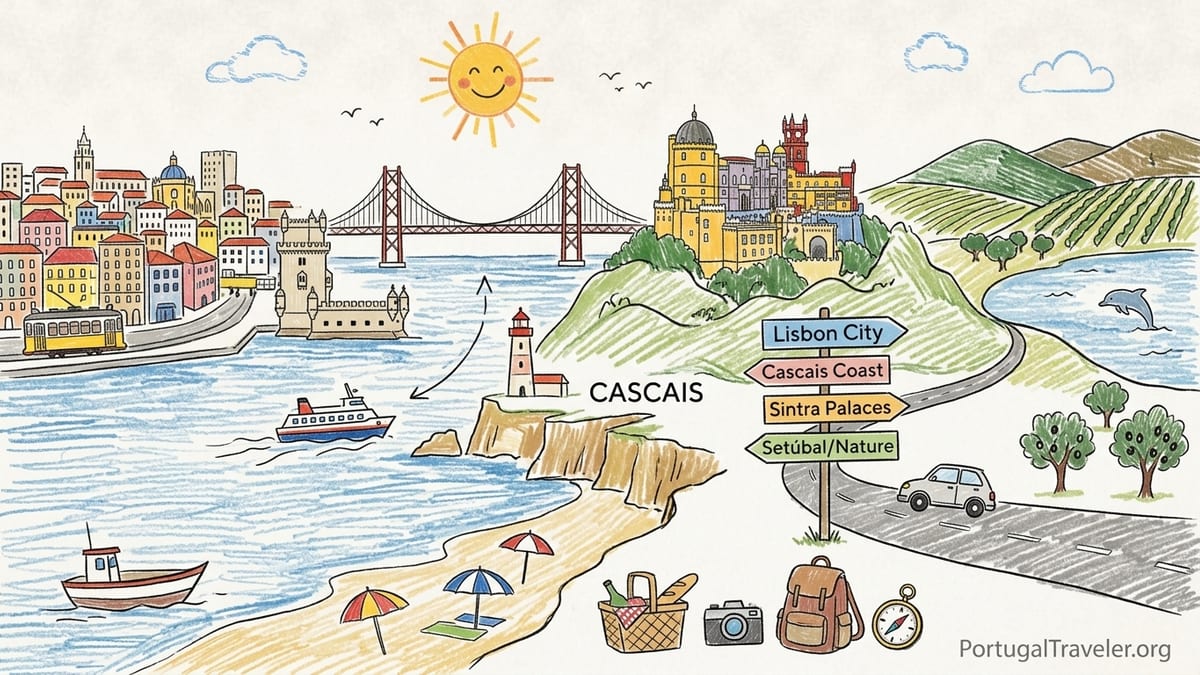
How I Structured a “Lisbon Region” Trip (Not Just Lisbon City)
For budgeting, it helps to picture the Lisbon Region as several practical bases rather than one long city break. A common pattern is four to five nights in central Lisbon, two nights in Cascais or Estoril on the coast, and one or two nights near Sintra or in Setúbal for nature and wine country. Transport between these hubs is straightforward and uses a mix of suburban trains, regional buses, ferries across the Tagus River, and occasional rental car days for harder to reach beaches and natural parks.
Most visitors arrive at Lisbon Airport and start with a taxi or ride hail into the city. In 2025, a regulated airport taxi to Baixa or Chiado typically costs the equivalent of around 15 to 20 euros including luggage supplements in normal traffic, while an airport metro ticket with rechargeable Viva Viagem card comes in closer to 2 to 3 euros per person. That first airport transfer immediately sets the tone. If two people choose taxis both ways instead of using metro or bus even once, they are already adding 25 to 30 euros to the region budget.
Once you add coastal bases like Cascais or Setúbal, extra nights in smaller hotels or guesthouses, repeated day trips to Sintra, and beach days that require paid chairs and trains, the total regional budget often ends up 25 to 40 percent higher than a pure Lisbon city stay of the same length. The goal of this breakdown is not to scare you, but to show where that extra money goes and how to control it.
Accommodation Costs Across Lisbon, Cascais, Sintra and Setúbal
Accommodation is the biggest line item on a Lisbon Region itinerary, and the city center is no longer a bargain. For a couple traveling in shoulder season such as April, May, September or October, a central mid range hotel in Baixa, Chiado or Avenida da Liberdade commonly runs around 150 to 220 euros per night for a standard double with breakfast. Simple but well reviewed guesthouses and apartments in adjacent neighborhoods like Arroios, Intendente or Alcântara can still be found closer to 90 to 130 euros per night if you book early and avoid peak festival weekends.
On the coast, Cascais and Estoril have a clear resort premium. Centrally located four star hotels with sea views often start around 200 to 260 euros per night in spring and autumn and can rise much higher in July and August. More modest pensões and guesthouse style stays further from the promenade usually fall between 100 and 150 euros per night for a double room. Compared with Lisbon, a similar standard of room by the beach often costs 20 to 40 euros more per night, which adds up quickly over a multi day stay.
Sintra looks cheaper at first glance, but there are a few budget traps. Basic guesthouses or small inns in Sintra town or nearby villages can be around 80 to 120 euros per night for a double in shoulder season, but properties within walking distance of the historic center and palaces are pushed higher by day trip demand. Many travelers also underestimate the convenience cost. A cheaper stay on the outskirts might require frequent tuk tuk rides or local buses, which can add roughly 10 to 20 euros per day to reach sites comfortably, especially on days with multiple palace visits.
Setúbal and the south side of the Tagus remain better value. Standard hotels in the town center often range from 80 to 130 euros per night outside the hottest weeks of summer, and guesthouses can be even less. Here, your accommodation line can drop by 30 to 70 euros per night compared with similar comfort levels in Cascais or central Lisbon. Over three nights, that is a noticeable saving that can easily pay for a rental car day or a special seafood meal.
Trains, Buses and Ferries: What Getting Around Really Costs
The good news is that public transport in the Lisbon Region remains one of the most budget friendly parts of the trip, especially if you understand ticket types. A rechargeable Viva Viagem or Navegante card lets you load single fares, day passes or zapping credit, and a standard metro or urban bus ride inside Lisbon typically costs around 1.80 to 2.00 euros when using the card. A 24 hour pass that covers metro, buses and trams comes in around 7 to 8 euros and quickly pays off on sightseeing heavy days.
For regional trips, the suburban train from Lisbon Cais do Sodré to Cascais is a key route. A one way ticket using the rechargeable card is usually a little under 3 euros and the journey takes about 40 minutes along the coast. A couple moving between Lisbon and Cascais twice, plus one separate day trip for a beach day, will often spend about 25 to 30 euros total on that line. Compared with taxi prices on the same route, which can easily run to 35 to 45 euros one way depending on pick up point and traffic, the train saves well over 50 euros across a typical week.
To reach Sintra, most visitors take the urban train from Rossio station. A one way ticket on this line also costs in the region of 2 to 3 euros and the trip is about 40 minutes. A single return day trip for two people has a transport cost of roughly 8 to 12 euros if you stick to the train and local buses. The budget goes up if you rely on rideshare cars between palaces, where a single short hop can be 6 to 10 euros, or if you join private small group transfers from Lisbon which start closer to 50 to 80 euros per person for the day including guiding.
South of the river, ferries from Cais do Sodré to Cacilhas or from Terreiro do Paço to Barreiro add less than 4 euros each way per adult and deliver classic views of the Tagus. A sunset there and back for two people still comes in under 15 euros in fares. The important thing is to keep small trips efficient. Scattered single metro tickets and separate suburban train trips can easily reach 8 to 10 euros per person per day. In contrast, pairing up journeys and using 24 hour transport passes on heavy travel days can bring that down toward 5 to 7 euros per day and keep the overall transport budget in line.
Rental Cars, Tolls and Parking: Where Costs Climb Fast
The biggest surprise for many Lisbon Region travelers is how quickly a “cheap” rental car day turns expensive once you add tolls, fuel and parking, especially around Cascais, Sintra and the Costa da Caparica beaches. Daily rental rates for compact cars from large agencies at Lisbon Airport can start around 25 to 35 euros per day in low to shoulder season, but realistic prices for automatic transmission, a well known brand and full cover with low excess are often closer to 45 to 70 euros per day. City center pick ups sometimes cost slightly more than airport collections.
Portuguese highways use a mix of traditional toll booths and fully electronic tolls. A drive between Lisbon and Setúbal via the main bridge and motorway typically collects toll charges in the 4 to 7 euro range each way, depending on route. Over a two day loop that includes Setúbal and the Arrábida Natural Park, this can add 15 to 20 euros in tolls alone. Many visitors also rent an automatic toll transponder from the agency for around 1.50 to 2.00 euros per day plus the actual toll amounts, which makes driving easier but still needs to be budgeted.
Parking is the other hidden cost beyond the city. In Cascais and Estoril, central car parks near the marina or beaches often charge approximately 1.50 to 2.50 euros per hour during the day. A relaxed afternoon that runs five hours can therefore reach 10 to 12 euros in parking, and full day stays for beach hopping may cost 15 euros or more. Sintra town has a mix of limited free areas and paid parking close to the historic center. In practice, many visitors end up in paid car parks where several hours between palace visits often cost 8 to 15 euros. When you add this to the car daily rate and fuel, a “flexible” Sintra rental car day for two people can easily total 90 to 120 euros without any attraction tickets included.
The flip side is that some bases let you skip the car entirely. Staying in central Cascais and using the coastal walking path and trains removes parking costs altogether. In Setúbal, it is possible to book boat trips and local taxis to reach beaches and still stay below the cost of a fully loaded rental car day. Choosing one or two targeted car days instead of a full week rental can reduce a typical region budget by several hundred euros.
Food and Drink: Daily Spend from Bakeries to Seafood Feasts
Food prices in the Lisbon Region still feel reasonable compared with many other European capitals, but costs add up quickly when every meal comes with a sea view and a bottle of wine. A typical breakfast in a neighborhood pastelaria, with a coffee and two pastries, usually comes in around 4 to 6 euros per person. Many city hotels include breakfast, but central guesthouses and apartments may not, so independent morning bakery runs are useful to factor into the daily total.
For lunch, a menu do dia, or fixed price daily menu, at a simple tasca style restaurant in less touristy areas of Lisbon or Setúbal often costs between 10 and 15 euros and usually includes bread, a main dish, sometimes soup or dessert, and a basic drink. In Cascais or in the center of Sintra near the palaces, similar meals for visitors often run closer to 15 to 22 euros without dessert. A couple who chooses sit down restaurant lunches every day along the coast will likely spend 35 to 45 euros per day on lunch alone, compared with 20 to 25 euros if they mix in bakeries, take away sandwiches and supermarket picnics.
Dinner is the moment that can swing the budget most dramatically. Casual seafood restaurants in Setúbal, known for grilled fish and cuttlefish dishes, can offer abundant platters for roughly 15 to 20 euros per main course. A shared bottle of local wine is often 10 to 15 euros. For two people, a generous meal might land in the 40 to 60 euro range including starters and dessert. In contrast, seafront restaurants in Cascais and stylish spots in central Lisbon can easily charge 20 to 30 euros for mains and 20 to 30 euros for a mid range bottle of wine. A full dinner for two naturally climbs into the 70 to 100 euro bracket.
Alcohol and snacks are where small choices accumulate. A draft beer or glass of house wine at a neighborhood bar often costs 2 to 4 euros, while sunset cocktails with a view can run to 10 to 14 euros each. Ice creams along the Cascais promenade are frequently around 3 to 4 euros per scoop, and several per day for a family adds a noticeable line item. In practice, a frugal couple who leans on bakeries, food courts inside shopping centers and occasional sit down meals might keep their daily food and drink budget around 40 to 60 euros. A pair who opts for restaurant lunches and dinners with drinks most days will see the region average rise towards 80 to 120 euros per day.
Beaches, Nature and Attractions: Entry Fees vs “Free” Days
Beaches in Portugal do not charge entrance fees, but that does not mean beach days are free. On many popular stretches of the Costa da Caparica, near Cascais or around Sesimbra and the Arrábida Natural Park, a pair of sun loungers with an umbrella often costs between 15 and 25 euros per day in summer or warm shoulder season weather. A more budget conscious setup with a single lounger or late afternoon timing can reduce this, but a week with three or four full beach days for a couple can still reach 60 to 80 euros just in chair rentals, plus food and drinks.
Palaces and monuments are the other major paid experiences. In Sintra, individual palace tickets have risen steadily in recent years. A combined visit to two or three of the most famous sites can easily total around 30 to 45 euros per person in entrance fees. Elsewhere in the region, prices are milder. Entry to a lighthouse museum or a small local fort along the Cascais coast often costs under 5 euros per person, and some miradouros, or viewpoints, remain free. The lift to the Christ the King monument across the river from Lisbon charges a small fee in the low single digits of euros.
Boat trips and guided excursions are the most variable category. A dolphin watching and Sado Estuary cruise from Setúbal with a respected operator commonly costs around 40 to 60 euros per adult for a few hours. Wine tasting experiences in the Azeitão area begin around 15 to 25 euros per person for a basic visit and tasting, rising for more elaborate tours with food pairings. Coastal bike rentals in Cascais or electric bike tours toward Guincho Beach usually cost approximately 15 to 35 euros per person depending on duration.
It is helpful to picture your attraction budget per day rather than by ticket. On heavy sightseeing days with multiple paid entries and a boat trip, a couple can easily spend 80 to 150 euros purely on experiences. On slower days centered on hiking in Sintra’s forests or wandering free coastal paths, that figure may fall to almost zero beyond transport and snacks. Planning a rhythm that alternates between paid heavy days and nearly free days is one of the most effective tools for keeping the regional total under control.
Putting It Together: Sample Daily Budgets by Travel Style
Combining these pieces, a realistic per day budget for the Lisbon Region varies widely by style. For a frugal but comfortable couple in shoulder season staying mostly in guesthouses outside the very center, using public transport for all intercity moves, cooking occasionally and focusing on free or low cost activities, a total of around 140 to 190 euros per day is often sufficient. That ballpark assumes accommodation around 90 to 120 euros per night, 35 to 50 euros for food and drink, 10 to 20 euros for transport and 10 to 20 euros for occasional entrance fees spaced out over the trip.
A mid range pair who chooses central hotels in Lisbon and a couple of nights in Cascais, eats out for nearly all meals including moderate restaurant dinners, and adds several paid attractions and a boat trip, will more realistically see region totals of around 220 to 320 euros per day. In this band, accommodation might average 140 to 200 euros, food and drink 70 to 100 euros, transport 15 to 25 euros, and experiences 25 to 60 euros depending on the day.
At the upper end, a comfort focused couple booking sea view rooms in Cascais, using rental cars for flexibility, dining in high end restaurants and joining organized day tours to Sintra and Setúbal can readily spend 350 to 500 euros per day across the region without entering luxury territory. The jump comes largely from accommodation, car rentals and premium dining rather than from public transport and standard entrances. Understanding this split helps you prioritize where to spend and where to simplify.
Families and small groups often benefit from economies of scale on apartments and car hire but pay more in total for meals and attractions. A family of four in a self catering apartment in Setúbal might pay 150 euros per night for a spacious place and keep restaurant meals to once a day, which can still keep their per person daily cost under that of a couple staying in smaller hotel rooms and eating all meals out on the Cascais promenade.
Common Budget Mistakes in the Lisbon Region (And How to Avoid Them)
The most common budget mistake is underestimating how transport and attraction choices compound once you step beyond Lisbon city. One example is treating Sintra as multiple separate day trips with return tickets instead of grouping its palaces into a single or double focused visit with efficient routing. Each extra round trip train for two people plus local transport and casual meals near the palaces can quietly add 40 to 60 euros to the trip total, compared with a better planned single long day.
Another frequent surprise is rental car creep. Travelers may book a low advertised rate and then accept several optional extras at pick up, including full insurance, toll transponder, additional driver fees and sometimes high fuel prepayment options. On a three day rental that was supposed to cost around 90 euros, these add ons and tolls can push the real bill toward 180 to 230 euros before parking. In busy months, arriving by car late in the morning to popular beaches or Sintra palaces can also mean that only higher priced parking or longer shuttle bus routes are available.
Food related overspending often comes from always choosing the most scenic location. In Cascais, it is easy to have every coffee, ice cream and drink directly on the main waterfront. Each item might be only a euro or two more than inland, but spread across ten days and multiple travelers, that habit can push the food and drink budget hundreds of euros higher than necessary. A useful pattern is to enjoy one “view premium” meal or drink per day and keep the rest in local bakeries, inland streets or even supermarket deli counters.
Finally, some visitors lock themselves into inflexible tours because they fear navigating public transport. Private day tours from Lisbon to regional destinations provide comfort and insight but frequently cost 70 to 120 euros per person, while a do it yourself day using suburban trains and a couple of local taxis might land under 30 to 40 euros per person including entries. Picking one or two high value guided days and handling the rest independently is often a better financial balance.
The Takeaway
A Lisbon Region trip that stretches beyond the city center into Cascais, Sintra, Setúbal and the nearby beaches is rarely “cheap,” but it can still represent solid value if you know where costs cluster. Accommodation, car rentals, sea view restaurants and dense sightseeing days do the most damage to the budget. In contrast, public transport, bakeries, local tascas, self guided walking routes and free viewpoints allow for rich experiences with modest spending.
In practice, many travelers find that adding just two or three region bases and a handful of special experiences, such as a dolphin watching cruise or a memorable seafood feast, increases their total trip bill by several hundred euros compared with staying in Lisbon alone. Treated deliberately rather than accidentally, that extra cost can feel like money well spent. Plan your heavy and light days, pick your splurges early and leave room for slower, low cost moments that make the Lisbon Region feel both expansive and surprisingly manageable for your wallet.
FAQ
Q1. How much should I budget per day for a Lisbon Region trip as a couple?
For a comfortable but not luxurious experience in shoulder season, many couples spend around 200 to 280 euros per day across accommodation, food, transport and attractions, with careful planners able to come in lower by choosing guesthouses, public transport and fewer restaurant meals.
Q2. Is it cheaper to stay only in Lisbon and do day trips, or to sleep in places like Cascais and Setúbal?
Sleeping only in Lisbon can be cheaper if you pick mid range or budget areas and use suburban trains for day trips, but stays in Setúbal often offer better value accommodation and food, while Cascais tends to be more expensive per night because of its resort character.
Q3. Do I really need a rental car for the Lisbon Region?
You do not need a car for Lisbon, Cascais or Sintra thanks to good trains and buses, but a one or two day rental can be useful for beaches in the Costa da Caparica area, Arrábida Natural Park or scattered wineries that are slower to reach with public transport.
Q4. How much do airport transfers cost into central Lisbon?
A metered taxi from Lisbon Airport to central neighborhoods like Baixa or Chiado usually costs around 15 to 20 euros including basic surcharges in normal traffic, while metro and bus options on a rechargeable card are closer to 2 to 3 euros per person each way.
Q5. What do typical meals cost in Lisbon and nearby coastal towns?
Breakfast in a bakery often costs 4 to 6 euros per person, simple lunch menus 10 to 15 euros inland and closer to 15 to 22 euros in tourist hotspots, while dinner for two with wine ranges from roughly 40 to 60 euros in local spots to 70 to 100 euros in popular seafront restaurants.
Q6. How expensive are attractions like palaces and boat trips?
Visiting two or three major palaces around Sintra can easily total 30 to 45 euros per person in entrance fees, and regional boat trips such as dolphin watching cruises from Setúbal often cost around 40 to 60 euros per adult for several hours on the water.
Q7. Are beaches in the Lisbon Region free to visit?
Beach access itself is free, but in popular areas a pair of loungers with an umbrella usually costs 15 to 25 euros per day, and you should also factor in transport, parking if you drive, and food or drinks from beach bars.
Q8. When is the most budget friendly time to visit the Lisbon Region?
April, May, late September and October are often the best value, with lower accommodation prices, reasonable weather and fewer crowds than peak summer, though some seasonal beach services may have reduced hours outside July and August.
Q9. How much should I set aside for public transport during a week long stay?
A traveler who uses metro, trams, suburban trains and ferries most days, including several day trips, might reasonably spend 40 to 70 euros per person over a week, especially if they combine journeys using 24 hour passes on the busiest days.
Q10. What are the easiest ways to keep a Lisbon Region trip on budget without feeling deprived?
Staying in well connected but slightly less central neighborhoods, mixing restaurant meals with bakery or supermarket options, relying on public transport instead of full week car rentals, grouping major paid attractions into a few days and enjoying free viewpoints, coastal paths and city walks are all effective strategies for reducing costs while still experiencing the region fully.