


Madeira’s tourism board likes to describe the island as an open-air adventure park in the Atlantic, and after a recent two-week trip I understand why. I spent those days walking levadas, hiking mountain ridges, bobbing about on a whale watching boat, scrambling down canyons, soaking in natural rock pools, riding cable cars and eating more than my share of limpets and passionfruit tarts. Some of those experiences were so good that I would happily book them again tomorrow. Others felt crowded, rushed or simply not worth the time once I saw how much the island really offers. This article focuses on the things I actually did, what they cost me, how they worked in practice and, most importantly, whether I would repeat them.
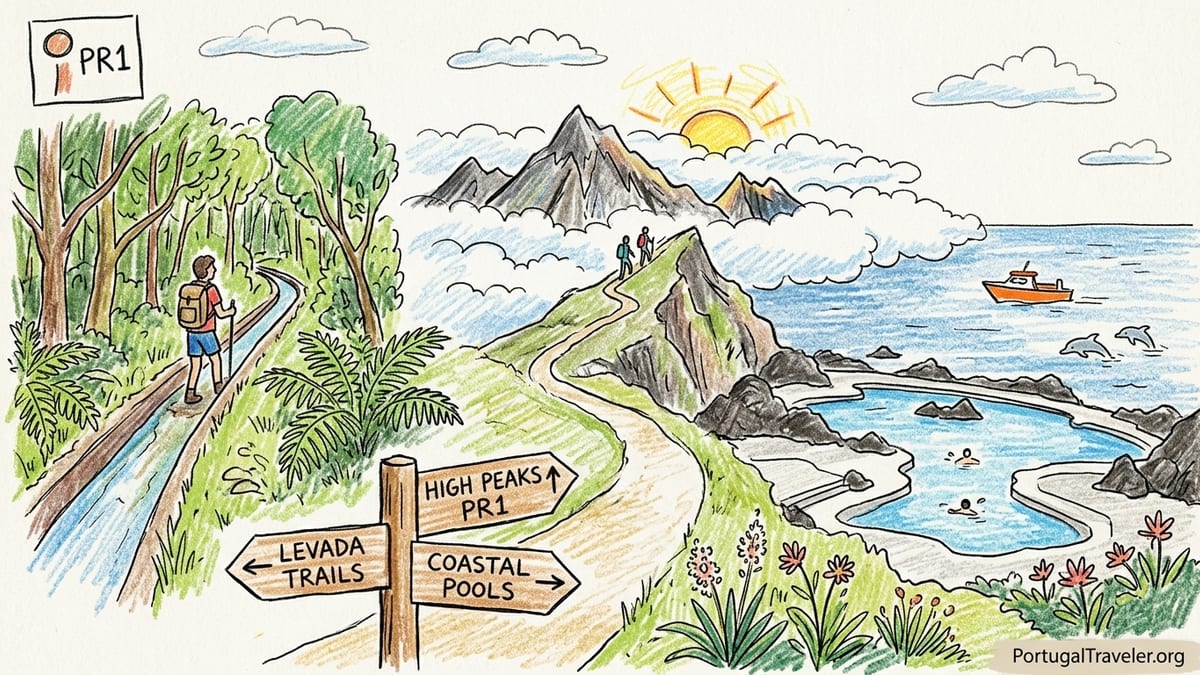
Levada Walking: When Madeira’s Famous Trails Live Up To The Hype
I booked two levada days, both on official PR-numbered trails that now require advance reservations and a small fee at the trailhead. On one morning I joined a guided walk on Levada do Rei, a forested canal path in the north of the island often described as one of the more peaceful classics. I booked through a mid-size operator in Funchal that runs daily walks, paid just under 50 euros for hotel pickup, guiding and insurance, and another few euros per person for the levada access fee at the start of the trail. The outing took about five hours door to door, with roughly three and a half hours on the trail itself. The walking was mostly level, with some muddy sections and narrow ledges, but it felt manageable for anyone of average fitness who is comfortable with several hours on their feet.
The booking process was straightforward: I confirmed online the afternoon before, received a WhatsApp message with pickup time, and paid by card in the minibus. Our group was eleven people, which felt close to the upper limit of what still counts as a pleasant nature walk. The guide set a steady but not rushed pace, paused often for plant explanations and photo stops, and checked everyone’s footwear at the trailhead. I wore trail-running shoes with good grip and was glad I did; one section crossed a shaded rock wall where irrigation water had splashed onto the path. The weather that day started cloudy and cool around 15 degrees Celsius and brightened into hazy sun, classic laurel-forest conditions with damp air and filtered light. I would absolutely repeat this specific walk, ideally again on a weekday outside school holidays to keep the trail quieter.
In contrast, my attempt to walk the famous Levada das 25 Fontes from Rabaçal was the closest I came to regretting a day out. I reserved a trail entry slot a few days in advance, drove myself up to the Paul da Serra plateau and paid for parking near the visitor area. Even midweek, the approach road and the shuttle down to the trail start were busier than anything I had seen elsewhere on the island, with a queue of minibuses and coaches already lined up by mid-morning. On the path itself I found long, single-file stretches at walking-pace traffic, frequent bottlenecks at narrow corners and a waiting line at the final waterfall basin.
The levada itself is genuinely beautiful, with dripping moss walls and side falls, but between the jostling for handholds and the constant over-the-shoulder pressure to keep moving, it felt less like a hike and more like being part of a slow-moving procession. The full outing from car park to waterfall and back took about four and a half hours, of which a good portion was spent either waiting or overtaking. Physically it was not demanding beyond a few steeper connectors, but mentally I found it tiring. I would not repeat 25 Fontes in this format. If I wanted another Rabaçal day I would either book a small-group guided variant that starts very early or choose an alternative levada in the same region with fewer tour buses.
High Ridge and Peak Hiking: Above-the-Clouds Views With Real Effort
Madeira’s high mountains were the highlight of my entire trip. I devoted one full day to the classic traverse between Pico do Arieiro and Pico Ruivo, often called PR1, and a second shorter morning to watching sunrise from Pico do Arieiro alone. For the traverse, I booked a one-way transfer service from Funchal that dropped us at Pico do Arieiro and collected us a few hours later at the Achada do Teixeira side. The transfer cost around 30 euros per person, booked two days in advance via the operator’s website, and the driver collected payment in cash on pickup. The walk itself took my partner and me just over five hours including breaks, covering steep stairways, tunnels and exposed zigzags with substantial elevation gain and loss.
This hike requires proper preparation. I wore lightweight hiking boots, carried a waterproof jacket, several layers, headlamp for the first tunnel and around two liters of water. The weather swung from brilliant sun to full white-out fog multiple times, with temperatures at the ridgeline dropping to around 8 degrees Celsius whenever the clouds rolled in. Physically, this felt like a strenuous mountain day comparable to a full-day alpine ridge hike, and I would only recommend it to travelers who are used to longer climbs and are comfortable with heights. The payoff, however, was extraordinary. When the clouds parted, the jagged volcanic peaks rose like islands in a white sea, and looking back along the staircase we had just climbed underlined how wild this section of Madeira still feels.
By contrast, my sunrise-only visit to Pico do Arieiro involved far less effort but came with crowds. I drove up myself, arriving about 30 minutes before sunrise, and found the main car park already close to full with rental cars and sunrise tours. Parking was free when I visited, but I had to squeeze into a spot along the access road. From the car it was an easy ten-minute walk to the main viewpoint platform and a slightly longer stroll along the first section of the PR1 path. Sunrise that morning was spectacular, with a clear inversion layer and the sun breaking through low clouds, but the number of tripods and selfie sticks made the experience feel more like a viewing event than a quiet mountain moment.
Was it worth it? Yes, but with caveats. I would repeat the full PR1 traverse in a heartbeat, ideally again with a transfer so I would not have to worry about logistics. I might skip a second sunrise at the main platform, or at least aim for a shoulder-season weekday and stand farther along the trail where the crowd thins out. If you are short on time and fitness, a short out-and-back walk from Pico do Arieiro still delivers dramatic scenery without committing to the full mountain day, as long as you bring warm clothing and respect the altitude conditions.
Natural-Pool Swimming and Coastal Viewpoints: Porto Moniz, Seixal and Beyond
Swimming in Madeira’s natural rock pools felt like stepping into the tourism-board brochure, but in a good way. I dedicated one north-coast day to driving from Funchal to Porto Moniz, stopping first at a viewpoint above Seixal and then at the free natural pools near the village before continuing to the main paid complex in Porto Moniz. At Seixal, I parked beside the road above the beach and walked five to ten minutes down a steep lane to reach the lava-rock pools that fill with Atlantic water at mid to high tide. There was no entry fee, no lifeguard presence that morning and only a dozen or so people in the water. Conditions were calm with small Atlantic swells, but I still kept an eye on wave sets and stayed clear of outer rocks where surges were strongest.
In Porto Moniz, the town’s main natural pool complex is a structured facility with changing rooms, lifeguards and a marked swimming area framed by black volcanic rock. When I visited, the adult entry fee was under 10 euros for the day, payable at a kiosk where I could use a card. Parking at the seafront road was free but busy; I arrived before 11 a.m. and still managed to find a spot within a few minutes’ walk. The pools themselves were busier than Seixal, with families, local swimmers doing laps and a mix of day-trippers, yet because the area is large it did not feel uncomfortably packed. The water was cooler than the air but incredibly clear, with fish darting between rocks underfoot.
In terms of value and repeat potential, Porto Moniz sits high on my list. For a single-digit entry fee I could swim, sunbathe on the concrete terraces, use basic facilities and watch waves crash safely against the outer walls. I stayed around three hours and would happily return on a future trip, preferably again by car so I am not constrained by the limited bus schedule. The only mild negative was the concrete underfoot, which becomes slippery in places; I would bring thin water shoes next time. Seixal’s free pools felt more raw and photogenic, especially with the steep cliffs and dark sand beach in the background, but I would treat them as a shorter stop rather than an all-day base because amenities are minimal.
Elsewhere along the coast I visited several signed viewpoints that fill Instagram feeds, including Cabo Girao skywalk on the south coast. The glass-floored platform there delivered impressive cliff views and a vertigo-inducing look at the sea far below, but the experience was marred by queues for photo angles and a surprisingly commercial feel, with souvenir stalls taking up much of the space behind the viewing area. The entry fee was modest, just a few euros via a turnstile, but I left after twenty minutes feeling that the more informal viewpoints along the old coastal roads offered almost as much drama with far less crowding. I would not make a skywalk repeat visit a priority on my next trip.
Whale Watching and Ocean Activities: Open Water Highs and Lows
Whale and dolphin watching is one of Madeira’s marquee activities, and I tested it on a three-hour catamaran cruise from Funchal. I booked a mid-afternoon departure the previous day directly at the operator’s kiosk in the Marina do Funchal, paying 40 euros per adult for a standard sailing-catamaran trip with a short swim stop. Check-in was thirty minutes before departure. The boat left the marina right on time, motored west along the coast and cut engines whenever the spotter network or crew identified animals. During my outing we saw a small pod of common dolphins riding the bow wave and a more distant group surfacing repeatedly a few hundred meters away.
The viewing experience was mixed. It was exciting to see dolphins alongside the hull and to look back at Funchal’s amphitheater skyline from the water, and the crew offered clear commentary on species, behavior and local conservation rules. At the same time, around 70 passengers on board meant that getting a front-rail position involved either claiming a spot early and not moving much or navigating through people with cameras each time animals were sighted. Drinks and snacks were sold at bar prices on board, which quickly added to the overall spend for families. The sea that afternoon was moderate, with enough swell that a few passengers felt queasy after an hour.
Would I repeat that exact trip? Probably not. Next time I would seek out one of the smaller-boat operators that charge closer to 50 to 60 euros per person for a 2.5-hour outing with fewer guests and a higher chance of personalized explanations. The catamaran gave a good general introduction, but it tipped into a volume-focused experience where the wildlife felt secondary to filling deck space. For travelers on a budget or with children who want space to move around, the big boats remain a fair choice. For those who care more about the animal encounter than the mini-cruise, a smaller RIB-style vessel would, in my view, justify the extra cost.
On a separate day I joined a beginner sea-kayaking session along the south coast near Funchal, booked through a watersports stand by the promenade. The price was around 35 euros per person for two hours, including tandem sit-on-top kayaks, life vests and a guide. Our small group of eight paddled along the base of cliffs, ducked into a low sea cave and stopped briefly at a pebble beach accessible only from the water. Conditions were calm with light wind and tiny swell, and the effort level felt moderate, with some arm and shoulder work but plenty of rest pauses. I left that session feeling both energized and more connected to the island’s coastal geology, and I would happily repeat a similar trip, perhaps choosing an early-morning slot for softer light and lower temperatures.
Canyoning in Ribeira das Cales: A Beginner-Friendly Adrenaline Hit
My first-ever canyoning experience took place in Ribeira das Cales, a stream in the Funchal Ecological Park that several local companies use for entry-level descents. I booked with a specialist operator that advertises Level 1 beginner trips, reserving two places online three days ahead. The price came to just over 80 euros per person, which included hotel pickup in Funchal, full equipment, guiding and insurance. From pickup to drop-off the experience lasted around four hours. More than half of that time was spent in the water and on the canyon route itself, with about thirty minutes at the start for gear fitting and a safety briefing.
The equipment provided was comprehensive: 5 mm wetsuit, neoprene socks, canyoning harness with descender, helmet and a waterproof top layer. I wore my own old trail-running shoes, as recommended, and packed a swimsuit and towel. Our group consisted of six guests and two guides, which felt like a good ratio. The first section of the canyon involved short practice abseils and simple slides to build confidence, followed by progressively taller waterfall rappels up to around 15 meters. The water was mountain-cold but bearable thanks to the wetsuits, and after the initial shock it became part of the fun. The guides managed to keep the atmosphere light while staying firm about safety, double-checking every harness clip and rappel device before anyone committed to the drop.
Physically, beginner canyoning challenged me more than the levadas but less than the big mountain hike. Anyone reasonably active and comfortable in water should cope, but it does involve committing to vertical drops and submerging in pools. The weather on my canyoning day was warm and bright in Funchal, yet up in the ecological park the air felt cooler under tree cover, and I was grateful for the wetsuit thickness during longer waits at each obstacle. Crowd levels were pleasantly low; we encountered one other group at the start but were mostly alone in the narrower sections. I would absolutely repeat canyoning on a future visit, perhaps stepping up to an intermediate route, though I would still favor small groups and established operators for the extra oversight.
One small negative was the photo upsell at the end. The operator’s package included basic guiding and equipment in the base price, but professional photos taken by the guide were offered as an optional extra at a not insignificant cost. I chose to buy the set because they were well shot and served as my only images from inside the canyon, where I did not carry my own camera. Still, I would have preferred that the operator list the approximate photo price clearly on the booking page ahead of time, so the add-on did not come as a surprise when we were already drying off and glowing from the experience.
Scenic Driving, Cable Cars and Gardens: Slower Days Between the Adrenaline
To balance the higher-effort days, I built several slow-paced experiences into my Madeira itinerary. The first was a full-day scenic drive that looped from Funchal through Camara de Lobos, across the plateau and down to the north coast before returning via Sao Vicente. I rented a compact car for three consecutive days at an all-in cost that averaged around 45 euros per day with basic insurance, booked from a local Funchal agency a couple of months before my trip. Driving on Madeira involves steep gradients, narrow village streets and frequent hairpin bends, but the main roads were in good condition and traffic was mostly calm outside rush hours. The biggest adjustment was learning to downshift early on descents to spare the brakes.
On that loop I stopped at multiple miradouros signed along the roadside, often with a handful of parking spots and a simple railing but no ticket booth in sight. These viewpoints provided some of my favorite unplanned moments: late-afternoon light hitting terraced hillsides, fishermen’s boats clustered in tiny harbors, and the sense that the island’s famous scenery extends well beyond the headliners. Because I traveled in late spring, crowd levels at these stops were low, with sometimes only one or two other cars present. Fuel for the day’s loop cost under 20 euros, and I ended the drive convinced that renting a car, even for a short period, offered vastly better value and flexibility than stacking up several coach tours that trace similar routes.
Back in Funchal, I spent a quieter half day exploring the city’s cable car and gardens. I bought a combined return ticket for the Funchal cable car up to Monte and the shorter cable car onward to the botanical gardens, paying a little under 40 euros total. The ride from the seafront station to Monte took around fifteen minutes each way, floating above tiled roofs and banana plantations, and felt smooth even for someone mildly uneasy with heights. Cabin queues were shortest early in the morning; by midday the line in the lower station hall was already snaking back and required a 20-minute wait.
At the top, Monte Palace Tropical Garden delivered cool shade, lake vistas and art installations, while the separate Madeira Botanical Garden further along showcased labeled native and exotic plants on terraced slopes. Each garden merited at least an hour and a half on foot, with some uphill paths but nothing particularly strenuous if you take your time. I wore regular sneakers and carried a small bottle of water. Crowds in both gardens were moderate, mostly concentrated near main viewpoints and cafés. I would repeat these visits, especially on a day when low cloud hides the high mountains, though I might skip the expensive café lunches and instead carry a simple picnic bought from a Funchal supermarket to enjoy on a quieter bench.
Food Experiences: From Espetada to Pastel de Nata (And a Few Misses)
Food in Madeira became as important a part of my trip as the landscapes. My most memorable meal was in a small restaurant in Camara de Lobos known among locals for its espetada, the island’s traditional beef skewers grilled over wood embers. I ordered a portion of espetada for one, milho frito (fried corn cubes) on the side and a half-liter carafe of local red wine. The bill came to just under 25 euros. The meat was smoky and tender, served on a hanging skewer, and the atmosphere leaned more toward neighborhood gathering than tourist show. I would go back there immediately, ideally on a weekday evening to avoid the busiest weekend services.
In Funchal, I sampled several of the foods tourists are encouraged to seek out in the old town. At the municipal market I tried fresh passionfruit and custard apples sold by the piece, paying a premium price that nonetheless felt reasonable for a one-off tasting. At a nearby bakery, I bought pastel de nata and bolo de mel, the dense Madeira honey cake, for a few euros each. Coffee and pastry stops like this became my default fuel between activities, and they offered good value, often costing less than five euros in total. I also tried lapas, grilled limpets served sizzling with garlic and butter, at a seafront restaurant where a portion and a glass of white wine cost around 15 euros. The flavor was briny and rich, something I would order again with company but perhaps not as a solo snack.
Not every food experience justified the hype. One widely recommended restaurant in the Funchal marina complex served me a bland scabbardfish fillet with banana, a regional specialty that can be wonderful when well executed. In this case, the fish was overcooked and the banana topping overly sweet, yet the dish was priced several euros higher than similar plates I saw in less prominent locations. The service, while polite, felt rushed as staff turned outside tables quickly to accommodate arriving cruise-ship passengers. I left full but underwhelmed, and I would steer future dinners away from the most obvious waterfront rows in favor of side-street establishments where locals visibly outnumber visitors.
Overall, Madeira’s food prices struck me as fair compared with many mainland European cities, especially for house wines, coffee and simple grilled dishes. The main traps to watch for are over-priced set menus in ultra-centrally located restaurants and fruit vendors targeting passengers from arriving tour coaches. If I returned, I would repeat the neighborhood espetada dinner, the casual café breakfasts and the low-key tasca-style lunches, while skipping high-turnover venues that treat guests more as a group than as individual diners.
The Takeaway
After two weeks of mixing levada walks, mountain hikes, canyoning, boat trips, scenic drives, gardens, rock-pool swims and many plates of grilled meat and shellfish, a pattern emerged. The experiences I would rush to repeat were those where group size was small, timing was chosen to dodge peak crowds, and the activity itself felt rooted in the island’s geography rather than in a photo op. Walking Levada do Rei with a guide, tackling the Pico do Arieiro to Pico Ruivo traverse, descending Ribeira das Cales in a wetsuit and floating in the natural pools of Porto Moniz all fall into that category. Each demanded varying degrees of effort and planning, but each gave back a sense of place that lingered well beyond the day.
On the other hand, a few much-promoted activities left me lukewarm. The iconic but congested Levada das 25 Fontes, the glass-floored skywalk at Cabo Girao, the large-group catamaran whale-watching cruise and the waterfront restaurants serving safe but forgettable versions of classic dishes all felt like they were designed around volume. None were disastrous, and in some cases they might still suit first-time visitors on tight schedules or those traveling with children or mobility constraints. Yet with the benefit of hindsight, I would either tweak the format, such as choosing dawn or a smaller group, or drop them entirely in favor of quieter alternatives.
If you are planning a trip to Madeira, my honest advice is to treat the tourism board’s list of headline activities as a starting grid rather than a fixed race plan. Decide where you want to spend your energy and money, then look for real-world details: exact prices, trail booking requirements, departure times, group sizes and cancellation policies. Book key adventures like high mountain hikes, canyoning and levada walks once you have checked weather forecasts and access rules, and leave yourself at least one or two unscheduled days for improvised viewpoints, village wanderings and repeat visits to whatever turns out to be your personal version of heaven, whether that is a laurel-forest canal, a volcanic tidal pool or a simple café terrace with a view of the sea.
FAQ
Q1. Do I need to book Madeira’s levada walks in advance, and how much do they cost?
For the popular official trails I walked, such as Levada do Rei and Levada das 25 Fontes, I either pre-booked a guided walk or reserved a trail entry slot and then paid a small additional fee at the access point. Guided half-day walks typically cost me around 45 to 55 euros per person including transport, while the standalone levada access charge at the start was only a few euros but still required advance online registration.
Q2. How difficult are the mountain hikes like Pico do Arieiro to Pico Ruivo?
The traverse between Pico do Arieiro and Pico Ruivo felt like a strenuous full-day mountain hike, with steep stairways, tunnels and continuous elevation changes over several hours. I would only recommend it to travelers who are used to longer hikes and comfortable with heights. Simpler options, such as short out-and-back walks from Pico do Arieiro, still offer dramatic views for those wanting something less demanding.
Q3. Is whale watching from Funchal worth the money?
My large catamaran trip from Funchal cost around 40 euros for three hours and did deliver dolphin sightings and fine views back to the city, but the crowding on deck reduced the sense of connection with the animals. In hindsight I would pay closer to 50 to 60 euros for a smaller-boat operator with fewer passengers and a more focused nature experience, especially if wildlife is your main reason for going out.
Q4. Which natural pools should I choose, Porto Moniz or Seixal?
On my trip, Porto Moniz offered the best all-round experience, with lifeguards, changing rooms, clear water and a modest entry fee under 10 euros, making it easy to spend several relaxed hours there. Seixal’s free rock pools and dark-sand beach were more rugged and photogenic but had minimal facilities, so I treated them as a scenic stop rather than a full-day base.
Q5. Is canyoning in Madeira suitable for complete beginners?
The Level 1 canyoning descent I did in Ribeira das Cales was clearly designed for first-timers, with full equipment included, detailed safety briefings and guides managing every rappel and jump. It still required comfort in cold water and a willingness to tackle vertical drops, but in a small group with reputable guides it felt like a safe and exhilarating way to try the sport.
Q6. Do I need a rental car to enjoy Madeira’s main sights?
I managed several key activities through guided tours and transfer services, but the days I had a rental car gave me far more flexibility for viewpoints, village detours and timing swims at natural pools. My compact car cost around 45 euros per day including basic insurance, and fuel for a full scenic loop was under 20 euros, which compared favorably to stacking multiple full-day coach tours.
Q7. How busy are Madeira’s headline attractions, and can I avoid crowds?
Places like Levada das 25 Fontes, the Cabo Girao skywalk and Pico do Arieiro at sunrise were all noticeably busy when I went, sometimes to the point of feeling rushed or cramped. I found that visiting early on weekdays, choosing lesser-known levadas and prioritizing small-group or independent options helped a lot, while some popular spots simply felt better skipped in favor of quieter alternatives.
Q8. Are Madeira’s cable cars and gardens worth a half day?
The Funchal cable car up to Monte, combined with visits to Monte Palace Tropical Garden and the Madeira Botanical Garden, made for a very pleasant low-effort half-day between more strenuous hikes. My combined cable car tickets cost just under 40 euros, and each garden rewarded at least ninety minutes of unhurried strolling, with enough shade and seating to suit a wide range of ages and fitness levels.
Q9. How much should I budget for food and drink each day?
On my trip, a simple café breakfast with coffee and pastry typically cost under five euros, lunch in a mid-range restaurant came to around 10 to 15 euros, and a generous dinner with wine often landed near 20 to 25 euros per person. You can spend more in heavily touristed waterfront spots, but neighborhood restaurants and tascas away from the main promenades offered better value and more memorable meals.
Q10. What should I pack for an active Madeira itinerary?
Based on the activities I did, I would pack sturdy trail shoes or light hiking boots, a waterproof and windproof jacket, layers for cooler mountain conditions, swimwear and a quick-drying towel, and, if you plan canyoning, older shoes that can get fully soaked. A small daypack, reusable water bottle, sun protection and motion-sickness tablets for boat trips also proved very useful.