


Across several trips that stretched from the green hills north of Porto to the beaches of the Algarve and the Atlantic‑blasted towns of the west coast, I learned that there is no single "best" time to visit Portugal. There are only better or worse fits for your tolerance for rain, heat, wind, crowds and seasonal closures. This guide walks through what I actually experienced in different seasons, then matches those stories with current climate data so you can pick the right moment for your own cross‑country Portugal trip.
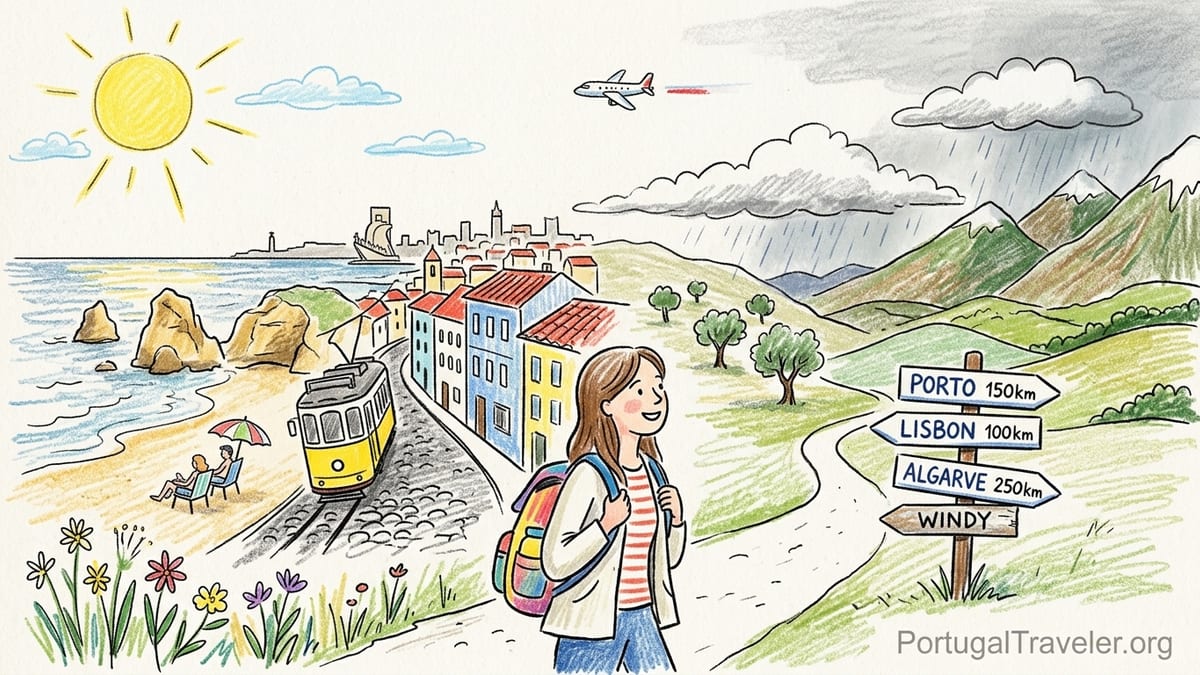
Portugal’s Big Seasonal Pattern in Real Life
Portugal is often sold as a year‑round destination, and on paper that is true. The national weather service data for the 1991 to 2020 period shows a classic Mediterranean pattern shaped by the Atlantic: hot, dry summers, mild but wet winters, and long shoulder seasons where conditions change quickly from north to south. Lisbon averages July highs in the upper 20s Celsius with almost no rain, while Porto is cooler and wetter and Faro, in the Algarve, is hotter and drier across most of the year.
On the ground, that broad pattern translates into very different days depending on where you stand. I have woken up in Braga under heavy morning rain and low cloud in April, then driven three hours south to reach bright sun and T‑shirt weather in the Alentejo by mid‑afternoon. I have watched surfers in Ericeira battle strong Atlantic wind in June while friends in Lagos, far to the south, texted pictures of almost windless afternoons on sheltered beaches. Those contrasts are not travel‑writer decoration. They are baked into how the country’s climate works.
Tourism layers another seasonality on top. Official Portuguese and European data show a powerful summer spike in visitor nights, with late June through August bringing the highest pressure on hotels, roads and city centers. At the same time, local tourism reports and hotel managers increasingly point to April, May, September and October as the new sweet spots, because the climate in much of Portugal is now comfortable enough then for beach and city travel while prices remain closer to shoulder‑season levels.
Across my own trips, the lesson has been simple: if you want to move comfortably between Portugal’s north, center and south on a single journey, you need to think in terms of bands of weeks rather than precise dates. A late April itinerary feels very different from one in early April. Late September is not the same as late October. The following sections walk through what changed between my winter, spring, summer and autumn visits, and how those changes played out from Braga to Porto, Lisbon, the Alentejo and the Algarve.
Winter: Rain in the North, Quiet Beaches in the South
My first deep winter trip to Portugal ran from late January into early February, on an itinerary that linked Porto, the Minho countryside, Coimbra, Lisbon and finally Lagos in the Algarve. Statistically, this is the wettest stretch of the year in the north. Long‑term figures put Porto’s winter rainfall well above Lisbon’s, with around twice as many rainy days per year as Faro in the Algarve. On this trip that difference was stark: in a week based in Porto and nearby Guimarães, I counted four days dominated by steady rain or low, misty drizzle.
In practice, that meant damp cobbles, slick granite stairways and a near‑constant need for a waterproof layer in the north. The Douro riverfront in Porto still had life, with café terraces using outdoor heaters and blankets, but day trips into the Minho countryside demanded flexibility. A planned hike above the Peneda‑Gerês area was replaced with a couple of hours exploring compact historic centers such as Ponte de Lima, where you can dart between arcades and cafés to dodge the showers. Open‑air viewpoints and rural trails felt like a gamble that week.
Moving south in the same period, the climate softened step by step. Lisbon in early February still saw rain, but showers were shorter and brighter intervals more common. Average daytime highs in the mid teens Celsius, confirmed by recent Lisbon climate summaries, matched my anecdotal experience of walking from Baixa up into Bairro Alto with a light jacket and needing sunglasses more often than an umbrella. By the time I reached Lagos, on the Algarve coast, the pattern had flipped. Locals talked about “our winter” being more about cool evenings than daytime cold, and the data supports that, with Faro recording some of the warmest winter temperatures on the mainland.
The payoff was almost empty beaches and dramatic Atlantic light. On Praia da Arrifana and Praia do Amado, surfers in thick wetsuits outnumbered sunbathers, but it was comfortable to sit in a fleece on a café terrace at lunchtime. Water temperatures were low in absolute terms, often in the mid teens Celsius, and most bathers limited themselves to quick dips. For a multi‑region trip, winter worked best as a cultural and hiking journey that happened to include the coast, not as a beach holiday. The compromise was obvious: you trade sparse crowds and lower hotel rates for persistent rain in the north and chilly, wind‑affected seaside days almost everywhere.
Spring: North‑South Contrasts and Unpredictable Skies
Two of my longest Portugal trips took place in spring, one in late March and one straddling mid to late April. Official rainfall tables show March and April as transition months, especially on the Atlantic coast: storm systems still track across the country, but the days grow longer and temperatures rise quickly from south to north. On the March trip, that played out as a near‑perfect illustration of Portugal’s climate map. I arrived in Porto to steady rain and cool days, with daytime temperatures hovering just above 15 degrees Celsius. Moving north to Braga added even more rain, particularly in the mornings.
Yet four hours south, the story was different. By the time I reached Évora and the Alentejo plain on the same itinerary, the landscape turned gold‑green and the skies widened. While official records still call this a wet season compared with summer, I encountered more broken cloud and sun than persistent downpours. Daytime highs nudged into the low 20s Celsius. On one specific day in April I drove early from a rainy Guimarães, spent a dry mid‑day walking the medieval streets of Óbidos, then finished in Cascais watching Atlantic waves in bright light, with only a stiff onshore breeze reminding me that the water was still cold.
These rapid changes make spring both rewarding and tricky for a traveler trying to visit the whole country. In cities such as Porto and Lisbon, spring felt almost ideal. Queues for highlights like Livraria Lello in Porto or the Belém Tower in Lisbon were present but manageable in late April, often in the 20 to 40 minute range in my experience, compared with much longer summer lines reported by local guides. Public transport ran on full schedules, and intercity trains between Porto and Lisbon were easy to book a few days in advance, though rail staff strikes can occasionally affect services in any season.
The countryside, however, demanded more flexibility. Rural walking in the Minho and Douro could be stunning between showers, with green slopes and full rivers, but several trails turned muddy and some smaller guesthouses in the interior had only just reopened after quieter winter months. Down south, in the Algarve, coastal towns like Lagos and Tavira were waking up for the season. Many beach cafés and smaller seafood restaurants were opening on reduced hours, and advance booking was rarely needed except in the most popular spots. Sea temperatures off the Algarve coast in April and May, according to recent marine data, typically remain below 18 degrees Celsius, which matched my impression that most people stayed on the sand rather than in the water.
Overall, spring proved workable for a multi‑region trip, especially from mid April onward, but it came with a clear compromise. The further north you go, the more you have to accept real rain days and cooler evenings. In exchange, you get wildflowers in the Alentejo, fresh green terraces in the Douro, and cities that feel busy but not overwhelmed. Packing a waterproof jacket and quick‑dry shoes, rather than just an umbrella, made the difference between frustration and a kind of game of weather‑dodging that became part of the pleasure of travel.
High Summer: Sun, Heat and Peak Crowds
My one full high‑summer trip to Portugal covered late July into early August, precisely the period that both local tourism bodies and international travel publications now define as the country’s peak season. Climatic data show July and August as the driest months virtually everywhere on the mainland, with high temperatures in interior regions such as Évora climbing well above 30 degrees Celsius, and the Algarve regularly posting hot, cloudless days. On the ground, that meant almost no need to check the forecast, but a constant need to manage heat and crowds.
In Porto and along the northern coast, summer heat felt warm but rarely oppressive. Average highs around the mid 20s Celsius, supported by recent regional climate comparisons, aligned with my days strolling the Ribeira district and crossing the Dom Luís I bridge without seeking shade every few minutes. However, the flip side of stable summer weather is that everyone else comes too. Even outside August’s absolute peak, terraces along the Douro were full by early evening, and it was common to see walk‑in diners turned away from popular riverside restaurants after 8 pm.
Lisbon in late July marked a turning point. Official data put the city’s July average maximum close to 28 degrees Celsius, but heatwaves have increasingly pushed some afternoons past 35. On my trip, several days landed above 30 degrees, and climbing Lisbon’s hills from Baixa up through Alfama felt like a slow, sweaty ascent. The city’s attractions were under real strain: queues for the famous tram 28 at Martim Moniz snaked far down the square, and I watched guidebook readers abandon the line more than once after staff announced temporary suspensions due to crowding. Social media and local travel sites frequently mention August as a month when some Lisbon residents leave the city to escape both heat and visitor pressure, and it is easy to see why.
Further south, the Algarve in high summer is straightforward weatherwise and more complicated logistically. Climate summaries describe about 3,000 hours of sunshine a year in this region, with July and August among the sunniest and driest months anywhere in Europe. During my stay near Lagos and around the western beaches of Sagres, I had ten consecutive cloudless days. Sea temperatures off Faro in August, based on recent readings, can exceed 21 degrees Celsius, which helped create classic crowded beach scenes at Praia da Rocha and Meia Praia, full of families, umbrellas and beach gear for rent.
The cost of that postcard experience was density and price. Conversations with local hotel owners and recent tourism analyses confirm that summer room rates in coastal resorts often run significantly higher than in shoulder months, and advance reservations become essential. On multiple evenings I saw beach restaurants in Albufeira and Lagos fully booked, with hosts turning away hopeful walk‑ins who had not reserved a table days earlier. Driving was slower, parking around cove beaches like Praia da Marinha often filled by mid‑morning, and short intercity journeys, such as Lisbon to Lagos by bus or train, were heavily booked.
For a traveler trying to see the whole country in one go, high summer delivered the best beach and sea‑swimming conditions, especially in the south, at the price of intense city crowds and sometimes uncomfortable urban heat. The only way I found to make it work was to shift city sightseeing to early mornings and late evenings, retreat inland at midday, and accept that popular attractions would feel busy almost all the time. If your dream Portugal trip is evenly split between museums, wine regions and Atlantic beaches, July and August will likely feel like a compromise that leans hard toward beach culture.
Autumn: The Sweet Spot that Keeps Shifting Later
When locals and long‑time visitors talk about their favorite time to travel in Portugal, they increasingly point to autumn, especially September and the first half of October. Climate records back that up. By September, average high temperatures in Lisbon and Porto have dropped slightly from summer peaks, while the Atlantic remains relatively warm, especially off the Algarve, where sea temperatures can still sit around the low 20s Celsius from real‑world measurements. Rainfall remains low compared with winter, particularly in the south, even as days shorten.
On my own September trip that started in Porto and ended in Faro, the country felt as if it had taken a deep breath after summer. Porto’s riverfront was still lively, but I could usually find a table along the Ribeira without a wait in the early evening. Daytime temperatures stayed mostly in the mid 20s Celsius, comfortable for climbing up to the Sé Cathedral or walking the length of the Vila Nova de Gaia riverbank. A day trip to the Douro Valley delivered warm, hazy sunshine rather than the piercing heat often reported there in August, though vineyard workers still began picking at first light to avoid the midday sun.
Lisbon in late September may be the closest thing Portugal has to a Goldilocks period. Weather data for this month shows mean temperatures near 22 degrees Celsius and mostly dry days, with a cooling Atlantic breeze. In practice, that meant I could spend entire days on foot without feeling drained, yet still eat dinner outside most nights in neighborhoods from Chiado to Campo de Ourique. Crowds were very present in central areas and at headline sights like the Jerónimos Monastery, but queues felt shorter than in July, and tram 28, while still crowded, became bearable right after the morning rush.
Further south, autumn delivered beach days that felt almost indulgent. On the Algarve coast in early October, warm air and water meant real swimming at Praia da Luz and Praia de São Rafael without the need for a wetsuit. Lifeguard stations were still staffed on major beaches, and most seasonal restaurants in resort towns remained open seven days a week. At the same time, hotel prices were beginning to soften compared with peak August rates according to local booking platforms and on‑the‑ground conversations. I had no trouble finding same‑week availability in mid‑range guesthouses that would have been full two months earlier.
There was, however, one important caveat. By late October, particularly in the north, the first serious autumn storms tend to roll in. On a later trip that stretched from late October into early November, I encountered heavier rain in Porto and Braga, swollen rivers in the Minho, and intermittent Atlantic gales in Nazaré and Peniche. Lisbon saw several days of heavy showers that interrupted sightseeing, although there were still bright, clear intervals in between. For a multi‑region itinerary, this period can still work, especially if you emphasize cities and the drier south, but it demands backup plans and a willingness to treat the beach as a place for walks rather than sunbathing.
Wind, Sea and the Atlantic Edge
One element that cuts across seasons in Portugal is wind. Climatic descriptions of Lisbon and the west coast highlight a persistent maritime influence, and every one of my trips confirmed it. In summer, an afternoon northerly known locally as the “nortada” often kicks in along the Atlantic coast from roughly Peniche to Cascais and beyond. On a June day trip to Guincho beach near Cascais, the contrast was vivid: Lisbon’s city center felt hot and sticky, while Guincho was several degrees cooler, with strong cross‑shore gusts whipping sand against my legs and filling the car with fine grains the moment I opened the doors.
Further north, surf hubs like Ericeira and Peniche are built around that same Atlantic energy. In April I watched surfers in thick neoprene tackle consistent, wind‑chopped waves, with air temperatures around 18 degrees Celsius and water much colder. Official sea‑temperature records for the central and northern coast show annual ranges from the mid teens to around 19 degrees Celsius at best, far cooler than many first‑time visitors expect from a country often grouped mentally with the Mediterranean. That chill, combined with frequent wind, explains why many beaches that look perfect in photos feel bracing in person outside high summer.
By comparison, the Algarve behaves differently. Sheltered bays along its southern edge, from Albufeira to Tavira, see lighter winds and warmer water, as their orientation shields them from the full Atlantic blast. On November and March visits, I found it perfectly pleasant to eat outdoors at lunchtime along the Lagos waterfront, while friends messaging from Porto the same day posted videos of rain hammering slate rooftops. Current climate data supports these impressions, showing that Faro records significantly fewer rain days per year than Porto and that its winter temperatures remain several degrees higher.
For a traveler planning a multi‑region trip, the Atlantic factor has direct consequences. City days in Lisbon often feel cooler and fresher than inland readings suggest, thanks to the river and ocean breezes, but standing on exposed viewpoints such as Miradouro da Senhora do Monte in winter can feel raw when the wind rises. In coastal towns from Figueira da Foz northwards, long seaside promenades are glorious in calm spring or autumn conditions, but in strong onshore winds you will see locals retreat to sheltered cafés one block back from the water. Building some flexibility into your daily plans, especially around boat tours and cliffside walks, makes it easier to adapt.
Did Any Season Truly Work for a Whole‑Country Trip?
Across these trips and the climate data that underpins them, two windows stood out as genuinely workable for multi‑region itineraries that included the north, center and south of mainland Portugal: mid to late April and late September into early October. Both periods offered a balance between acceptable weather and manageable crowds, but each came with its own compromises.
In mid to late April, I could start in Braga or Porto without freezing and finish on the Algarve with a few credible beach days. The countryside in the Minho and Douro was lush and green, the Alentejo was in bloom rather than sun‑blasted, and cities had enough life without the high‑summer stress. The trade‑off was rain. In any given week then, you should expect at least one or two days of solid rain in the north and central coast, with the possibility of cloudy, breezy conditions even in the Algarve. Rural dirt roads can become muddy, and some hiking trails, especially near rivers, may be slippery or partially flooded.
Late September into the first half of October tilted the balance the other way. On my journeys then, cities were warm but not scorching, beach days in the Algarve felt effortless thanks to relatively warm water and light winds, and the Douro and Minho offered grape harvest scenes under stable skies. The risk here shifts from persistent rain to variability at the back end of the window. A trip that ends in mid October may still enjoy classic late‑summer weather; a trip that stretches into early November, especially if it leans heavily on the north and west coast, is more likely to encounter the first big autumn storms.
Winter and high summer were the outliers for a “see it all” trip. January and February delivered excellent value, nearly empty tourist sites in interior regions, and atmospheric coastal landscapes, but northern rain meant I had to accept that some days would be spent mostly indoors or in transit. Spontaneous rural exploration was limited. High summer delivered almost guaranteed sun, the warmest seas and long, light evenings, but city crowds and heat drained energy, particularly in Lisbon and in inland Alentejo towns, and the cost of accommodation and car rental climbed sharply.
If I had to recommend a single period for a first‑time, multi‑region Portugal trip based on lived experience plus the latest climate and tourism data, it would be the final two weeks of September. That window has given me the most consistent mix: swim‑worthy beaches in the Algarve, comfortable city sightseeing in Lisbon and Porto, and countryside travel that is still fully open but a little less frenetic than in August. It is not perfect: popular sights are still busy and occasional hot days do occur, especially inland. But it is the only period that has reliably let me move from the Minho to the Algarve on one itinerary without feeling that I was fighting the weather at either end.
FAQ
Q1. What is the single best month to visit Portugal for a multi‑region trip?
For most travelers, the second half of September strikes the best balance between weather and crowds. You are likely to find warm but not extreme temperatures in Porto and Lisbon, genuinely pleasant beach conditions in the Algarve with relatively warm water, and largely dry days across the country. Popular sights are still busy, but they are usually less strained than in August, and hotel availability opens up slightly compared with peak summer.
Q2. Is April too rainy to enjoy the north of Portugal?
April in the north, around Porto and the Minho, does bring a real chance of sustained rain, but it rarely washes out an entire week. In my experience, you can expect a mix of showers and bright intervals, with temperatures that are comfortable for walking in a light jacket. If you combine the north with Lisbon, the Alentejo and the Algarve in mid to late April, you can still enjoy several warm, mostly dry days further south even if the north sees more unsettled weather.
Q3. How cold is the Atlantic for swimming outside summer?
The Atlantic along Portugal’s west coast stays cooler than many visitors expect. Around Lisbon and Porto, sea temperatures usually range from the mid teens Celsius in winter to the high teens in late summer, which feels brisk without a wetsuit. Off the Algarve’s south coast, the water is warmer, often reaching the low 20s Celsius in late summer and staying relatively mild into early autumn. Outside July to September, most casual swimmers limit themselves to short dips, while surfers rely on full wetsuits for comfort.
Q4. Are Portuguese cities crowded all year now?
Major cities like Lisbon and Porto see visitors in every month, but crowd levels still vary significantly. Summer, especially August, remains the busiest period, with long queues at attractions and high hotel occupancy. Spring and autumn have become popular as people try to avoid peak heat, so they can feel lively but generally more manageable. January and February are noticeably quieter, particularly away from major events and school holidays, though you will still encounter tour groups in central areas.
Q5. Is winter a good time for a road trip across Portugal?
Winter can work for a cross‑country road trip if you accept some limitations. Roads themselves are usually in good condition, and traffic is lighter than in summer, but heavy rain and low cloud are common in the north and interior between November and February. That can hide views in mountainous areas and make rural tracks muddy. On the positive side, accommodation prices are often lower, many restaurants in cities stay open, and southern regions like the Algarve offer mild, sunny days that are pleasant for walking and coastal drives.
Q6. When are beach services and lifeguards available?
On the main Atlantic beaches near big cities and in the Algarve, lifeguard coverage and full beach services are generally concentrated between June and September, with the exact dates varying by municipality and year. During that core season you can expect staffed watch posts, flagged swimming areas, and open beach bars on the most popular stretches of sand. In shoulder months like May and October, some services remain in place on major beaches, but smaller or more remote coves may have no lifeguards and only limited bar or café hours.
Q7. How far in advance should I book accommodation in peak season?
For July and especially August, it is wise to book accommodation several months in advance in high‑demand areas such as central Lisbon, Porto’s riverfront and Algarve resort towns. During my own summer trip, many mid‑range hotels and guesthouses in those locations were either full or significantly more expensive closer to arrival. In spring and autumn, booking a few weeks ahead is usually enough outside major festivals, while in winter you often have more flexibility, particularly in the interior and smaller coastal towns.
Q8. Does the weather differ much between the Algarve and Lisbon in spring?
Yes, there is usually a noticeable difference. In March and April, Lisbon still experiences a fair share of Atlantic showers and cool evenings, whereas the Algarve tends to be drier and slightly warmer. On my spring trips, I often left Lisbon under grey, breezy skies and arrived in Lagos or Tavira the same afternoon to find clearer weather and higher temperatures. Climate records support this pattern, showing fewer rain days and somewhat higher average temperatures in Faro than in Lisbon during these months.
Q9. Are there seasonal closures in the countryside?
In rural areas, especially in the interior and smaller coastal villages, some guesthouses, restaurants and activity providers reduce hours or close completely from late autumn through early spring. On my winter and early spring visits to the Douro, Minho and Alentejo, I found that it was important to check opening days and hours in advance, particularly for small family‑run restaurants and rural tourism properties. By late April and through summer, most of these places are open again and operating on fuller schedules.
Q10. If I hate intense heat, which months should I avoid?
If you are sensitive to heat, it is sensible to avoid late July and August, especially in inland areas such as the Alentejo and in densely built parts of Lisbon where stone and concrete retain warmth. Daytime highs can climb well above 30 degrees Celsius during heatwaves then, and nights may stay warm. Instead, consider traveling in April, May, late September or early October, when daytime temperatures in most of the country are far more comfortable, yet you can still enjoy long days, outdoor dining and, in the south, credible beach time.