

I have been to the Algarve several times over the past few years, usually as a skeptical travel writer who has seen one too many crowded “paradise” coasts. Each visit, I kept a simple rule: only recommend experiences I would genuinely repeat with my own money, on my own holiday. What follows is not a checklist of famous spots but a report from the field. These are the swims, cliff walks, boat trips, surf lessons, train rides and seafood meals I actually did, what they cost at the time, how I booked them, and whether they were really worth it once I was standing there with salt in my hair and sand in my shoes.
Swimming Different Beaches Instead of Chasing Just One “Perfect” Shore
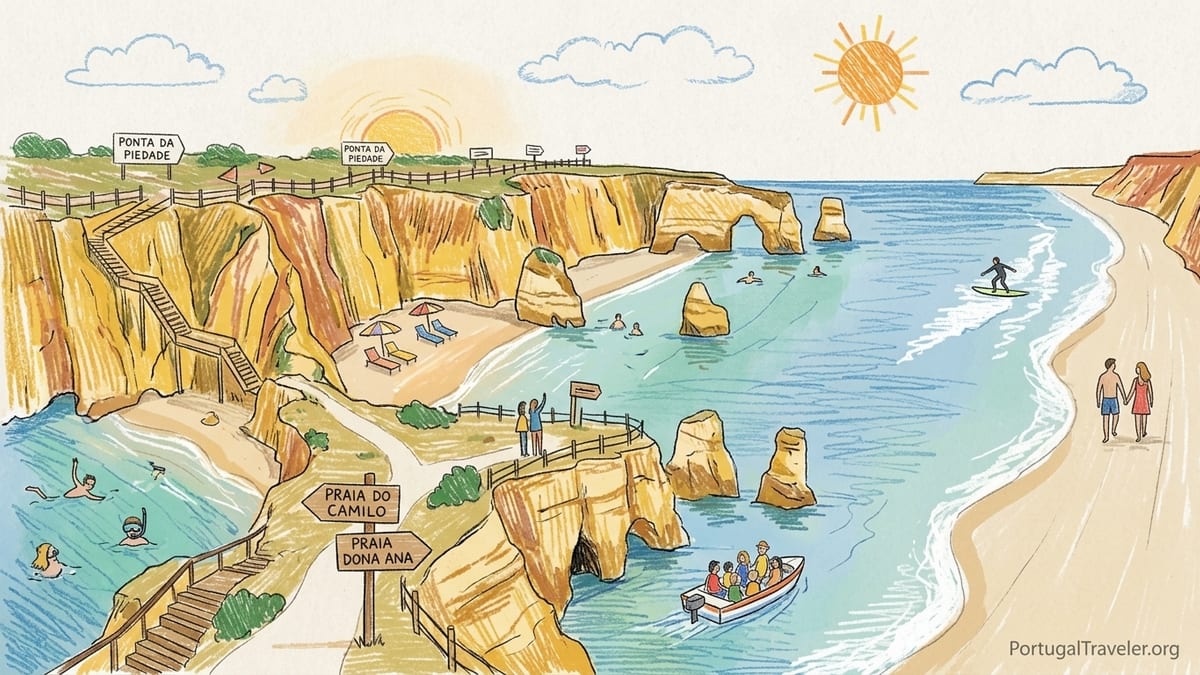
On my first Algarve trip I made the classic mistake of trying to pick a single “base” beach. On later visits, I did the opposite and treated beaches like you would treat restaurants in a food city. I swam at Praia do Camilo and Praia Dona Ana in Lagos, Praia da Marinha near Lagoa, and Praia da Falésia between Vilamoura and Olhos de Água, all on separate days. I reached Camilo and Dona Ana on foot from Lagos’s old town in around 20 minutes. Marinha and Falésia I reached by rental car and, once, by local bus plus a short walk. The experience of mixing beaches, rather than committing to one, is something I would absolutely repeat.
Praia do Camilo was my first serious swim in the Algarve. The day was clear, mid-June, about 26 degrees Celsius on land, with a moderate Atlantic swell and water around 19 degrees. I walked down the long wooden staircase just after 9 in the morning, when there were fewer than 20 people spread across the sand. I swam without any rented equipment, just my own mask. No lifeguard flags were up yet, and the sea felt cold but manageable once I was in for a minute. It struck me how quickly the small cove felt busy. By 11, every patch of sand held a towel. The intimacy of the cove was beautiful but I would only repeat Camilo if I could arrive early again or outside peak summer.
Praia Dona Ana, a 10 minute walk from Camilo, gave me a different kind of swim. It is slightly larger, with more space to spread out, and on my September visit it had lifeguards, sunbed concessions and a more mixed crowd of older Portuguese couples, families and small groups of friends. I did a short, 15 minute swim parallel to the shore in late afternoon under softer light. The water was choppy but the gradual slope of the sand gave me confidence. No equipment was provided or needed. What surprised me was how much more relaxed I felt than at Camilo, simply because of the extra space. If a friend was nervous about waves, I would bring them here first.
Praia da Marinha was the most visually dramatic of all my swims. I drove there in a compact rental car from Lagos, paid a few euros for parking in peak season, and walked 10 minutes down the path from the clifftop viewpoint to the sand. Late May gave me air around 24 degrees and a calm, almost glassy sea. I swam just beyond waist-depth, near the right-hand cliffs, with maybe 50 people on the entire beach. There were no sunbeds, only a small seasonal kiosk and lifeguard stand. The water clarity was the best I have had in the Algarve. I remember floating on my back between the rock stacks and thinking that this free swim felt more satisfying than some of the paid excursions I had already booked.
Praia da Falésia gave me my longest, most meditative shoreline walk-and-swim combination. I accessed it from the Açoteias side, walking through the pine trees and emerging above the striped cliffs that give the beach its name. I visited in October, shoulder season, with a bracing breeze and patchy sun. The water was livelier and the waves rougher, more suited to jumping and short dips than long, calm swims. I did two quick plunges, about 10 minutes each, and then simply walked the firm, wide tideline for nearly an hour. The scale of Falésia surprised me: compared with tiny coves, it felt like a proper Atlantic beach where you can stretch your legs. I would repeat Falésia for that long, free walk just as much as for the swimming.
Cliff Walks That Outshone Paid Tours
The Algarve’s cliffs have a way of undermining your best-paid plans. Twice I found that free cliff walks were more memorable than anything I bought a ticket for. The first was the Seven Hanging Valleys trail between Praia da Marinha and Praia de Vale Centeanes. I walked a central section of the route rather than the full out-and-back. I parked at Praia da Marinha, followed the marked trail east for about 90 minutes, stopped often for photos over the caves and arches, then turned back. It cost nothing beyond parking and water.
I did this hike on a sunny day in late April with a light onshore breeze. The temperature hovered around 21 degrees, which made the exposed sections bearable. Underfoot, the trail was mostly compacted dirt and limestone, with occasional rocky steps and short detours around fenced areas. Crowds were moderate. At popular viewpoints above Benagil there were small clumps of people, then sometimes I would walk several minutes without seeing anyone. What surprised me most was how close the trail comes to the cliff edge in places. I wore sturdy trainers and would not attempt it in flimsy sandals. I would unhesitatingly repeat this hike, but only with decent shoes, water, and respect for the warning signs.
In Lagos, the Ponta da Piedade headland was my repeat experience of choice. I walked from central Lagos to the lighthouse, then followed the boardwalk and informal paths that loop above the sea stacks. My first visit was on a blustery March afternoon, the second on a calm June morning. Both were free. The only cost was time, about 20 to 30 minutes each way on foot from town. The March visit gave me wild, white capped seas and golden light between showers. The June one brought clear blue water and busier viewpoints, though I could still find quiet corners away from the main platforms.
On my second visit I skipped the long staircase down to the water level. Instead, I lingered high up, watching small boats thread between arches that I would later visit by sea. It was from this vantage point that I realized something important. The sense of scale and the freedom to wander, sit, and return to favourite viewpoints made the free walk more satisfying than a later boat tour from Lagos marina that felt rushed and tightly scripted. If I had to choose one Ponta da Piedade experience to repeat, it would be the clifftop wander.
Boat Trips: When The Coastline Is Magical And When It Feels Rushed
I did two small boat trips in the Algarve that left very different impressions. The first was a grotto tour from Lagos marina to Ponta da Piedade. I booked it in person the day before at one of the kiosks near the marina footbridge. The price was 25 euros per adult for about 75 minutes on the water, in a small open motorboat carrying around 10 people. Life jackets were provided and required. The captain spoke English and Portuguese and gave a running commentary on rock formations and small coves, occasionally steering the bow into tight corners under arches.
The sea that morning in early June was calm with a gentle swell. Skies were clear. We left just after 10, which avoided the very earliest departures but before the heat of midday. The views themselves were objectively beautiful and I enjoyed being at water level. What surprised me was how choreographed the whole thing felt. Each cove had an allotted pause, each arch a joke or nickname. Boats queued in loose lines to enter certain caves, and we rarely spent more than a couple of minutes in any one place. I did not feel unsafe, but I did feel processed. If a friend wanted to see the cliffs from the sea and did not want to paddle, I would still recommend it, but personally I would not prioritise repeating this specific tour.
The second outing was a longer coastal trip from Portimão that included the Benagil area. I booked via my guesthouse in Portimão, which arranged spaces the evening before with a local operator using a rigid inflatable boat with about 12 passengers. The cost was 40 euros per person in late May for roughly two hours. Check in was at the riverfront, where we were fitted with life jackets and given a quick safety briefing. Our captain checked sea conditions with the harbour office before departure and warned that we might not be able to enter every cave if the swell increased.
The Atlantic was lively that morning. Once we cleared the river mouth, the wind increased and the boat slapped more firmly against the chop. The company supplied waterproof windbreakers for anyone who wanted them, which turned out to be a welcome layer. We stopped at several smaller caves and hidden beaches before reaching the Benagil area. Due to current regulations in place at the time of my visit, the captain kept us just within the entrance of the main cave for a short, circling pass, with no disembarkation and strict instructions not to swim. We shared the space with a handful of other small boats, and after perhaps four minutes inside we pulled back to give way.
I remember thinking that the cave itself was impressive, but the constant manoeuvring around other boats and the need to keep moving drained some of the magic. What I did appreciate and would repeat was the broader two hour run along the coast, which gave me a far better sense of scale than my shorter Lagos boat outing. Seeing Praia da Marinha, Algar de Benagil and lesser known inlets in one sweep helped me later decide where to hike and swim. If I went again, I would choose an early or late sailing in shoulder season and treat the boat trip as a moving overview of the coastline, not as the ultimate goal in itself.
Learning To Surf The Atlantic Breaks
The experience I was most nervous about, and one I am glad I pushed myself to repeat, was learning to surf on the west coast of the Algarve. I based myself in Lagos but joined a full day surf lesson that shuttled us to the Atlantic beaches near Sagres, where the swells are more consistent. I booked two different days on two separate trips with two different local surf schools, both arranged in person at their shops in Lagos old town. In both cases, the price was 60 to 70 euros per day, including transport, wetsuit, board, instruction and a simple packed lunch.
My first surf day was in late September, with air temperatures around 24 degrees and water near 19 or 20. The van picked us up around 9 from central Lagos, did a loop around hostels and guesthouses, then drove just under an hour to a beach near Sagres that the instructors chose based on the forecast. The group had eight students to two instructors, which felt manageable. After a beachside warm up and safety talk about rips, we spent about 30 minutes practicing pop ups on the sand. Then we rotated in and out of the white water in depth around chest-height.
The wetsuits and soft-top boards were provided and in good condition, though by the end of the second session most people’s arms were tired. Waves were waist to shoulder high on the sets but forgiving in the inside section where beginners stayed. I managed to stand up briefly on a couple of waves during the afternoon session. What surprised me was how physically draining it was just to paddle back out over and over, and how quickly the Atlantic chill crept in when I waited too long between attempts. Despite the fatigue and a sore neck, it was one of the most satisfying days I had in the Algarve, because it felt like engaging properly with the ocean rather than simply observing it.
The second lesson, on a spring visit in April, had smaller waves and cloudier weather, with water that felt a degree or two colder. Again, everything was included: transport, boards, thick wetsuits. The beach was different but the rhythm was similar. Fewer students turned up, which meant more frequent feedback. I still left exhausted, but this time more confident in reading the sets and choosing when to go. Would I do it again? Yes, with the caveat that you need a basic level of fitness and a tolerance for being cold and humbled by the sea. For me, surfing days justified both their cost and the time they consumed.
Quiet Kayaking And Ria Formosa Moments
Compared with the Atlantic side, my most peaceful hours on the water came inside the Ria Formosa lagoon, east of Faro. I joined a guided kayaking trip from the waterfront near Faro old town that explored marsh channels and sandbank islands. I booked this online two days beforehand through a local outfitter’s own booking page, after checking the forecast. The cost was 45 euros for a three hour small group trip, including double sit-on-top kayaks, paddles, buoyancy aids and a dry bag for phones.
We met mid-morning in late October, with mild weather around 22 degrees and very light wind. The guide gave us a basic paddling and safety briefing, then we launched from a ramp into calm lagoon water with almost no current. The group consisted of six participants plus the guide, which felt intimate. Over the next two and a half hours, we followed narrow channels between salt marsh, watched wading birds and stopped on a sandbank to walk and swim in shallower, warmer water than on the ocean side. The water was clear enough that I could see fish darting near the kayak.
What surprised me most was the change in pace. After days of dramatic cliffs, the flat horizons and soft lagoon light felt like a reset. The guide talked about shellfish harvesting and the protected status of the area, without the sales pitch tone I had heard on some boat tours. There was no rush to perform, no traffic jams at cave entrances, and the equipment was basic but well maintained. I would happily repeat this exact experience and, if anything, choose an earlier or later departure to see the light change across the marshes.
I also took the simple public ferry from Faro to Ilha de Faro and, on another day, to Ilha da Culatra from Olhão. In both cases, the cost was under 5 euros return, paid at the ticket booth near the quay. On Ilha da Culatra I walked from the small harbour along sandy tracks and wooden walkways to the ocean side beach, then swam and lingered at a beach cafe. There was no formal tour, no narration, and that simplicity was part of the charm. If you want a low cost way to feel the broader scope of the Algarve beyond its road-accessible beaches, these slow ferry and walking combinations are worth repeating.
Seafood Meals And Small Market Rituals
Some of my best Algarve memories have nothing to do with sand or salt on my skin, but with what was on my plate. In Lagos, I returned twice to the municipal market near the river, not as a tourist taking photos of fish but as a shopper. I bought small sardines, clams and local vegetables on a Friday morning in June, then again on a cooler, quieter Tuesday in October, to cook in my apartment kitchen. Prices varied by season and catch, but on those visits I paid roughly 7 to 10 euros per kilogram for fresh sardines and slightly more for clams. Vendors were patient with my halting Portuguese and wrapped everything with an economy born of repetition.
Cooking those ingredients myself, simply grilled or steamed with garlic and olive oil, turned into its own travel ritual. I would shop in the morning, swim or walk in the afternoon, then eat on a small balcony while the light faded over the marina. Nothing about this is exclusive, but it is exactly the kind of daily rhythm I would repeat. It made me feel part of the place in a way that restaurant meals, however excellent, could not quite match.
That said, there were restaurant experiences I would prioritize again. In Tavira, I had an early evening cataplana de peixe for two at a family run restaurant just off the main square, paying around 38 euros for a pot brimming with local white fish, clams and prawns. The waiter explained that cataplana portions are generous, so I ordered one to share and added a simple salad and house wine. The metal dish arrived still steaming, the lid lifted at the table. The broth tasted of both sea and tomatoes in a way that felt anchored to the region. I walked out full but not heavy, and immediately planned a repeat visit for my next trip.
What surprised me across several Algarve towns was how varied seafood quality could be on the same street. In more obviously touristic strips in Albufeira and central Portimão, I had one grilled dourada that was clearly overcooked and overpriced compared to similar meals in smaller side streets. I learned to glance at what was on local diners’ tables and whether chalkboard menus changed daily. I would happily repeat evenings at modest-looking places full of Portuguese conversations before any neon lit seafront restaurant with laminated picture menus.
Researched Alternatives I Have Not Personally Done
There are experiences in the Algarve that I have researched thoroughly but have not yet done myself, either because of time, weather, or changing regulations. I want to flag them clearly as such so you can separate my lived experience from secondhand information.
Golf is a major draw in the region, with courses like Vale do Lobo, Quinta do Lago and Monte Rei frequently mentioned by dedicated golfers. I have walked past fairways and watched players tee off while staying nearby, but I have not played a round myself in the Algarve. Green fees, equipment rental and availability vary significantly by season, so any figure I could give you would be based on current research rather than my own wallet.
Likewise, I have not yet cycled the Ecovia do Litoral, the coastal cycle route that strings together much of the Algarve, nor have I booked a dedicated spa or wellness retreat, even though spa travel is now a significant part of the region’s tourism offering. Protected inland areas around Monchique and the Guadiana river have hiking and jeep tours that I have only read about or glimpsed from a distance while driving. When I return, those inland walks are at the top of my personal list, but it would not be honest to recommend a specific operator or route I have not walked.
Finally, regulations around iconic sites such as the Benagil cave continue to evolve, especially regarding which vessels can enter and whether kayakers or swimmers may land on the internal beach. When I visited, we were not allowed to disembark and could only enter with a licensed boat. Before you commit money to any cave-focused tour, I would strongly suggest checking current local rules and choosing an operator that explains clearly what is and is not possible on the day of your trip.
The Takeaway
Across several trips, the Algarve experiences I would personally repeat share a few traits. They are usually simple to access, involve a degree of physical movement, and leave space for your own rhythm rather than rushing you along a script. Early morning swims at Praia da Marinha, long walks along Praia da Falésia, informal cliff rambles at Ponta da Piedade and slow ferries across the Ria Formosa all fit this pattern. None required more than a modest outlay and some willingness to wake up early, carry water and pay attention to the sea.
Paid activities can absolutely be worth it, especially surf lessons on the west coast or small group kayak and boat trips that respect conditions and capacity. When they feel rushed, it is often because they are trying to cram a famous sight into a narrow window of time. If you think of boat trips as moving viewpoints instead of once in a lifetime events, and leave room for low-key days of markets and home cooking, the Algarve becomes less of a checklist and more of a place where you can build your own rituals.
Most of all, I would repeat the habit of mixing coasts and tempos. A windy surf day near Sagres followed by a warm lagoon paddle in the Ria Formosa; a busy swim at Dona Ana contrasted with a near solo morning at Falésia in October; a restaurant cataplana balanced by a simple market sourced sardine dinner. That variety is what has kept me coming back, and what makes me comfortable recommending these specific experiences to you.
FAQ
Q1. Is it worth visiting the Algarve outside the summer peak months?
Yes. My most enjoyable experiences were in April, May, September and October, when air temperatures were comfortable, the sea was still cool but swimmable, and crowd levels dropped noticeably on beaches and trails.
Q2. Do I need a car to repeat the experiences you describe?
You can do cliff walks in Lagos, boat trips from marinas and Ria Formosa ferries using public transport and your feet, but having a car made it much easier for me to reach Praia da Marinha, Praia da Falésia and some west coast surf spots on my own schedule.
Q3. How cold is the water for swimming and surfing in the Algarve?
On my visits, sea temperatures hovered between about 17 and 21 degrees Celsius depending on month and location. For casual swims I used only a swimsuit, while surf schools provided full wetsuits which made longer Atlantic sessions much more comfortable.
Q4. Are the cliff walks safe without a guide?
I did the Seven Hanging Valleys trail and Ponta da Piedade walks independently and felt safe, but only because I stayed behind fences, wore good footwear, avoided wet or windy extremes and paid attention to signs warning of unstable edges. A guide is not essential, but caution is.
Q5. Should I book boat trips and surf lessons in advance?
In July and August, I would book at least a few days ahead. In shoulder months, I often booked surf days and grotto or coastal tours one or two days in advance either online or in person at marina kiosks or surf shops.
Q6. How expensive are the activities you would actually repeat?
On my trips, small boat tours ranged from around 25 to 40 euros per person, half or full day surf lessons with transport and equipment from about 60 to 70 euros, and a three hour guided lagoon kayak trip about 45 euros. Cliff walks and most swims were free aside from parking or bus fares.
Q7. What should I pack specifically for these Algarve experiences?
I was glad to have sturdy trainers for cliff trails, a light windproof layer for boat trips, a hat, reef safe sunscreen, a dry bag for electronics and a refillable water bottle. For shoulder seasons, a lightweight sweater was useful after sunset or post surf.
Q8. Are the beaches and boat trips suitable for children?
Families were present on almost every boat trip and beach I visited. That said, steep staircases like the one at Praia do Camilo, cooler water, and choppy seas on some coastal tours may not suit very young children or anyone nervous around waves.
Q9. How easy is it to find good seafood without overpaying?
In my experience, looking for daily changing chalkboard menus, watching where local workers and families ate, and shopping at municipal markets for self catering helped me find fresher, better value seafood than sticking to the busiest, most obvious seafront strips.
Q10. If I only have three days, which experiences would you prioritise?
Based on what I would personally repeat, I would choose one cliff walk such as Ponta da Piedade or part of the Seven Hanging Valleys, one boat or kayak outing that suits your comfort with the sea, at least one early morning or late afternoon swim at a scenic beach, and one unhurried seafood meal or home cooked market dinner to anchor each day.