


After several extended trips across Portugal spread over the last few years, I stopped traveling with a checklist and started treating the country like a set of very different trips layered on top of each other. I have done the classic Lisbon and Porto city break, meandered along the Algarve coast in both July and November, taken slow trains through wine country in the Douro, rented a car to wander Alentejo’s cork forests, and flown out to islands in the Atlantic. Some places I would happily repeat for a week, others I would now treat as a one-night stop. This is how I would actually allocate my time if I were planning another Portugal-wide itinerary from scratch.
Lisbon: Urban Portugal, Viewpoints and Neighborhood Life
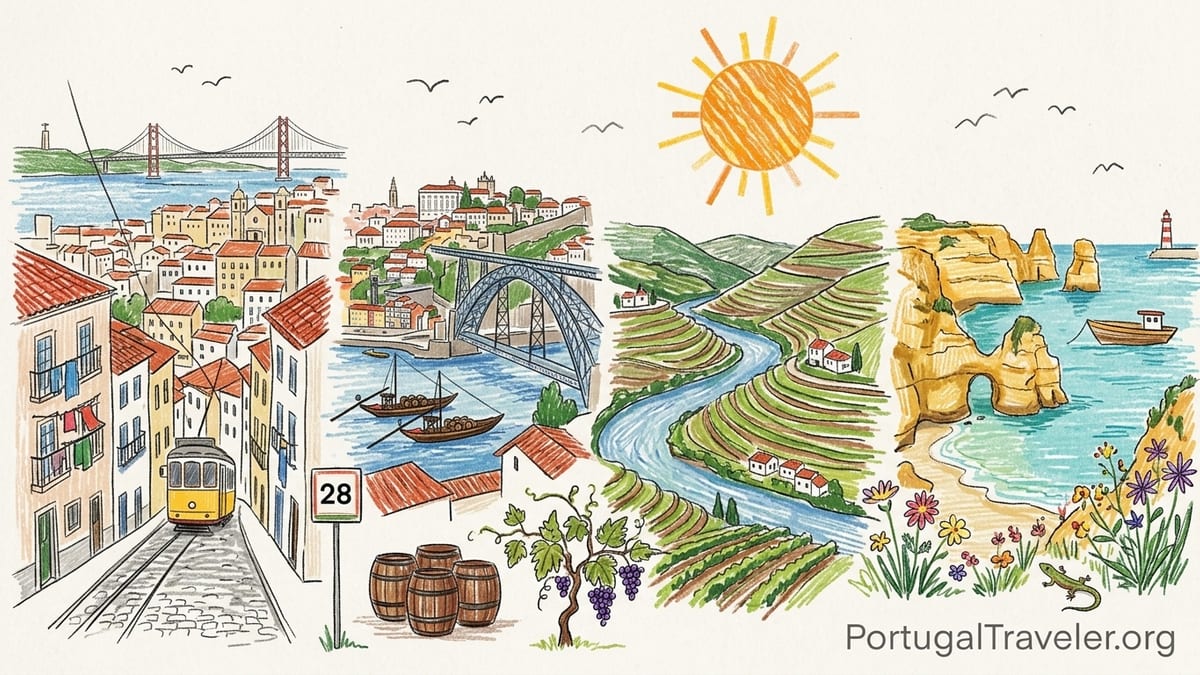
Across three visits, I have spent roughly three weeks in Lisbon, and it remains the place I recommend first if you want an urban introduction to Portugal. Lisbon gives you that layered European capital experience: grand riverfront plazas in Baixa, steep residential lanes in Alfama and Graça, and renovated warehouses along the Tagus where locals now drink at sunset. I liked how walkable the core is, and how easy it was to get from a tiled backstreet cafe to the river in ten minutes. The city can feel crowded in high season, especially around the Santa Justa lift and the Belém monuments, but step a few streets away and you still find small tascas serving grilled dourada with a glass of house wine for around 10 to 14 euros in central neighborhoods, slightly less in more residential areas.
Lisbon worked best for me as a "live here briefly" city rather than a checklist of monuments. On my second trip I based myself in Campo de Ourique, a tram ride from the center, and enjoyed having a local market, a bakery where a coffee cost about 1.20 euros, and a neighborhood park where families gathered late into the evening. From there I dipped into the classic sights: Jerónimos Monastery and the waterfront in Belém, the Museu Nacional do Azulejo for tile history, and sunset views from Miradouro da Senhora do Monte. What surprised me was how much I preferred the viewpoints over the museums; Lisbon’s personality is more about light, hills and street life than about any single attraction.
If I were allocating time today, I would give Lisbon three full days on a short trip or up to five if I wanted to add slow days in between. More than that, and I start to feel the city’s tourist pressure and rising prices without getting much extra reward. For a first visit, I would skip a packed day trip schedule and focus instead on two city days and one day where you either ride the ferry across to Cacilhas and walk along the riverfront, or take the train out to Cascais for sea air and a very different pace, then come back to Lisbon for dinner. The city delivers Portugal’s most complete mix of food, nightlife and culture, but I now see it as a base layer for the rest of the country rather than the main event.
Porto and the North: Characterful City and Gateway to Wine Country
Porto has grown on me more with each visit. I have spent about ten days in the city itself, divided across different trips, and I now prefer it to Lisbon for atmosphere. Porto’s historic core along the Douro River is compact and dramatic, all steep staircases, laundry hanging from balconies and the iron Dom Luís I Bridge arcing overhead. On my first stay near Ribeira I loved the views but disliked the noise and crowds late into the night. On later trips I chose neighborhoods like Cedofeita and Bonfim, which meant a fifteen to twenty minute walk down to the river but quieter streets, local bakeries and small wine bars where a glass of Douro red often cost 3 to 4 euros.
Porto is where Portugal’s wine culture becomes real. You see the famous Port wine lodges directly across the river in Vila Nova de Gaia, but the city also has relaxed newcomers: bars where you can order small pours of white Port and tonic, or try a vertical tasting from a single Douro estate. I liked that I could visit one or two lodges in a day, walk the riverfront, take the funicular back up the hill and still be back at a simple restaurant serving a hearty francesinha for under 15 euros. My main dislike here is how steep and slippery the cobbled streets can feel in rain, something to bear in mind if you have mobility issues or travel in winter.
As a trip type, Porto delivers a city stay that feels more intimate and lived-in than Lisbon, with easier access to the Douro Valley and the cooler, greener north. From Porto’s São Bento station I booked day trips east into wine country and local trains to the coastal town of Matosinhos for grilled fish on the beach. If I were planning another Portugal journey, I would give Porto at least three nights, four if I knew I wanted one full day for the Douro. It works well either as a standalone long weekend or as the northern anchor of a longer north–south itinerary across the country.
Douro Valley: Wine Country and Slow-Travel Landscape
The Douro Valley is where Portugal finally forced me to slow down. I have spent a total of six nights there across two trips, and if I could redo my first itinerary I would move at least one extra night from Lisbon to the Douro. The valley is not about ticking off villages, it is about sitting with the landscape. Terrace after terrace of vines climbs above the river, with small quintas and whitewashed chapels punctuating the hillsides. The region is recognized by UNESCO as a cultural landscape rather than a single monument, and that is exactly how it feels: you travel through it rather than to it.
Most visitors see the Douro on a day tour from Porto. Recently, full day small-group tours with two wineries, lunch and a short river cruise have typically started from around 60 to 90 euros per person, with more premium or smaller groups rising into the low hundreds depending on inclusions and date. Those tours are good value if you want a one-day overview and do not want to drive on winding valley roads after wine tastings. I have done one of these long day trips and appreciated how it simplified logistics, but the pace felt rushed, with only brief stops in places like Pinhão.
On another trip I took the regular train from Porto to Pinhão, which follows the river for the last part of the route and turns the journey into an experience of its own. From Pinhão I stayed at a small guesthouse with breakfast included and then booked a private half-day visit to a family-run estate. The cost per person was higher than a big group tour, but the slower rhythm and the ability to ask detailed questions about grape varieties and harvest schedules made it one of my favorite experiences in Portugal. If I were planning again, I would budget at least two nights in the valley instead of treating it as a day trip. The Douro delivers a specific trip type: slow mornings, long lunches on terraces, and evenings listening to cicadas, with not much in the way of nightlife or shopping. If that appeals to you, consider taking days from the cities and spending them here.
Algarve: Coastlines, Cliff Walks and Two Different Personalities
The Algarve is Portugal’s most visited coastal region, and after spending nearly three weeks there in total across late spring, high summer and shoulder season, I understand both its popularity and its critics. Statistically the Algarve accounts for a large share of tourist nights in Portugal, and in July and August you feel that especially in resort towns like Albufeira and Vilamoura where Irish and British pub signs line the marina. I stayed near Albufeira once in July and found the beaches beautiful but the nightlife intense and prices higher than elsewhere in the country, particularly for seafront dining.
What surprised me on later visits was how different the western and eastern Algarve feel. Around Lagos and the western cliffs, the coast is all golden rock formations, small coves and viewpoints like Ponta da Piedade where sunrise or early morning light turns the water deep blue and keeps the crowds manageable. In November I walked a stretch of the coastal path near Praia do Camilo and shared the trail with just a handful of other hikers. In the east, towns like Tavira and Olhão have a gentler vibe with marshes, islands reached by short boat hops, and more local year-round communities. Here I could still find grilled sardines and a glass of wine for under 15 euros in simple restaurants a few blocks back from the water.
If I were planning a fresh trip, I would give the Algarve at least four nights and divide them between two bases to experience both personalities: two or three nights near Lagos for cliffs and coastal walks, and two nights around Tavira or a quieter village for lagoon landscapes. I would avoid staying in the most nightlife-heavy strips of Albufeira unless that is specifically the atmosphere you want. As a trip type, the Algarve is about sea, sun and accessible infrastructure. It suits travelers who want reliable weather, varied beaches and enough English spoken that logistics are easy. If you are chasing a feeling of remoteness, however, you may find more of that either farther west near the Costa Vicentina or in the Atlantic islands.
Alentejo and the Portuguese Countryside: White Towns and Wide Horizons
Alentejo remains my favorite region in mainland Portugal for slowing down and feeling space. I have spent about a week there over two separate trips, each time with a rental car, and I would readily allocate even more time on a future itinerary. The landscape between Évora and the Spanish border is all cork oak forests, wheat fields, and small fortified towns rising above the plains. Compared with Lisbon or the Algarve, prices drop noticeably once you leave the main tourist towns. In small village restaurants I have paid under 10 euros for a plate of migas with pork and a glass of local red wine, and guesthouses often include a large homemade breakfast in the room rate.
Évora works well as a base for at least two nights: a university town with a Roman temple, a cathedral whose rooftop you can climb for views, and enough cafes and wine bars to keep evenings interesting. I liked wandering its streets in the early morning, when the only sounds were shopkeepers opening shutters and church bells. From there I took day drives to hill towns like Monsaraz, where white houses and stone streets end abruptly at views over the Alqueva Lake. Unlike the coast, this part of Portugal feels very quiet once the day-trippers leave, and English is less dominant, which I found refreshing but some travelers may find challenging.
As a type of trip, the Alentejo is Portugal’s countryside at its most spacious and contemplative. You come here for long drives on empty roads, stays in converted farmhouses and rural hotels, and meals that stretch across entire afternoons. There are few big-name sights, which is both the attraction and the main limitation. I would not suggest Alentejo as your only stop in Portugal if you are a first-time visitor wanting an energetic city break. But if you have ten to fourteen days in the country, I would absolutely trade one or two Algarve or Lisbon nights for time here, especially between April and June or in September and October when temperatures are manageable and the fields are green or turning golden.
Sintra, Coimbra and Historic Towns Between Lisbon and Porto
On paper, Portugal’s central belt between Lisbon and Porto is full of headline names: Sintra’s palaces, Coimbra’s university, and canal-laced Aveiro. In practice, I found these places rewarding in moderation and often subject to timing. I have visited Sintra three times now, always as a day trip by train from Lisbon, and it still feels magical at moments: mist around the Pena Palace in the morning, or the views from the Moorish Castle across the hills to the sea. What I liked least was the mid-morning crush at the most famous sites and the queue system for shuttle buses, which can eat into your day. If I were planning again, I would book the first timed entry of the day for one major site, then spend the rest of my time walking into less visited corners like the gardens of the Quinta da Regaleira or out towards the coast instead of trying to see everything.
Coimbra and Aveiro offer a different tempo. I spent two nights in Coimbra and found that to be the right amount: enough time to tour the historic university with its richly decorated library, wander the lanes of the old town and listen to a fado performance in the evening. Aveiro, visited on a separate trip, charmed me visually with its canals and Art Nouveau facades, but felt more like a half-day stop than a base. The lagoon and nearby Costa Nova with its striped fishermen’s houses are worth the short bus ride, but after one night I was ready to move on.
In terms of trip type, these central towns work well as historic interludes between bigger anchors. If you are traveling by train between Lisbon and Porto, I would recommend breaking the journey with one or two nights in Coimbra rather than attempting to do all the central highlights as day trips. That way you experience an evening in a smaller Portuguese city when the day visitors have gone. For Sintra, I would still treat it mainly as a day or overnight excursion from Lisbon, but with a tighter focus and an early start. I would not reassign more than two or three days of a Portugal trip to this region unless you are specifically interested in palaces and university history.
Atlantic Islands: Azores and Madeira for Nature-Focused Trips
Portugal’s Atlantic islands offer a completely different kind of trip from the mainland. I have visited São Miguel in the Azores and Madeira on separate journeys, spending five nights in each, and both times the experience felt less like an extension of a Lisbon or Porto trip and more like an independent nature-focused vacation. Flights from Lisbon to the main islands are frequent, and when I last checked, promotional one-way fares on carriers such as TAP Air Portugal and Azores Airlines sometimes dropped under 60 to 80 euros on off-peak dates, while high-season and last-minute tickets climbed higher. That price spread matters if you are on a budget and flexible with timing.
On São Miguel I based myself in Ponta Delgada without a car for the first few days and joined day tours to Furnas, Sete Cidades and the tea plantations. The island’s draw is its mix of volcanic landscapes, crater lakes and hot springs. I remember sitting in a thermal pool surrounded by lush vegetation with rain coming down, then eating cozido stew that had been cooked slowly in the ground. What I disliked was how reliant I felt on tour schedules without a rental car, so on a later visit I would hire a vehicle for at least part of the stay to explore viewpoints and small villages at my own pace.
Madeira felt more urban and resort-oriented around Funchal, where cruise ships come and go, but the island’s levada walking trails made the trip special. I spent mornings hiking along irrigation channels with sheer drops and dense greenery, and afternoons sampling local bolo do caco bread and espetada skewers in town. Both islands are best treated as stand-alone trips of at least five to seven days, especially given the extra flight time from the mainland. If I had two weeks for Portugal and wanted variety, I might spend a week between Lisbon and Porto with a Douro side trip, then fly to either São Miguel or Madeira for a full second week focused on hiking, hot springs or whale watching.
How I Would Allocate Time on a Future Portugal-Wide Trip
Looking back across all these experiences, the biggest shift in how I would design another Portugal itinerary comes down to trading breadth for depth. On my first countrywide loop I tried to see "everything" in two weeks and ended up with a blur of train stations and check-ins. Today, given the same time, I would rather choose three or four trip types and lean into them. For a fourteen-day journey, that might mean four nights in Lisbon with one day in Sintra, three nights in Porto with a Douro day or overnight, four nights split between west and east Algarve, and three nights in the Alentejo countryside. Alternatively, if wine and nature were priorities, I would spend more time in the Douro and Alentejo and skip the Algarve entirely.
In practical terms, I have also become more realistic about travel days. The intercity train between Lisbon and Porto usually takes around three hours city center to city center, to which you add time getting to and from stations and checking into accommodation. That effectively turns it into a half-day commitment. Because of that, I now avoid itineraries that require frequent long hops. Instead of Lisbon to Algarve to Porto to Douro in rapid succession, I would cluster destinations geographically, such as Lisbon, Sintra and Alentejo in one loop, or Porto, Douro and the northern coast in another. The benefit is not just less time in transit but more unstructured hours sitting at a cafe or viewpoint actually absorbing where you are.
Budget has also shaped how I think about where to linger. In heavily visited regions like the Algarve in August, nightly rates and restaurant bills can resemble other Western European hotspots, while inland areas and shoulder seasons feel gentler on the wallet. I now use that to my advantage: spending high-season days in Alentejo farm stays, northern small towns or the cooler parts of Madeira rather than in the most crowded beach resorts. Overall, if you have ten to fourteen days, I would suggest choosing one city base, one coastal base, one countryside base and, if time allows, one wine or island segment, rather than chasing a long list of individual towns.
FAQ
Q1. How many days do I really need for a first trip to Portugal?
For a first visit that balances cities, coast and countryside, I feel that ten to fourteen days works well. With one week you can still have a great time by focusing on Lisbon plus one other region, but you will need to be selective about day trips.
Q2. If I have only one week, which regions would I prioritize based on your experience?
With seven days, I would personally choose four nights in Lisbon, including a day in Sintra, and three nights in either Porto or the Algarve, depending on whether you prefer a second city or a beach focus. That split has given me the best balance on shorter trips.
Q3. Is Porto worth visiting if I am already spending several days in Lisbon?
Yes. After multiple trips to both cities, I find Porto different enough in scale, atmosphere and its connection to wine country that it justifies at least two or three nights, especially if you are curious about the Douro Valley.
Q4. Should I visit the Douro Valley as a day trip or stay overnight?
I have done both and would now stay at least one or two nights in the valley whenever possible. Day tours from Porto are convenient and good value, but overnight stays give you quiet evenings, slower tastings and more time to appreciate the landscape.
Q5. Is the Algarve too crowded to enjoy in summer?
In July and August, busy resort areas can feel very crowded, especially around the central Algarve. On my visits I still found quieter experiences by staying slightly away from nightlife centers and exploring early in the morning, but if you dislike crowds, consider shoulder seasons or spending more time in less visited regions.
Q6. How expensive did you find Portugal compared with other Western European countries?
Prices have risen, particularly in Lisbon, Porto and major coastal towns, but I still found everyday costs somewhat below those in cities like Paris or Amsterdam. Inland regions and smaller towns offered noticeably lower room rates and restaurant bills than the most touristy coastal areas.
Q7. Do I need a car to enjoy the countryside and wine regions?
For the Alentejo countryside and parts of the Douro Valley, having a rental car gave me much more flexibility and allowed me to visit small villages and viewpoints. However, for the Douro specifically, organized tours from Porto work well if you prefer not to drive after wine tastings.
Q8. Are the Azores or Madeira realistic to add on to a mainland itinerary?
They are realistic if you have at least ten to fourteen days in total. In my experience, each island trip feels more satisfying at five to seven days, so I treat them as either a standalone vacation or as a full second week after time on the mainland.
Q9. When did you find the best balance of weather and crowds?
Across my trips, April to early June and late September to early November offered a good balance. The weather was generally pleasant, sea temperatures were still acceptable in early autumn, and crowd levels were lower than peak summer, especially in the Algarve.
Q10. If you returned to Portugal tomorrow, where would you spend most of your time?
With the benefit of hindsight, I would divide a new trip between Porto and the Douro, the Alentejo countryside, and either São Miguel or Madeira, spending fewer nights in Lisbon and the busiest Algarve resorts in order to have more time in wine country and rural landscapes.