

The Algarve’s marketing promises 200 kilometres of perfect sand, but after several trips and a recent coast‑to‑coast drive from the Costa Vicentina to the Spanish border, I can say this: not every “best beach” list survives contact with reality. Parking is harder than the photos suggest, wind on the west coast cuts days short, some famous coves are better for postcards than for swimming, and a few low‑key stretches quietly deliver the best actual beach days. The beaches below are the ones I would personally return to, after visiting them myself and comparing notes with the official tourism breakdown of the region into wild Costa Vicentina, central cliff‑backed Algarve and the calmer eastern side beyond the Ria Formosa lagoon.
How the Algarve’s Coasts Really Differ When You Get Sand in Your Shoes
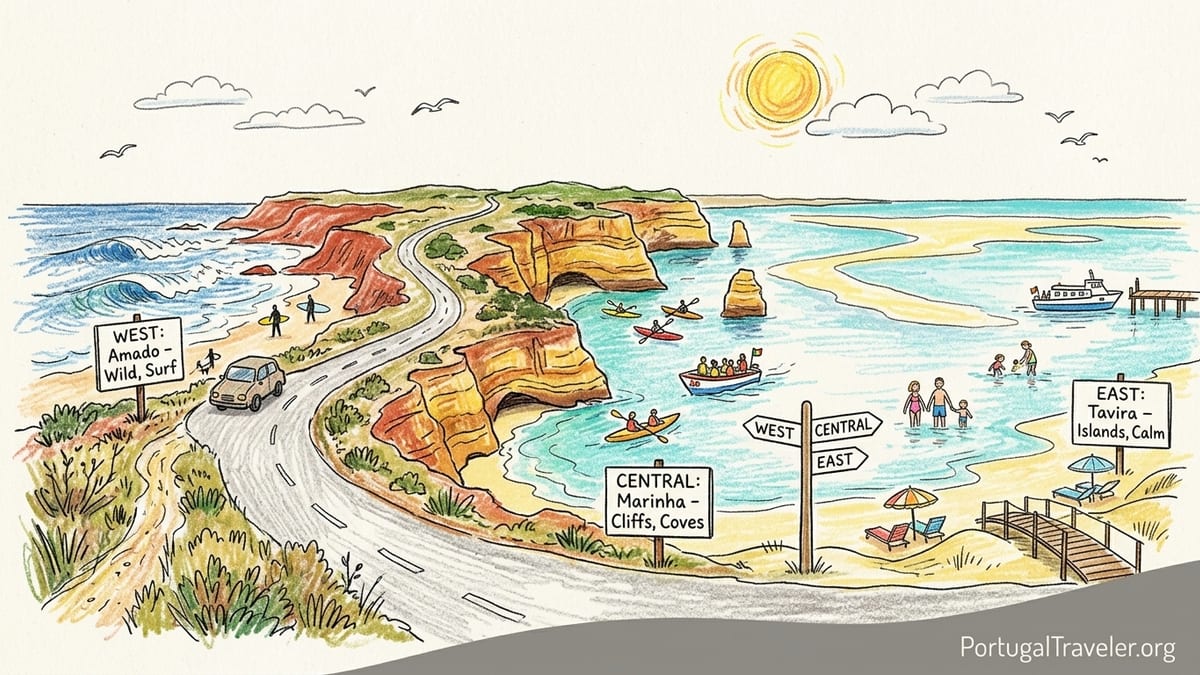
Official tourism material divides the Algarve into roughly 200 kilometres of coast, split into three very different personalities: the wild Atlantic‑facing Costa Vicentina in the west, the cliff‑backed central Algarve between roughly Lagos and Faro, and the flatter, quieter eastern beaches beyond the Ria Formosa lagoon towards Spain. I used that framework while driving the A22 and the old EN125, detouring to beaches that looked promising on maps and brochures, then keeping only the ones that worked in real life once the first “wow” view had worn off.
On the Costa Vicentina, beaches like Amado and Bordeira sit inside a protected natural park. They feel far from the resort Algarve. Access is almost always by car on narrow roads with dirt parking, and your first contact with the sand is usually via wooden walkways over dunes or short, steep paths. The wind hits first, then the Atlantic swell. Even in late June on my last visit, the water temperature was bracing, wetsuit‑friendly rather than lazy‑swim warm.
In the central Algarve, the postcards are right about the cliffs. Around Lagos, Carvoeiro and Armação de Pêra, golden limestone walls frame coves like Praia da Marinha and Benagil. Here, the arrival is part viewpoint, part workout: park at the top, stare at the turquoise water and rock arches, then descend staircases carved into the rock. The sea is calmer and slightly warmer than on the west, with clearer water and finer, more golden sand. It is also where crowds, beach concessions, boat tours and kayak rentals are concentrated during the bathing season.
East of Faro, from the Ria Formosa lagoon through Tavira to near Vila Real de Santo António, the Algarve softens. The drama shifts from cliffs to sandbanks, barrier islands and very long strands like Ilha de Tavira or Manta Rota, reached by short ferries, water taxis or boardwalks over dunes. The Atlantic is filtered by the lagoon, so the water usually feels a touch warmer and shallower near the shore. These are the beaches where Portuguese families roll in with cool boxes and shade tents and stay all day, and where I found some of the easiest swimming and most relaxed full‑day stays.
Praia do Amado: The West Coast Beach I’d Return to for Surf and Wild Energy
Praia do Amado, near Carrapateira on the Costa Vicentina, is the one wild west‑coast beach I would go back to without hesitation, specifically for surf days or to show first‑timers what the “other” Algarve looks like. It sits inside the Southwest Alentejo and Vicentine Coast Natural Park, so the approach already feels different: I left the A22 near Lagos, cut across to the N268 and followed signed local roads through scrub and low hills until the tarmac thinned and the surf‑school vans started appearing on the verges.
The arrival experience here is car‑centric. There is a broad dirt and gravel parking area behind the beach, free when I visited, with surf vans selling lessons and renting boards. From the car park you walk down wooden ramps and a short path, not serious stairs, onto compact, slightly coarse yellow sand that stays firm underfoot, even near the tide line. The bay is wide and bracketed by low red and ochre cliffs, with very little natural shade except right under those cliffs in the late afternoon. In summer, the wind most often comes in from the north or northwest, so you feel it on your skin almost immediately after stepping onto the sand.
The sea at Amado is unapologetically Atlantic. Even in early July, the water was cool enough that most people stayed in wetsuits. The shore break can be dumpy on bigger days, with a quick drop‑off from knee depth to chest depth within a few metres, and rips and lateral currents that make this a poor choice for nervous swimmers and small children. On my last visit, small blue‑flag signs marked the supervised swimming area, and lifeguards were on duty during the afternoon bathing hours, but their attention was understandably split with the clusters of surf students on soft boards peppered across the bay.
Facilities here are basic but functional. Behind the sand there were seasonal beach structures: a low restaurant and bar with outdoor terrace, simple toilets, and outdoor showers to rinse off salt and sand. I did not rent chairs at Amado and did not see neat rows of loungers like on the resort beaches; most people used towels or brought their own folding chairs. From mid‑morning to late afternoon the central section became busy with surf schools, but because the bay is large, it never reached the shoulder‑to‑shoulder crowding of central Algarve coves. Across several visits I usually stayed three to four hours, enough for a surf lesson plus time to warm up on the sand. After the first photograph from the clifftop lookout, the enjoyment actually increased as the surf rhythm took over, although I would not personally choose this beach for an all‑day sun‑lounging session or for young families.
Praia da Marinha: Iconic Cliff Scenery, Tricky Parking and Shorter Stays
Praia da Marinha, near Lagoa in the central Algarve, is the beach image you see on glossy Algarve campaigns, and the official tourism board openly highlights this cliff‑backed coastline as the emblem of the region. The reality on the ground is that Marinha is breathtaking, but it is also one of the most logistically constrained and, at peak season, overrated beaches for spending a full day. I would return for the cliffs and a swim, but with expectations adjusted and my timetable set firmly for early morning or late afternoon.
To reach Marinha I left the main EN125 near Lagoa and followed smaller rural roads past vineyards and low houses, with brown signs pointing the way. Public buses connect towns like Lagoa and Carvoeiro, but they do not go all the way to the clifftop car park, so in practice you arrive by car, taxi or an organised tour. There is a free car park at the top of the cliffs, but on my most recent August visit it was effectively full by around 9:30 a.m. Cars were already parking along the access road, adding a hot, dusty roadside walk to the experience for latecomers.
From the parking area the famous viewpoint is steps away. The first view is extraordinary: vertical golden cliffs, rock pillars and sea stacks in layered cream and rust colours, and very clear water graded from pale turquoise to deep blue. To get from view to sand you descend a set of concrete and wooden stairs built into the cliff. They are solid but long and reasonably steep, and people tend to stop to take photos, so the descent and later climb back up can bottleneck and feel slow in the midday heat. Arriving early, before big coach groups, makes a noticeable difference.
The beach area is compact, with fine golden sand that becomes crowded at high tide. The cliffs offer patchy morning shade close to the rock but also come with rockfall signs, so I felt more comfortable setting up a bit further forward with my towel. The bay is open to the south, so wind is usually less aggressive than on the west coast, and on my visits waves were moderate, enough for playful jumping but not serious surf. The water was clearer and felt slightly warmer than on Praia do Amado, and it shelved at a moderate gradient, giving waist‑deep water within a short distance of shore. Seasonal lifeguards patrolled the flagged swimming zone, and at the back of the beach there were toilets, outdoor showers and at least one bar‑restaurant open during bathing season.
I have both rented and skipped sun loungers here. When I last rented a pair with a fixed parasol, I paid a day rate that, while reasonable compared with central Europe, felt high for the short window before crowding reduced the sense of space. By late morning in peak season the sand between the cliffs and the lifeguard posts filled tightly with towels and umbrellas, and the sense of peace from the early hours was largely gone. Across visits I rarely stayed more than two to three hours, preferring to walk a section of the clifftop trail and then move on. In that sense, Praia da Marinha is world‑class for scenery, photography and a mid‑length swim, but if I were choosing a single beach for an unrushed full day, I would look elsewhere on this list.
Praia da Falésia: The Long Central Beach I Actually Spent Whole Days On
Between Olhos de Água and Vilamoura, Praia da Falésia delivers what many travellers imagine when they book the Algarve: red and white cliffs, green pine trees on top, a huge run of sand and just enough facilities to feel looked after. After testing many central beaches, this is the one where I ended up staying entire days, and it is where I would point families and casual swimmers who want scenery without cliff‑cove claustrophobia.
Access to Falésia depends on which end you choose. When I based myself near Olhos de Água, I walked down from town via a mix of residential streets and signed footpaths. At several access points wooden staircases lead down from the pine‑topped cliffs to the sand. The stairs are solid and shorter than Marinha’s, but you still feel the climb back up under the afternoon sun. At the Vilamoura end, I also arrived from resort car parks on flatter ground, with only gentle ramps and short steps onto the beach. In both cases parking was a mix of free roadside spaces and paid or time‑limited spots in high season, so arriving before late morning made the experience easier.
The sand here is fine, firm and wonderfully even, with plenty of space to lay a towel even when the central sections fill up in July and August. The cliffs sit to the north, so you get good wind protection from cooler inland breezes while remaining exposed to sea breezes from the south. In practice, on my summer visits the air felt warm but rarely stifling, especially compared with enclosed coves. By mid‑morning the beach was already lively but because Falésia runs for kilometres, I could simply walk a few minutes along the shore to find a quieter patch.
The sea here is friendlier than on the west. Waves range from gentle to moderate, enough for kids with bodyboards but rarely challenging. The entry is gradual and sandy, with no cliffs dropping straight into the water. In the official bathing season lifeguard posts are spaced at intervals, indicated by flags, and I routinely saw families with small children staying close to these zones. Along the back of the beach there are several licensed concessions with lines of sunbeds and parasols for rent, plus restaurants and beach bars that serve full meals, snacks and drinks. I used the chairs on my longer stays and found the cost acceptable for a full‑day base with shade. Showers and toilets are available near the main access points.
The key difference at Falésia is that the beach remains enjoyable long after the first “red cliffs over blue water” photo. I have stayed from around 10 a.m. until 6 p.m., dipping in and out of the sea, reading under the umbrella and walking sections of the beach when it felt too busy directly in front of a bar. It does get busy in high summer, but the combination of space, lifeguards, food options and soft sand makes it an easy recommendation for full days, especially for mixed groups and families who want both scenery and simplicity.
Praia da Rocha and Alvor: Resort Beaches that Work Best for Convenience
Praia da Rocha in Portimão and nearby Alvor are the central Algarve’s big resort beaches. They are not my idea of romantic Algarve, but they deliver very specific advantages that make them worth considering, especially if you care about ease of access, a town right behind you and a full spread of services. After several stays in Portimão and one in Alvor, I would return to both when I want a “no thinking required” beach day, though I now pick my sections more carefully.
At Praia da Rocha, the arrival is urban. I walked from my hotel along the main avenida and accessed the beach via wide staircases and ramps that drop down from the clifftop promenade. There are also lifts in some spots, useful for buggies. The sand is a vast, wide strip that feels more like a city beach than a cove, with soft golden sand that can get very hot by mid‑afternoon. Natural shade is practically non‑existent, so shade comes from rented parasols or your own gear. Wind is usually moderate, often a sea breeze rather than the gusty cross‑winds of the west coast.
The sea at Rocha and Alvor is usually calmer than on the Costa Vicentina but more exposed than inside the Ria Formosa. On my visits in June and early September, small waves rolled in steadily, ideal for light bodyboarding rather than serious surf. The depth increases gradually, and lifeguard stations are spaced along the beach in season. Along the back of the sand, long boardwalks connect beach bars, full‑service restaurants and clusters of loungers and umbrellas for rent. I have rented sets here, which came with fixed‑position parasols and basic but comfortable loungers, and appreciated being able to retreat quickly to cafes or my hotel if weather turned or crowds became overwhelming.
Alvor, a short drive away, feels softer. The arrival is usually by car to large surface car parks behind the dunes, followed by a pleasant walk on wooden boardwalks that snake out towards the sea and over the estuary wetlands. The sand at Alvor is wide and fine, and there is more of a sense of nature thanks to the estuary and dunes. On windier days I noticed more sand being whipped along the surface than at Praia da Rocha, but there was also more room to move up or down the shore to find a comfortable angle. Facilities are similar: lifeguards in season, beach bars, toilets near the main access points and rows of rentable chairs in front of some concessions.
Across several full‑day tests in both places, the beaches remained functional rather than magical once the early‑morning light had gone. They excel for convenience: easy parking or hotel walks, guaranteed food options, plentiful lounger rentals and predictable swimming conditions. For families with strollers, travellers with mobility concerns or anyone who wants nightlife and restaurants directly behind the sand, they are practical choices. For pure scenery and atmosphere, I would still choose Falésia or the eastern beaches below, but Rocha and Alvor have earned a place on my list for ease.
Ilha de Tavira and the Eastern Islands: Where I’d Go to Swim All Day
The official descriptions of the Algarve emphasise how the east, beyond the Ria Formosa lagoon, trades cliffs for long, calm beaches and barrier islands, and my time on Ilha de Tavira and neighbouring strands confirmed that. These are the beaches where I happily stayed from morning until the last ferry, swimming, reading and watching local families settle in for long, shaded lunches under canvas gazebos.
To reach Ilha de Tavira, I walked through Tavira town to the small ferry pier and took a short boat ride across the lagoon. In high season the ferries run frequently, and there are also smaller water‑taxis from nearby quays, which I used on one visit when I wanted to return later in the day. Arrival on the island is via a wooden pier and a sandy track through low pines, lined with small seasonal restaurants, snack bars and a few simple shops selling beach gear. There are no cars on the island section near the main beach. From the end of the path, wide sand spreads out to either side.
The sand here is pale, soft and deep, with dunes behind, protected by low fencing and boardwalks. The shore slopes very gently into the sea, creating a wide band of knee‑ to waist‑deep water that is ideal for relaxed swimming and for children to play. Compared with the Costa Vicentina and central cliff beaches, the water felt several degrees warmer on each of my summer visits, helped by the geography of the lagoon system. Small waves roll in but rarely build to anything challenging. Wind can pick up in the afternoon, but with no cliffs or tall buildings, it felt like an even, steady breeze rather than gusts.
Facilities on Ilha de Tavira are surprisingly comprehensive given the setting. Behind the main supervised area I used restaurants that served grilled fish, salads and simple dishes, along with cafes for coffee and ice cream. There were public toilets, outdoor showers at some exits and clearly marked lifeguard posts in the core bathing zone. I rented sun loungers with parasols on my longest days there and found that, while there was a denser crowd directly by the ferry arrival area, walking ten to fifteen minutes along the shore took me to quieter sections where I could still see a lifeguard flag in the distance but enjoy more space. Crowding peaked around midday but never felt as compressed as in small central coves.
In terms of how long the beach remained enjoyable after the initial arrival, Ilha de Tavira and nearby eastern beaches like those near Cacela Velha were standouts. I easily spent full days on the island, from around 10 a.m. ferry arrivals to late‑afternoon returns, without feeling hemmed in or battered by surf. For travellers who prioritise swimming, gentle paddling, child‑friendly shallows and the simple pleasure of walking long distances on flat sand, this is the part of the Algarve I would most confidently recommend.
What Felt Overrated, Harder Than Expected, and How I Now Choose Beaches
After multiple circuits of the Algarve coast, a few patterns emerged. The first is that some of the most heavily promoted cliff coves between Lagos and Carvoeiro are best treated as viewpoints and short‑stay beaches, not full‑day bases. Praia da Marinha is the archetype: spectacular for photos and a genuinely beautiful swim, but limited space, a steep stair descent and heavy midday crowding mean my realistic visit length tops out at a couple of hours. Similarly, a handful of small coves accessible only by long staircases or steep trails looked inviting from the top but lost appeal once I imagined hauling cool boxes, beach tents and small children up and down in the heat.
On the “harder than expected” list, access and parking were the main culprits. Remote Costa Vicentina beaches such as those near Carrapateira receive far fewer tour buses, but their narrow access roads and dirt or cliff‑edge car parks demand a level of driving confidence that surprises some travellers used to multi‑storey parking by resorts. In August it is also common for the limited parking at top‑tier scenic spots to fill by mid‑morning, pushing late arrivals into informal roadside parking or long uphill walks. Public transport, while useful between major towns, rarely delivers you directly to a beach staircase or dunes. If you plan to rely on buses and trains, the resort beaches of Portimão, Albufeira and Tavira town offer the simplest onward walks.
Conversely, several beaches quietly exceeded expectations and became places I would return to first. Praia da Falésia, which sometimes sits in the shadow of more famous coves in marketing materials, emerged as my go‑to in the central Algarve because it combined consistent lifeguard cover, restaurants, showers, long walking options and a dramatic but not claustrophobic backdrop. In the east, the island beaches around Tavira and the stretches near Manta Rota felt underrated internationally compared with the famous cliff coves, yet they provided the best conditions for everyday swimmers and families.
If I had to match beaches to travellers based on my own time on the sand, I would choose Costa Vicentina spots like Praia do Amado for surfers and landscape lovers who do not mind cool water and wind, Marinha and its neighbours for photographers and short scenic swims, Praia da Falésia and Alvor for mixed groups and all‑day lounging with easy facilities, and Ilha de Tavira and other eastern island beaches for people who care most about warmish, shallow water and long, flat walks. The Algarve has enough variety that once you are honest about how much you enjoy stair climbs, wind and waves, you can find a beach you will genuinely want to return to, not just one that looks perfect on a poster.
FAQ
Q1. Which Algarve beach would you personally choose for swimming all day?
For relaxed, repeated swims in relatively warm, shallow water I would choose Ilha de Tavira or another Ria Formosa island beach, where the gentle slope and lagoon‑influenced conditions make it easy to stay in and out of the sea all day.
Q2. Where in the Algarve is best for families with young children?
For a mix of lifeguards, gradual depth and easy facilities, Praia da Falésia, Alvor and the eastern beaches around Tavira work especially well, because they combine soft sand, space for play, clear supervision zones and straightforward access to toilets, snacks and shade.
Q3. Which Algarve beaches are best for surfing rather than gentle swimming?
The Costa Vicentina west coast, particularly beaches like Praia do Amado near Carrapateira, is the area I would return to for surf, thanks to consistent Atlantic swell, on‑site surf schools and a wide bay that can accommodate many surfers at once.
Q4. Are the famous cliff beaches like Praia da Marinha suitable for a full day with kids?
I would treat Praia da Marinha and similar coves as half‑day or shorter visits with children, mainly because of the steep stair access, limited flat sand at high tide and crowding during peak hours, then move to a larger, easier beach for the rest of the day.
Q5. Do I need a car to reach the Algarve’s best beaches?
A car makes reaching wild west‑coast beaches and some central coves far easier, as public transport usually stops in nearby towns, but you can still enjoy good beaches like Praia da Rocha, Falésia and Ilha de Tavira using buses, trains and short ferries paired with walking.
Q6. How cold is the water on the Costa Vicentina compared with the central Algarve?
On my summer visits the Atlantic on the Costa Vicentina felt noticeably cooler, often encouraging the use of wetsuits for longer sessions, while the central and especially eastern Algarve seas were more comfortable for casual, longer swims without extra gear.
Q7. Which beaches felt overrated once you were actually on the sand?
Praiada Marinha remains stunning for photos and a short swim, but the combination of steep stairs, tight space and heavy summer crowds meant it did not work as well for full‑day relaxing as more spacious options like Falésia or the eastern islands.
Q8. Where would you base yourself without a car for easy beach access?
I would consider staying in towns like Portimão, Albufeira or Tavira, where you can walk or take very short local rides to large beaches such as Praia da Rocha, sections of Falésia or Ilha de Tavira without needing to navigate rural roads or find clifftop parking.
Q9. Are chair and umbrella rentals widely available on Algarve beaches?
On resort and larger central and eastern beaches like Praia da Rocha, Falésia, Alvor and Ilha de Tavira, licensed concessions usually rent loungers and parasols in the bathing season, while more remote or protected beaches like some on the Costa Vicentina have few or none.
Q10. If you had only two beach days in the Algarve, which would you pick?
For variety, I would spend one day between Praia da Falésia and nearby resort strands to experience the classic cliff‑and‑resort Algarve, and one full day on Ilha de Tavira or a neighbouring eastern island beach to enjoy the calmer, long‑sand, lagoon‑influenced side of the coast.