


On my last long stay in the Lisbon region I stopped trying to cram everything into day trips and instead divided my time between three very different bases: central Lisbon, the Atlantic coast, and the inland countryside. I kept the same overall radius, usually no more than ninety minutes from the city, but the way each place felt in daily life changed so dramatically that it reshaped how I now plan Lisbon trips for friends and readers.
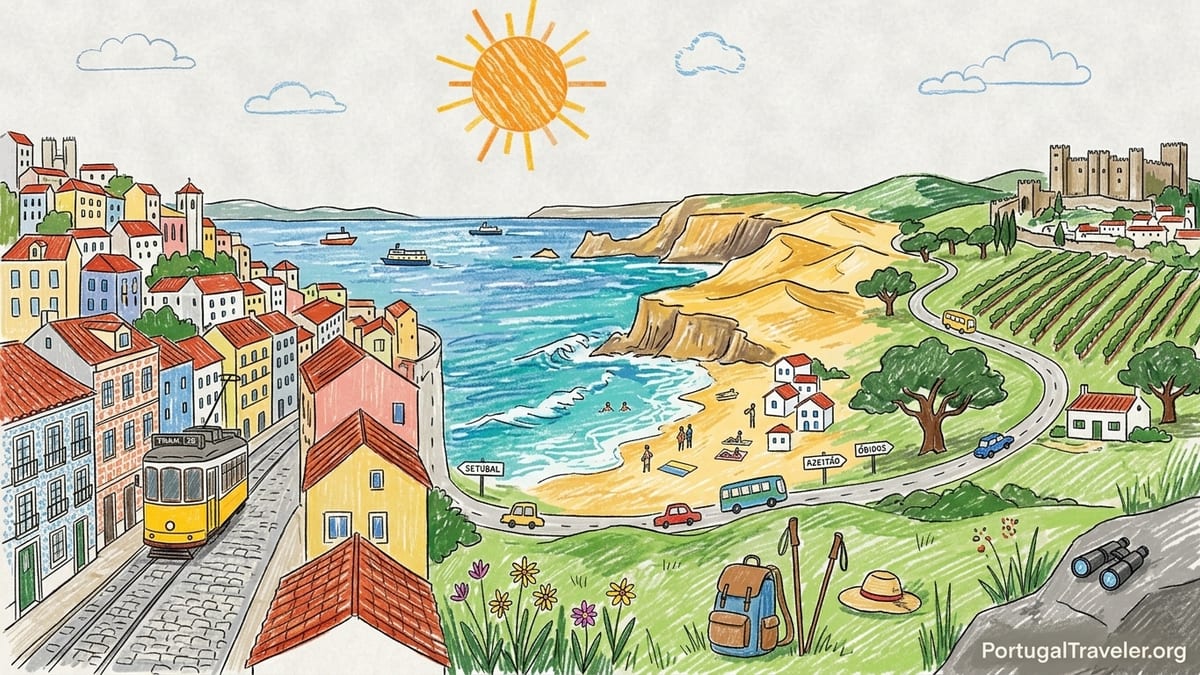
How Lisbon City, Coast and Countryside Fell Into Place
When I first visited Lisbon, I treated the entire region as one destination. I slept in the city, darted out on trains and buses, and came back every night. Only when I started spending several nights in each setting did I realise how stark the contrasts are between central Lisbon, the Atlantic edge north and south of the Tagus, and the quieter inland towns and wine country behind the hills.
On this last trip I booked ten nights in a small apartment near Martim Moniz in Lisbon, five nights in a guesthouse near the sand dunes by Praia do Meco on the Sesimbra side of the coast, and four nights in a converted farmhouse outside Azeitão and later in the medieval town of Óbidos. All of these are within what most people casually call the “Lisbon area,” yet my days looked and felt completely different in each place.
I moved around by metro, suburban train lines, regional buses and a couple of short car rentals. Along the way I paid attention to not just the big-ticket sights but the small routines: where I bought coffee, what evenings felt like, when the crowds hit, and how easy it was to get around without a strict schedule. Those details are what ended up mattering most in deciding how to split time between city, coast and countryside.
What follows is not a mathematical comparison but an honest, first-person look at what it felt like to live in each part of the Lisbon region for a few days, and what kinds of travellers might be happiest in each.
Staying in Lisbon City: Dense, Walkable and Longer Nights
In Lisbon itself I stayed within walking distance of Rossio and Martim Moniz, close enough that I could hear tram squeals in the morning and bar chatter at night. My days started with the metro. Lisbon’s metro runs roughly from 6:30 in the morning until 1:00 at night, and with a Navegante travel card loaded I tapped through the gates several times a day without thinking about individual fares. A combined Carris and Metro ticket currently costs under 2 euros per ride, and a 24 hour pass is just over 7 euros, which meant I hopped between Baixa, Arroios and Alcântara very freely.
Accommodation choice in the city felt like a trade-off between noise and convenience. Around Baixa and Chiado I looked at hotels in the 150 to 200 euro range per night in spring, with polished lobbies and instant access to the Elevador de Santa Justa and tram 28. In contrast, my simple one-bedroom near Martim Moniz cost about 110 euros per night and sat on a steep hill between residential buildings, with laundry lines and small groceries downstairs. Personally it felt more like living in the city, but I could still walk to Rossio in under ten minutes.
Eating in Lisbon was where the city really pulled away from the coast and countryside. In one day I could eat a plate of grilled sardines with boiled potatoes at a no-frills tasca in Mouraria for around 12 euros, grab a pastel de nata and bica at a counter in Praça da Figueira for under 3 euros, and then spend 30 to 40 euros per person at a contemporary place in Campo de Ourique with natural wines and modern takes on Alentejo pork. That density of choice simply does not exist when you move out to the dunes or the vineyards.
Evenings in town were long and layered. On one night I started with sunset at Miradouro da Senhora do Monte, picked up a drink around Intendente, and then wandered down through the lanes of Bairro Alto where Fado spilled out of doorways and small bars alternated between quiet and packed depending on who had live music. The energy was youthful but not frantic, and getting home was as simple as a short metro ride or a ten euro taxi.
Life on the Atlantic Coast: Space, Sea Air and Early Mornings
By contrast, the time I spent based on the Atlantic side near Sesimbra and Praia do Meco ran on the rhythm of the tides and bus timetables. I chose this stretch deliberately instead of the better-known Cascais line because I wanted a quieter, more rugged coast than the busy town beaches west of Belém. From Lisbon I crossed the 25 de Abril bridge by bus to Sesimbra and then used a combination of local buses and a short car rental to reach Meco and Arrábida.
My guesthouse outside Aldeia do Meco sat behind the pine dunes, a ten to fifteen minute walk from the dramatic cliffs above Praia do Meco. Rooms here in high season hovered around 90 to 130 euros per night, typically with a small pool and breakfast served under pine trees. Compared to central Lisbon the nights were almost silent, broken only by wind in the vegetation and the hum of distant surf. I could see the stars clearly, which you forget is possible when you have slept several nights off Avenida da Liberdade.
On the coast, eating shifted toward simple seafood and early dinners. In Sesimbra I queued with local families at a marisqueira on Avenida dos Náufragos where a shared platter of clams, shrimp and grilled fish came to roughly 25 to 30 euros per person with house wine. In the tiny settlement behind Praia do Meco the choice was much narrower. One evening we walked to a small restaurant set among holiday houses for grilled cuttlefish and salad, another we picked up groceries from a minimarket and cooked in the guesthouse kitchen. After around 22:00 most places were quiet, and instead of drifting into a second or third bar, I found myself reading on the terrace.
Reaching the beaches of Arrábida Natural Park from this base showed me another side of the coast. In summer, the “Arrábida sem Carros” programme limits private vehicle access on the one narrow road that hugs the cliffs between beaches like Figueirinha, Galapos and Portinho da Arrábida, with daytime hours when traffic is restricted and park-and-ride shuttles operate instead. When I visited in early summer, I parked at a designated lot above Figueirinha and took the shuttle minibus down to the sand, paying only a few euros but gaining peace of mind from not having to squeeze along the cliff road.
Those days in Arrábida felt like being far from the city even though Setúbal is only about fifty kilometres from Lisbon. The beaches were set below steep limestone hills, the water a clear but cold turquoise. I saw no high-rise hotels, just a handful of small beach kiosks renting umbrellas and serving grilled fish and cold drinks. At Galapinhos I arrived by foot along a rocky path and spent the afternoon listening to the echo of waves off the cliffs. It was an entirely different experience from the urban riverfront in Belém, which faces the estuary rather than open Atlantic.
The Inland Countryside: Vineyards, Villages and Slower Clocks
Moving inland, the rhythm slowed yet again. My first inland base on this trip was a small rural stay between Azeitão and the Arrábida ridge, surrounded by vineyards that supply the area’s moscatel wines. I reached it by picking up a rental car in Setúbal, though regional buses can take you as far as Azeitão itself from Lisbon or Setúbal. Nightly rates here were around 80 to 120 euros, with breakfast built around local cheese, bread and the farm’s own jam.
From this base my main outings involved short drives or bike rides to historic estates and small restaurants. Instead of the sweeping sea views of Arrábida’s southern slopes, the inland side showed off cork oak groves, low stone walls and whitewashed chapels. In Vila Nogueira de Azeitão I toured a historic wine cellar, tasted sweet muscatel for a fee of just a few euros, and then walked to a café where coffee and a slice of “torta de Azeitão” together cost under 4 euros. The overall cost of eating out here felt lower than both Lisbon and the more touristy Atlantic strip.
Later I moved even further inland to stay two nights within the walls of Óbidos, which lies north of Lisbon but often forms part of a broader regional itinerary. From Lisbon’s Campo Grande bus terminal I caught a Rodoviária do Oeste bus, paid in cash on board, and arrived in around an hour to walk through the town gate with my overnight bag. The medieval streets inside the walls are undeniably popular during day-trip hours, but staying the night changed the mood completely once the buses left.
In Óbidos evenings were about strolling the empty main lane, occasionally sipping a small plastic cup of cherry liqueur from a doorway vendor, and watching the sunset from the battlements. There were no metros or trams, only occasional cars on the outside ring road. Accommodation options inside the walls ranged from simple guesthouses at 70 to 100 euros per night to a historic pousada commanding more, but all shared the same quiet after dark. It was the polar opposite of sleeping a few metres from Rua da Rosa in Lisbon, where conversations drifted up to my balcony at two in the morning.
What surprised me inland was how quickly journeys became tied to specific bus schedules if I did not have a car. A missed bus from Óbidos back to Lisbon could mean a wait of an hour or more, and in rural Azeitão I often saw only a handful of departures per day. That slower clock was fine for a few peaceful days but would frustrate someone who wanted to tick off many sights.
Getting Around: Urban Convenience vs Regional Logistics
Transport was the single biggest factor that changed between the three sides of the region. In Lisbon city proper, once I had a Navegante travel card loaded with either a balance or a 24 hour pass, daily movement required almost no planning. A single Carris and Metro ticket costs around 1.90 euros and covers an hour of travel across buses, trams and metro, and I could reach most central neighbourhoods within twenty minutes. Even late at night, the frequency on major lines felt comfortable, and rideshare taxis filled in the gaps.
On the Atlantic coast, the core spine from Lisbon to Cascais is served by a frequent suburban train along the Linha de Cascais, but my choice to stay farther south around Sesimbra and Meco made me more dependent on regional buses and occasional taxis. During the week, buses from Lisbon to Sesimbra were straightforward and cost under 6 euros, but from Sesimbra to Praia do Meco I had to pay attention to weekday versus weekend schedules, when services thinned out and the last bus back could be around early evening. In Arrábida the summer shuttle system added another layer of timetables, since the park limits private car access during the busiest months to protect the cliffs and manage congestion.
Inland, especially around Azeitão, a car felt almost essential for full flexibility. Without one I could have reached only the main villages and would have missed smaller chapels, trailheads and viewpoints. The road network itself was easy, with short hops of ten to twenty minutes between villages and little traffic once I left the main N10 and A2 routes, but petrol and tolls added to costs that simply do not appear if you stay only in the city with a metro pass.
For long-distance day trips such as Óbidos or even farther afield to Nazaré, I found the bus system reliable but less forgiving. At Campo Grande terminal, bus tickets to Óbidos cost in the region of 8 to 10 euros one way, payable in cash when boarding, and travel time hovered around an hour to an hour and a half depending on stops. Miss a departure and you might wait thirty to sixty minutes for the next one. That is perfectly manageable for a handful of excursions but more tiring if you try to cover coast and countryside heavily in a short stay.
The practical conclusion for me was that travellers planning to split their trip between city, coast and countryside should decide early how comfortable they are driving. Without a car, it makes sense to choose coastal bases along strong rail or bus corridors, such as near the Cascais line or in Setúbal itself, and to pick inland towns with direct, frequent bus links to Lisbon.
Atmosphere, Crowds and Evenings: Who Thrives Where
Each part of the Lisbon region drew a different crowd and created a different rhythm from breakfast to bedtime. In Lisbon city my neighbourhood near Martim Moniz mixed long-term residents with short-stay visitors and a significant immigrant community. Mornings started with workers catching the first metro and café counters full by eight, then thinned out in early afternoon before another wave of activity in the early evening. Tour buses fed Baixa and Belém, but I could step one or two blocks away and find residential calm.
Crowds in the city were most noticeable around very specific touchpoints: the tram 28 stop at Praça Martim Moniz, the Santa Justa lift, and the narrow steps leading up to São Jorge Castle. Outside those pockets I often walked through quiet lanes lined with laundry and heard only the clack of tiles under my feet. Evenings near Bairro Alto and Cais do Sodré, by contrast, could feel intense, with dense bar clusters, music leaking from doorways and people out late, especially in summer and on weekends.
On the coast, the crowd shifted to a mix of Lisbon weekenders and international visitors with rental cars and cool boxes. In Sesimbra there was a family holiday feel, with strollers on the promenade and children playing on the sand until sunset. Around Praia do Meco the scene was more alternative and nature focused, with a well-known nude section further along the beach, surfers and dog walkers at dusk, and younger locals gathering at casual bar shacks above the sands. Even on busy days the overall soundscape was waves and wind rather than trams and traffic.
In the countryside, especially near Azeitão and Óbidos in the evenings, the quiet could be profound. After around 21:30 on weeknights I walked through streets with more cats than people. Small restaurants might stay open, but reservations were straightforward and there was no sense of rushing to “beat the crowds.” For some travellers, that peace feels magical, an antidote to city life. Others might find it dull after a couple of nights if they enjoy bar-hopping or spontaneous late-night plans.
Personally, I realised that I prefer my longest stretch in Lisbon city for cultural variety and then shorter blocks on the coast and inland. The city gave me energy and options, while the other two bases worked best as three to four night resets where I leaned into early mornings and quiet nights.
Where Each Side Shines: Matching Place to Travel Style
Looking back at my notes, what stands out is not which place was “better,” but when each one felt right. If I had only five nights in the Lisbon region, I would now spend at least three of them in the city. That would give enough time to learn a tram or metro route by heart, find a favourite café, and see how Lisbon changes from Monday morning to Friday night. The convenience of having the metro, short taxi rides and a dense restaurant scene all on the doorstep simply makes the city the strongest base for a first visit.
The Atlantic coast came into its own when my main priorities were sea air, long walks and quiet nights, not ticking off museums. Staying several nights near Sesimbra and Meco meant I could watch the same stretch of sand in different moods: morning mist, bright midday glare, orange evening light. Arrábida added dramatic scenery and genuinely wild-feeling corners of coast within an hour of Lisbon. It suits travellers who want to swim, hike short coastal trails and linger over grilled fish at lunch, and who are happy to accept that evenings will be very low key.
The inland countryside rewarded slow, sensory travel. Wine lovers can base themselves around Azeitão to tour local producers without packing and unpacking for each tasting. History fans who want medieval walls and cobbled alleys after dark can spend a night or two in Óbidos rather than rushing back to Lisbon on an evening bus. These areas are ideal for travellers who do not need nightlife, appreciate landscapes of vineyards and olive groves as much as beaches, and are comfortable with either renting a car or working around infrequent bus schedules.
For my own future trips, I now imagine the Lisbon region as three overlapping circles. One trip might combine five or six nights in Lisbon with three nights on the coast. Another might link Lisbon with a countryside stay and a day trip to a quieter stretch of Atlantic beach. The key is to decide which “side” is allowed to set the pace of the trip and to base yourself there, rather than trying to force every part of the region into the same style of travel.
The Takeaway
After dividing my time between Lisbon city, the Atlantic coast and the inland countryside, I stopped thinking of the Lisbon region as a single, homogeneous destination. The city felt dense, walkable and culturally rich, with late nights and easy public transport. The coast felt open and elemental, shaped by tides, wind and seasonal access rules in protected areas like Arrábida. The countryside felt timeless and human-scaled, with days structured around meals, vineyard visits and bus timetables rather than sightseeing lists.
For travellers planning their own trips, the practical question is not “Should I visit all three?” but “Which one should be my home base, and for how long?” If you enjoy lively evenings, diverse food and minimal planning, give Lisbon the majority of your nights and treat the coast or countryside as add-ons. If you crave quiet and nature, consider reversing that logic and letting a coastal village or inland town anchor your stay, with city days sprinkled in by train or bus.
Whatever balance you choose, build in at least two consecutive nights in any new base. Arriving somewhere like Meco, Azeitão or Óbidos late in the day and leaving the next morning will not reveal its character. Two or three sunrises, one cloudy afternoon, and a single unhurried evening walk will tell you far more about whether that side of the Lisbon region feels like your kind of place.
FAQ
Q1. If I have one week in the Lisbon region, how should I split my time between city, coast and countryside?
For a first visit, a balanced plan is four or five nights in Lisbon city and two or three nights on either the Atlantic coast or inland in a town like Óbidos or around Azeitão. That gives enough time to feel the city’s rhythm but still experience a slower side of the region without spending the whole week packing and unpacking.
Q2. Can I visit the Atlantic coast and the inland countryside as day trips without changing hotels?
Yes, you can reach places like Cascais, Setúbal or Óbidos as day trips from Lisbon using trains and buses, but it compresses your time and keeps you on transport schedules. Staying at least one or two nights on the coast or inland lets you see those areas early and late in the day when they are quieter and gives you a better sense of what it is like to be there, not just pass through.
Q3. Do I need a car to enjoy the Lisbon coast and countryside?
You do not need a car if you choose bases on strong public transport corridors, such as along the Cascais train line, in Setúbal or in Óbidos, and are comfortable planning around bus and train timetables. A car becomes more useful for reaching less connected coastal stretches near Meco or scattered vineyards and villages inland around Azeitão, especially if you want flexibility and do not want to watch the clock.
Q4. Is it cheaper to stay on the coast or in the countryside than in central Lisbon?
In my experience, accommodation outside the city can be slightly less expensive for similar comfort, especially in rural guesthouses and small inland hotels. Eating out can also cost a little less in countryside towns than in central neighbourhoods of Lisbon. However, very popular coastal villages in high season can approach or match city prices, especially for stylish boutique properties close to the beach.
Q5. How crowded are Arrábida and other nearby beaches in summer?
Arrábida’s most accessible beaches, such as Figueirinha and Galapos, can be very busy on summer weekends and holidays, which is why local authorities restrict car access and run shuttle buses. On weekdays or outside peak summer, the same beaches feel more relaxed, and smaller coves reached by footpaths are quieter. The stretch around Praia do Meco, while also popular, generally feels less crowded than the town beaches immediately west of Lisbon.
Q6. Which side of the region is best if I care most about restaurants and nightlife?
Lisbon city is by far the best choice if restaurants, bars and varied evening options are priorities. You can eat everything from traditional tascas to experimental tasting menus and then move between different neighbourhoods for drinks or music without needing a car. Coastal towns and inland villages are pleasant in the evenings but quieter, with a focus on relaxed dinners rather than late-night bar-hopping.
Q7. Where should families with children consider basing themselves?
Families often enjoy a mix, with a few nights in Lisbon for sights like tram rides, riverside walks and parks, and a few nights on the coast where children can play on the sand and swim under supervision. Areas like Sesimbra, Carcavelos or the bay near Setúbal offer relatively gentle water and promenades. Inland towns can also work for families that enjoy castles and countryside walks, but you will rely more on buses or a rental car.
Q8. How does the weather differ between city, coast and countryside?
Lisbon city tends to feel warmer and a bit more sheltered, with heat radiating off stone streets in summer. The Atlantic coast is often windier and cooler, with sea breezes that can make evenings feel fresh even on hot days. Inland, away from the immediate influence of the ocean, daytime temperatures can climb higher in summer, but nights may cool pleasantly, especially in rural areas with more vegetation.
Q9. If I am travelling off-season, which side works best as a base?
Outside the main summer months, Lisbon city makes the most reliable base because restaurants, cultural venues and public transport run year-round and do not depend on beach tourism. The coast can still be beautiful in autumn and spring, but some seasonal businesses reduce hours. Inland towns remain atmospheric in cooler months, and wine regions around Azeitão can be particularly appealing when the hills are green and walking conditions are comfortable.
Q10. How far in advance should I book accommodation in each area?
For peak summer months and major holidays, it is wise to book several months ahead in all three areas, especially for small guesthouses on the coast and character properties inside historic towns like Óbidos. In shoulder seasons you can often book Lisbon hotels and rural stays with less notice, though booking a few weeks in advance still gives better choice and prices. Last-minute options exist but may limit you to less central or less characterful places.