

Ask three Algarve regulars about the best time to visit and you will usually get three different answers. After several trips that landed in very different parts of the calendar, I stopped thinking in terms of one "perfect" month and started matching my dates to the kind of trip I wanted: swimming and beach-lounging, road-tripping and sightseeing, hiking coastal trails, or chasing surf. What follows is grounded in months I have actually spent on the Algarve coast, then framed by what the climate data says about the rest of the year.
How Algarve Seasons Really Feel On The Ground
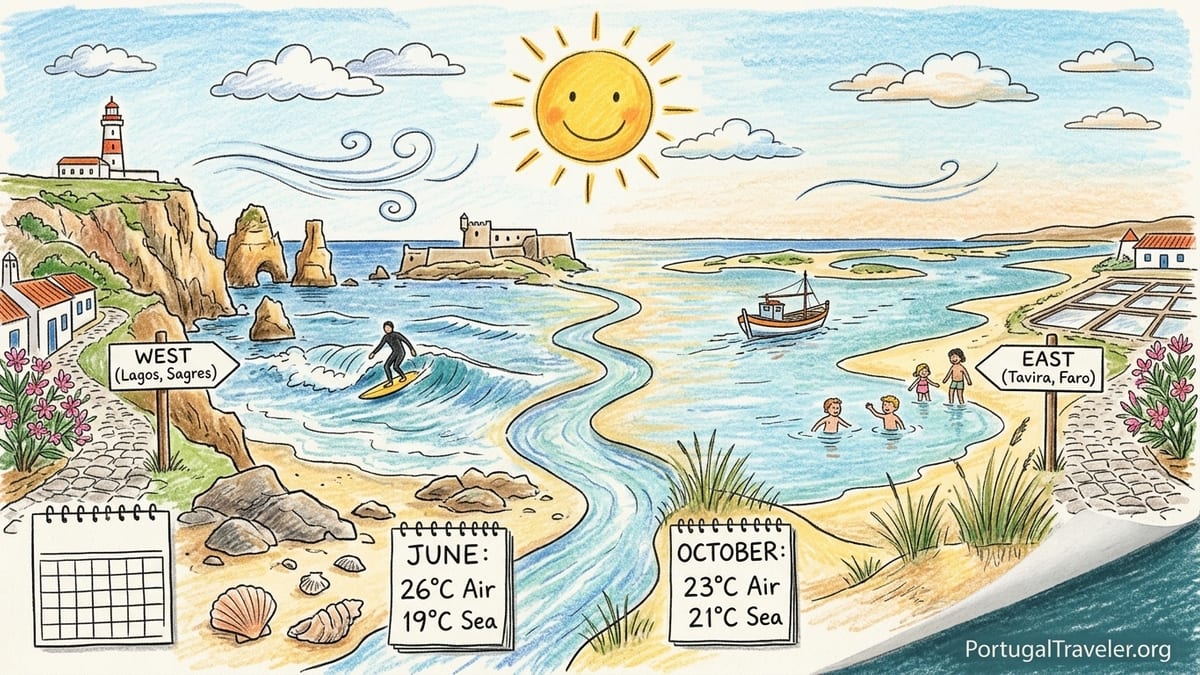
Official tourism campaigns like to describe the Algarve as having more than 3,000 hours of sunshine a year and mild weather in all seasons. That broad picture is accurate, especially around Faro and along the eastern coastline, where climate records show annual sunshine above the 3,000-hour mark and very little rain from June through September. Yet that slogan hides two crucial details that shaped every one of my trips: first, the west and east coasts do not feel the same, and second, the Atlantic warms and cools on its own schedule, so water in October can feel friendlier than in June even if the air is cooler.
On my summer visits to the western Algarve around Lagos and Sagres, the contrast was obvious. Daytime skies were almost always cloudless, but a strong north or northwest wind often picked up by late morning on exposed beaches. The air itself was warm, usually somewhere in the mid to high 20s Celsius in June according to Faro-area climate tables, yet that breeze and the Atlantic upwelling on the west side kept the water on the chilly side for longer swims. In October, under softer light and slightly cooler air, the sea felt noticeably less shocking, which lines up with regional sea-temperature data showing peaks around late September and early October rather than early summer.
Further east, around Tavira and the barrier-island beaches of the Ria Formosa, my autumn trips felt different again. Afternoons were still warm enough for T-shirts and outdoor café tables, but the wind dropped a notch and nights stayed milder, helped by what climatologists describe as more frequent “tropical nights” along the eastern Algarve in summer. The sea is fed by the same Atlantic, but records and local operators both report slightly higher water temperatures between Tavira and Vila Real de Santo António than on the Atlantic-battered west, which matched my own experience wading in there late in the season.
That mix of stable sunshine, shifting wind and slowly warming water means there is no single answer to when the Algarve is “best.” Instead, each part of the coastline comes into its own at different times for different kinds of trips. My June and October stays, on both the exposed west and calmer east, made that point far more clearly than any climate chart could.
June on the Algarve: Early Summer Heat and Cool Atlantic Water
June was my first real test of how “mild” Algarve summers feel on the street. In the central and western Algarve around Lagos and Portimão, meteorological records show average daytime highs in June around 26 to 27 degrees Celsius and lows around 18 degrees, with sea temperatures still in the 19 to 21 degree range. That matched the sensation of stepping out from a shaded alley in Lagos’ old town into full midday sun: perfectly comfortable at 9 a.m., borderline hot by 2 p.m. if you were not near the water, and still warm enough in the evening to eat outside in a light shirt.
For sightseeing, that meant front-loading city walks. I remember starting around 8:30 a.m. in Lagos to stroll past the marina and climb up to viewpoints near Ponta da Piedade before the heat baked the stone paths. By 11 a.m., the combination of reflected sun from the limestone cliffs and very little shade started to feel tiring. On one day we tried reversing the schedule and wandered through Silves’ castle at 3 p.m.; climbing the exposed ramparts in that hour-long window felt much warmer than the raw temperature number suggested, a reminder that Algarve sun intensity matters as much as the air reading.
The Atlantic told a different story. Official sea-temperature guides list June water on the Algarve at roughly 18 to 21 degrees, cooler in the west and slightly milder as you move east. In practice, early-summer dips off beaches like Praia Dona Ana or Meia Praia were bracing. A quick plunge and five-minute swim felt fine on calm days, especially around lunchtime when the sand grew hot underfoot. Staying in longer than ten minutes took resolve, and more than once I watched people walk down the beach, put a toe in, and turn back to their towels. Surf-focused beaches along the Vicentine coast felt even colder due to wind-driven upwelling on the west side.
Crowds and logistics in June fell somewhere between shoulder season and full summer. In Lagos, parking lots behind Meia Praia filled up by late morning on weekends, but on weekdays I could usually still find a spot around 10:30 a.m. without circling more than once. Restaurant reservations in the old town only became essential for prime 8 to 9 p.m. slots at popular seafood places. Beach clubs were operating but not yet packed to their August limits. It felt like the first “busy” month of the season, with plenty of atmosphere and long sunlight hours without the shoulder-to-shoulder crowding of school holidays.
October: Softer Light, Warmer Sea, and Calmer Towns
My October trips, split between Lagos on the west and Tavira on the eastern Ria Formosa, turned out to be a different kind of sweet spot. Climate averages for the Algarve show October daytime highs easing back to around 23 to 24 degrees, with nights around 15 degrees, while the sea lingers in the 20 to 21 degree range after absorbing summer heat. On the ground, that meant pleasant afternoons where jeans or a light dress were enough, a thin sweater felt comfortable after dark, and the sun had lost just enough strength that I could wander through town all day without feeling drained.
In Lagos, I noticed the flip that local guides often mention. In high summer the air is hotter than the sea; by early October it becomes the other way around, with water sometimes holding a degree or two above the air. I remember wading into Praia do Camilo expecting the usual Atlantic shock and instead finding water that felt surprisingly forgiving. It was still not tropical, but I could stay in comfortably for twenty minutes, and the waves were gentler than the short, wind-whipped chop I had seen in June. That lined up neatly with regional sea-temperature data that identifies late September and early October as the warmest swimming window.
Over on the eastern side in Tavira, October had an even more relaxed feel. The air ran slightly warmer and the wind weaker than in Lagos; barrier-island beaches like Praia de Tavira, accessed by short ferry rides across the Ria Formosa lagoon, felt almost half-empty on weekdays. Lifeguard posts were still staffed, cafés behind the dunes were open, but I could spread out a towel with tens of meters of space to either side. Locals told me that August felt completely different there, with ferries running every few minutes and families packed shoulder to shoulder along the high-tide line.
Crowd levels and logistics shifted accordingly. In both Lagos and Tavira, parking near the beach was straightforward even at 11 a.m., and multi-story car parks in the town centers had plenty of spaces at dinner time. We walked into most restaurants without reservations, only booking ahead for especially sought-after spots on Friday and Saturday nights. Accommodation prices also reflected the drop-off from peak. While I will not quote precise nightly rates because they change year by year, there was a noticeable gap between what we paid per night in the first week of October versus published August high-season prices for the same guesthouses, enough to extend the trip by an extra night within the same budget.
West vs East: How Exposure Changes Heat, Wind and Water
The Algarve coastline is often described as two distinct halves. Barlavento, the western side from roughly Lagos to Sagres and up the Vicentine coast, sits fully in the path of Atlantic weather systems and the prevailing northerly winds. Sotavento, the eastern side from Faro through Olhão and Tavira to Vila Real de Santo António, looks toward Spain and the Gulf of Cádiz and is sheltered by both geography and sandbar islands. Climate summaries for the region confirm that the east posts slightly higher average temperatures and more frequent very warm nights, while the west runs a few degrees cooler, windier and cloudier, especially in spring.
On my June stay based in Lagos, that exposure was obvious. Beaches that faced west or southwest, like those along the Vicentine coast north of Sagres, collected wind from late morning onward. Sand blew in low sheets across the beach, umbrellas needed to be pushed deep into the ground, and by mid-afternoon families started to pack up because children were getting chilled after swims. Wave conditions there suited surfers and bodyboarders, with consistent Atlantic swell and whitewater near shore, but it was not ideal for nervous swimmers. In the town itself, narrow lanes offered pockets of shelter, yet the breeze still found its way down to the waterfront promenade.
By contrast, Tavira’s setting behind the Ria Formosa islands softened both wind and waves during my October trip. Reaching Praia de Tavira involved a short ferry ride that felt more like crossing a calm lagoon than heading out to sea. Once on the seaward side of the island, the ocean still had depth and some surf, but the waves were long and relatively gentle, and the prevailing breeze felt like a steady background presence rather than something that dictated how long you stayed on the sand. Standing knee-deep in the water, I noticed that the chill factor was lower than at west-coast beaches in similar air temperatures.
These differences matter when you match months to activities. Surfers and windsurfers often prefer the western Algarve exactly because that wind and swell are so reliable, while families with small children or travelers who care more about floating than wave riding tend to gravitate to eastern beaches and the central south-facing coves in summer and autumn. Golfers spread across both coasts, but even there, rounds on cliff-top courses near Lagos in June felt more exposed in the afternoon than inland courses closer to the Guadiana River would in the same month.
When to Go for Beach Swimming vs Surf, Golf, Hiking and Road Trips
My own calendar has taught me that “best time” in the Algarve depends completely on what you plan to do most. For classic beach holidays focused on swimming and long days on the sand, late September and early October gave me the best compromise between water temperature, air temperature and crowds. With sea temperatures often around 21 to 23 degrees in early autumn according to regional data, and daytime air in the low to mid 20s, I could spend longer in the water than in June while also avoiding the densest summer beach traffic and the hottest inland afternoons.
Surf seekers, on the other hand, see things differently. The exposed west coast around Sagres, Vila do Bispo and up toward Aljezur is described by both local surf schools and climate studies as windier and a few degrees cooler than the south-facing central strip. On my June visit, that meant wearing a full wetsuit for surf lessons even when the beach itself felt warm in a T-shirt. Autumn sessions can be especially rewarding, when Atlantic swells strengthen and the water retains some summer warmth. If your priority is consistent swell and you do not mind bracing temperatures outside high summer, there is a wider window than if you insist on bare-skin swimming.
For golf, the Algarve’s status as a major year-round destination means fairways are playable in almost all months, but my October rounds were markedly more comfortable than high-summer ones. Afternoon tee times in June started to feel hot by the back nine on exposed courses near the coast. In October, similar tee times still had players in short sleeves, but with lower sun and slightly cooler air, walking 18 holes felt like gentle exercise instead of a slow bake. Green-fee prices also ease outside peak holiday weeks, and course staff I spoke with noted that late autumn and early spring see a strong influx of dedicated golf travelers precisely because temperatures are easier on concentration and stamina.
Hiking and road-tripping benefit most from the kind of shoulder-season conditions I encountered in October, and that climate records show for March, April and November as well. Trails along the cliffs near Lagos or farther west on the Rota Vicentina can feel punishingly exposed under mid-summer sun, with no tree cover and rock surfaces that radiate heat back at you. In October, early starts rewarded me with cool air, soft light and almost empty paths, while midday never reached the kind of temperatures that make you ration water nervously. The same applied to inland drives up into the Serra de Monchique, where viewpoints and small villages were quiet, and parking near scenic spots was effortless compared with reports from August.
Heat, Crowds and Practical Logistics by Season
Looking back across my June and October stays, the most tangible differences lay in how early the day became hot, how crowded the beaches felt, and how far ahead I had to plan basic logistics like parking and restaurant reservations. June in the western Algarve brought high, bright sun by around 9 a.m. and noticeable warmth by late morning. On popular beaches such as Praia da Rocha or Meia Praia, that translated into prime shoreline spots filling by 10:30 or 11 a.m., especially on weekends. Street parking near historic centers tightened at similar times, and some highly rated restaurants in Lagos were turning away walk-ins from about 8 p.m. without reservations.
In October, even in postcard-famous towns, the curve flattened. Mornings stayed cooler longer; I could sit on a café terrace with a coffee and pastel de nata at 9 a.m. in a light sweater and watch the town slowly come to life. On beaches near Lagos and Tavira, a midday arrival still left plenty of space, and sunbed concessions sat half empty except on unusually warm weekend days. Parking at the smaller coves around Ponta da Piedade, often a pinch point in peak season, required patience but not luck. In Tavira, the queues for the short ferry across the lagoon to the island beaches never reached the snaking lengths locals described from July and August, when services increase frequency simply to keep up.
Nighttime temperatures shaped how long I wanted to stay outside. In June, evenings in Lagos were consistently balmy; I rarely needed more than a light layer even close to midnight, especially in the relatively sheltered streets behind the waterfront. In October, once the sun dropped, the air cooled faster, and I started carrying a light jacket when heading out for dinner. The trade-off was an atmosphere that felt more local. Street musicians still played in the old towns, but the tone of conversations shifted from peak-season holiday energy toward a mix of residents and longer-stay visitors.
One practical point that surprised me was how shoulder season improved day-trip flexibility. In June, driving the coastal N125 between resort towns involved more congestion, and last-minute ideas like detouring to Benagil or exploring Carvoeiro sometimes hit parking limits. In October, I could decide over breakfast to head west toward Sagres or east toward Tavira and usually find a parking spot near the waterfront without circling endlessly. That kind of spontaneous exploration is one of the Algarve’s pleasures and is easier to enjoy when the calendar edges away from school holidays.
The Takeaway
The Algarve’s headline climate figures tell a tempting story of year-round mildness and endless sun, and in broad strokes they are accurate. My own trips in June and October, across both the exposed western coast and the calmer eastern side, added the missing layers of how that plays out in real days: what it feels like to walk narrow cobbled streets at midday, how long your feet can tolerate the Atlantic, when the wind chases you off the sand, and how many cars are already queuing for the last parking spaces above the cliffs.
For beach-first holidays that revolve around swimming and sunbathing, my experience and local sea-temperature data both point toward late September and early October as an especially rewarding window, with warmer water than in early summer, manageable heat and thinner crowds. If surf, wind sports or dramatic wave-watching top your list, then the western Algarve’s cooler, windier beaches open up a much broader season, at the cost of chillier water and the need for wetsuits outside the hottest weeks. Golfers, hikers and road-trippers gain the most by sliding into shoulder seasons, when exposed fairways and cliff paths are still dry but no longer feel like griddles by midday.
Ultimately, the “best time to visit the Algarve” is not a single month but a match between climate and purpose. The same sunny forecast that makes an August afternoon perfect for families on Tavira’s broad island beaches can make a June hike on the Vicentine cliffs feel relentless. By understanding how heat, wind, water and crowds shift across the calendar and along the coast, you can choose dates that suit the trip you actually want, rather than the generic one that brochures promise.
FAQ
Q1. Is June warm enough for swimming in the Algarve?
June air temperatures are usually comfortably warm, but the Atlantic is still on the cool side, especially in the west. Short swims are fine on sunny, calm days, yet many people find the water more inviting in September and early October, when sea temperatures have had longer to warm and can feel noticeably milder.
Q2. How crowded are Algarve beaches in October?
On my October visits, even famous beaches near Lagos and Tavira were far less crowded than in high summer. You can normally arrive late morning and still find space for a towel, and beach cafés have free tables outside peak weekend lunchtime. It feels lively rather than packed, especially once school holidays end.
Q3. What is the difference between the western and eastern Algarve for weather?
The western Algarve around Lagos and Sagres is more exposed to the Atlantic, with stronger winds, rougher seas and slightly cooler air. The eastern Algarve around Tavira is more sheltered, with gentler waves, slightly warmer water and calmer conditions, especially on the barrier-island beaches behind the Ria Formosa.
Q4. Do I need a wetsuit for surfing in June or October?
On the west coast, a wetsuit is recommended in both June and October. In June the water is still relatively cool despite warm air, and in October the sea retains some summer heat but Atlantic swells and wind can make long sessions chilly without neoprene, particularly on exposed beaches north of Sagres.
Q5. Are evenings cold in October in the Algarve?
Evenings in October are generally mild, but cooler than in high summer. In towns like Lagos and Tavira you can often sit outside comfortably in a light sweater or jacket after sunset, though inland areas and hilltops feel cooler. It is wise to pack one warm layer for dinners and late-night walks.
Q6. Is June a good month for hiking and road trips?
June offers long, dry days and bright light, but midday heat on exposed coastal paths can feel intense. It works well if you start hikes early, plan scenic drives for the hottest hours, and save town walking for mornings and late afternoons. If you prefer cooler conditions, October or spring months are more forgiving.
Q7. When is the best time for a pure beach holiday in the Algarve?
For a trip focused on swimming and relaxing on the sand, late September and early October balance warm sea temperatures, pleasant air and reduced crowds. High summer delivers hotter weather and a more energetic atmosphere, but also busier beaches, fuller ferries and higher accommodation prices.
Q8. Do I need restaurant reservations in June and October?
In June, reservations are advisable for popular spots in busy towns like Lagos, especially between 8 and 9 p.m. In October it is easier to walk in without booking, though weekends and highly rated restaurants can still fill. Making at least a few advance bookings is a good idea if you have specific places in mind.
Q9. How early does beach parking fill up in summer?
In June on the central and western Algarve, car parks at well-known beaches can be close to full by late morning on sunny weekends. Arriving before 10 or 10:30 a.m. makes parking easier. In October, the same lots usually have spaces into midday, except on rare unseasonably hot days.
Q10. Is the Algarve still worth visiting outside June to October?
Yes. Winters are generally mild compared with much of Europe, making the region attractive for golf, long stays and coastal walks, even though sea temperatures drop and some seasonal beach businesses close. Spring brings wildflowers and fresh greenery inland, and although I have not personally stayed then, climate data and local reports describe it as one of the best times for hiking and quieter sightseeing.